肌肉肥大常見問題40問|一次回答「為什麼?」「真的可以嗎?」
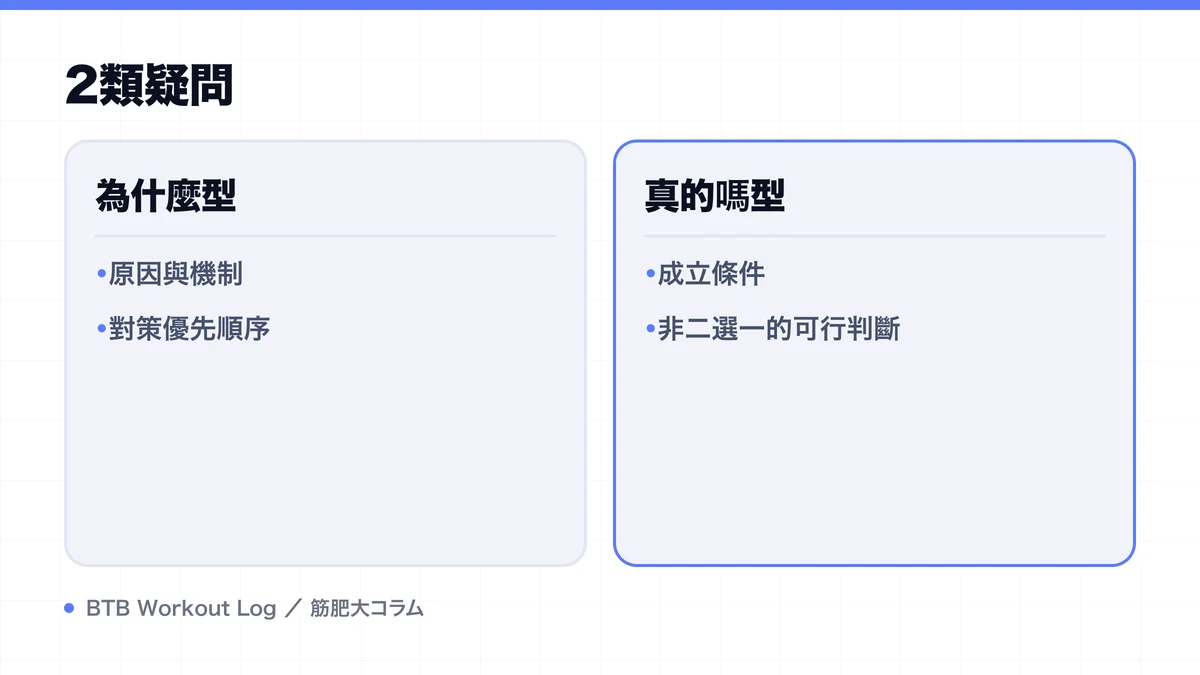
肌肉肥大的疑問分為兩大類。一種是想了解「為什麼會這樣」的原因問題,另一種是想確認「這個方法真的有用嗎」的假設驗證。前者涉及訓練機制,後者探討成立條件。
兩者都無法用「行/不行」的二分法回答。以下是按容易卡住的順序排列的索引。
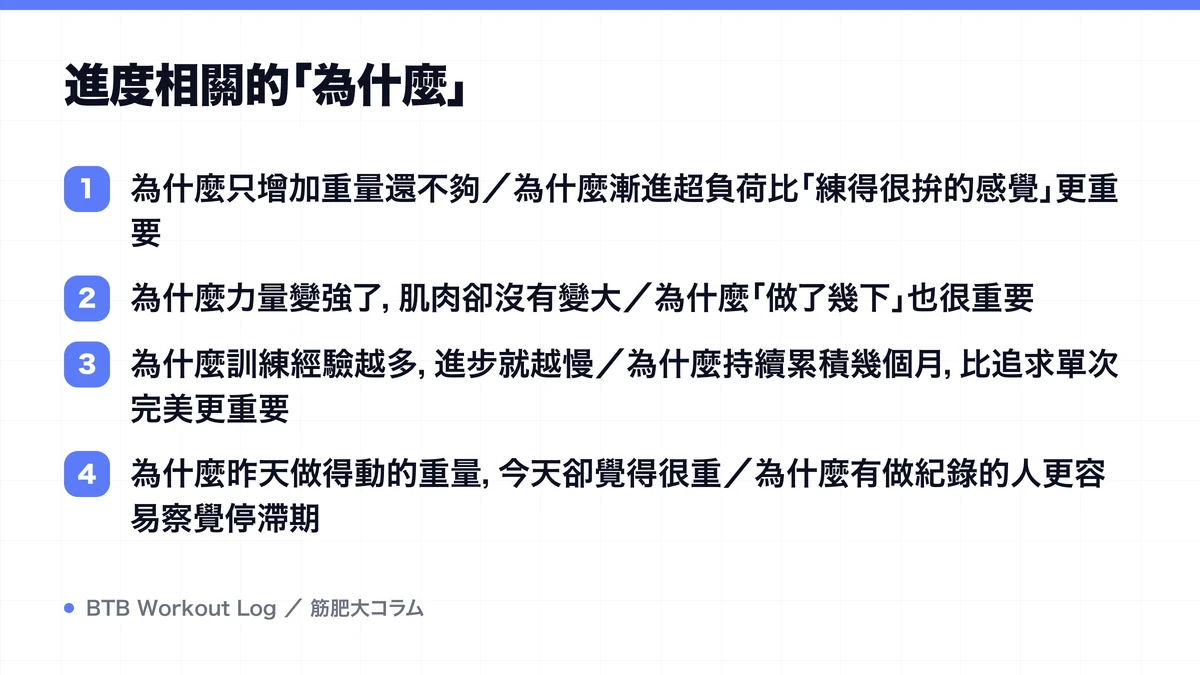
進度相關的「為什麼」
最常見的問題就是:明明很努力,數字卻毫無變化。原因通常出在刺激、疲勞、恢復或紀錄其中一環。
- 為什麼只增加重量還不夠/為什麼漸進超負荷比「練得很拚的感覺」更重要
- 為什麼力量變強了,肌肉卻沒有變大/為什麼「做了幾下」也很重要
- 為什麼訓練經驗越多,進步就越慢/為什麼持續累積幾個月,比追求單次完美更重要
- 為什麼昨天做得動的重量,今天卻覺得很重/為什麼有做紀錄的人更容易察覺停滯期
這些問題都有同一個核心:不是不夠努力,而是努力的方向錯了。每次都練得很累,表現卻沒有超越上次;力量明明增加,外觀卻沒變;同樣的重量,每天感受都不一樣——這些情況往往都源自把主觀感受當成進步指標。先確認數字有沒有變化,一半的困惑自然就會消失。
刺激、訓練量、訓練頻率的「為什麼」
即使照著同一份課表訓練,結果仍可能不同,主要差別通常在於每組離力竭有多近,以及訓練量的實際內容。
- 為什麼不用每次都練到力竭,肌肉仍然會變大/為什麼同樣做10下,效果卻不一樣
- 為什麼組數加太多反而會造成反效果/為什麼同樣每週10組,成果卻有差異
- 為什麼提高訓練頻率不一定能加快進步/為什麼組間休息不宜太短
- 為什麼輕重量也能促進肌肉肥大/為什麼沒有肌肉痠痛也能產生肌肉肥大
這裡幾乎所有差異,都可歸結為每組離力竭有多近。同樣做「10下」,若還保留4下餘力,刺激可能不足;反過來說,若只剩1下餘力,即使用輕重量也能形成有效刺激。在增加組數或頻率之前,先確認每組都在什麼程度收手,會更容易判斷調整後的效果。
反過來,如果已經更接近力竭卻仍然沒有進步,應優先懷疑訓練量是否過高,導致恢復跟不上。刺激與恢復之間存在取捨,只看其中一邊來調整,最後往往只會反覆來回。
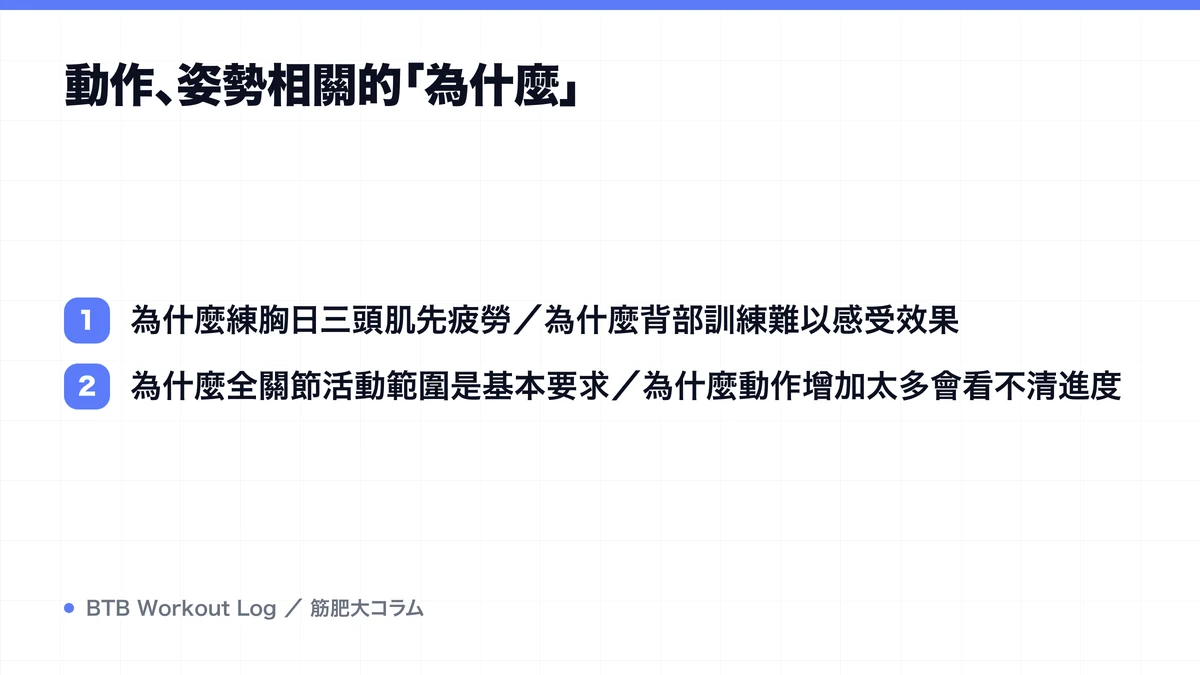
動作、姿勢相關的「為什麼」
目標部位沒有感受、練不出效果的煩惱,通常來自動作特性和主觀感受的落差。
動作方面的問題,等訓練量和接近極限的程度都滿足後再處理,解決會更快。即使某個動作感受不強,只要重量和次數在增長,刺激就是有進去。感受最不敏銳的部位,更應該用數據來確認。
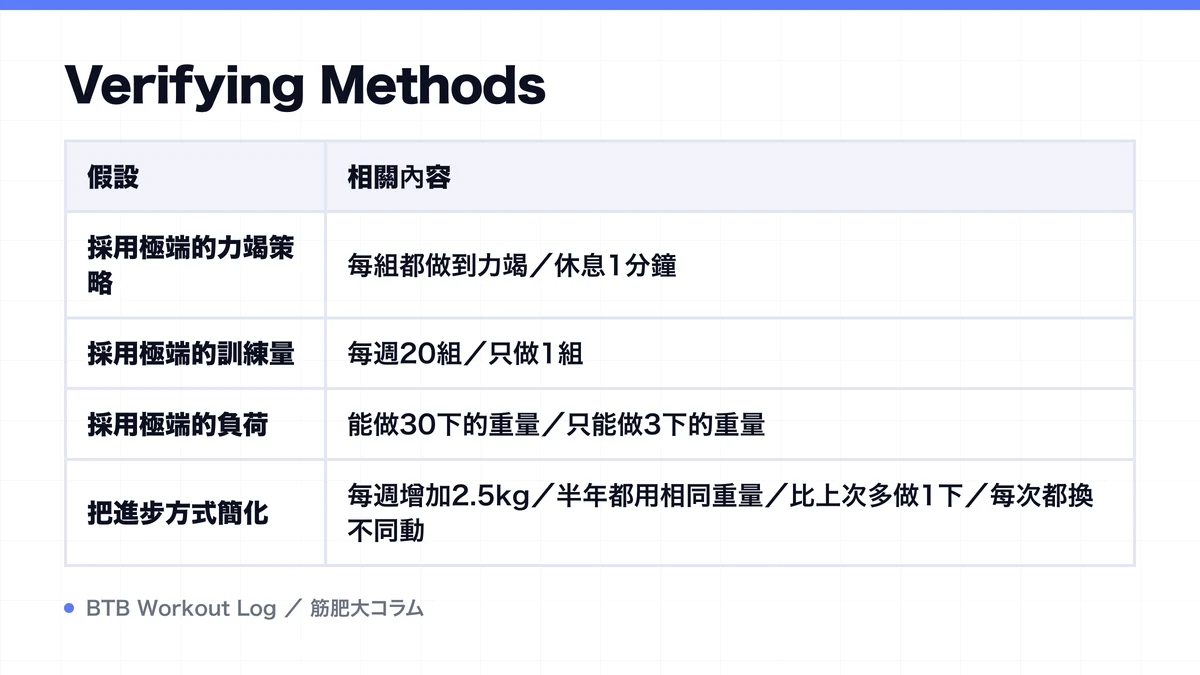
Verifying Methods
接下來要驗證這些假設。多數情況的結論都是:只要符合條件就能成立,但那些條件往往相當嚴苛。
| 假設 | 相關內容 |
|---|---|
| 採用極端的力竭策略 | 每組都做到力竭/休息1分鐘 |
| 採用極端的訓練量 | 每週20組/只做1組 |
| 採用極端的負荷 | 能做30下的重量/只能做3下的重量 |
| 把進步方式簡化 | 每週增加2.5kg/半年都用相同重量/比上次多做1下/每次都換不同動作 |
| 把主觀感受當成指標 | 沒有肌肉痠痛/沒有充血感 |
這些驗證都有同一個答案:「可以成立,但條件很嚴苛」。例如每週增加2.5kg的做法,在新手階段的幾個月內確實可行;但隨著訓練重量提高,每次增加的幅度在比例上也會變大,最終必然無法維持。極端做法之所以失敗,通常不是方法本身錯了,而是超出適用範圍後仍繼續使用。
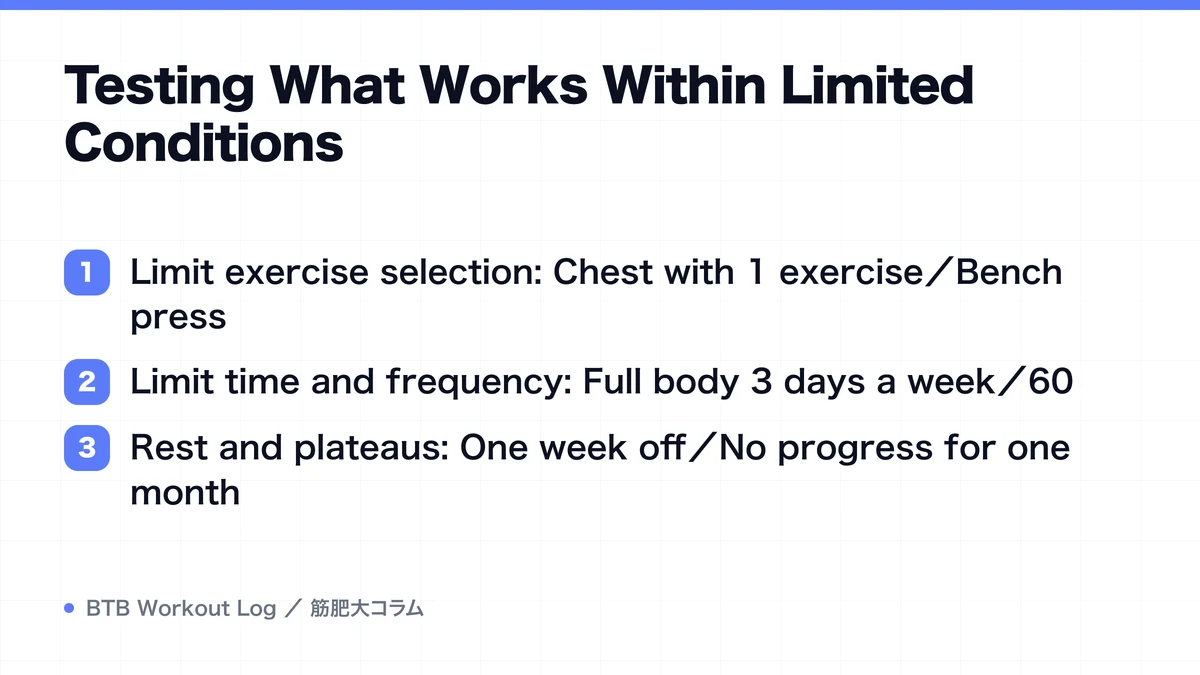
Testing What Works Within Limited Conditions
The question is how far you can push results within real limits—time, exercise selection, and 恢復.
- Limit exercise selection: Chest with 1 exercise/Bench press alone/Squat alone/Pull-ups alone
- Limit time and frequency: Full body 3 days a week/60 minutes or less
- Rest and plateaus: One week off/No progress for one month
Questions under constraint aren't about "settling for less." Even at 3 days per week, 60 minutes per session, and limited exercises, you'll still grow if 每週組數 per body part and proximity to failure stay sufficient. The real problem is not noticing when one specific body part drops in volume because of the constraint. The tighter your time, the more you need to track how many sets each muscle gets.
Blanket answers don't help here. Whether you meet the conditions is something you can determine yourself by watching your weekly set counts and progression per exercise—use a log app.
常見問題
- There are too many questions—where should I start?
- If your numbers are stuck now, start with progression. If you're rebuilding a routine, read stimulus, volume, and frequency first—it's more efficient. Exercise selection questions are easier to solve once volume and proximity to failure are dialed in.
- "If conditions are met, it works"—but that doesn't give me a clear answer.
- 肌肉肥大 research often shows small average differences, so making blanket claims would be dishonest. Practically speaking, meet the conditions, test for a few weeks, and let your numbers tell you what works. That's faster.
- How do I check if this applies to me?
- Change one thing at a time. Keep the same conditions for 2–3 weeks. If you change multiple variables at once, you won't know which one made the difference.
重點整理
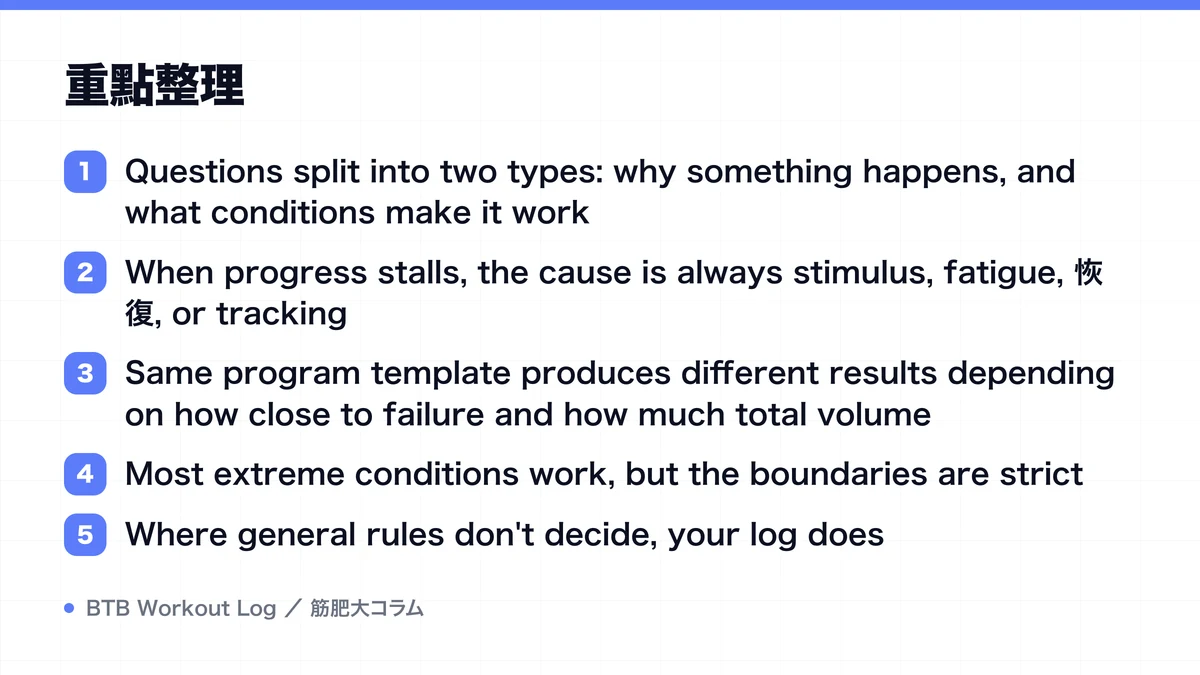
- Questions split into two types: why something happens, and what conditions make it work
- When progress stalls, the cause is always stimulus, fatigue, 恢復, or tracking
- Same program template produces different results depending on how close to failure and how much total volume
- Most extreme conditions work, but the boundaries are strict
- Where general rules don't decide, your log does
參考文獻
- Dose-response Relationship Between Weekly Resistance Training Volume and Muscle Mass
- The Resistance Training Dose Response: Meta-Regressions Exploring the Effects of Weekly Volume and Frequency on Muscle Hypertrophy and Strength Gains
- ACSM Position Stand: Progression Models in Resistance Training for Healthy Adults