
每次都換動作,漸進超負荷還能成立嗎?「多樣性」和「肌肉肥大」能否兼得
Yes, it works—with a catch. Pure random exercise selection each session makes it nearly impossible to tell if you've pushed harder than last time. You need either a regular rotation that brings the same lift back periodically, or one anchor exercise you keep testing.
What matters to muscle isn't exercise name consistency—it's sustained, progressive stimulus to the target. But to verify that progress, you need measurable reference points: load, reps, RIR, and range of motion tracked under the same conditions.
Progressive Overload Is Not "Personal Best Every Session"
Progressive overload basics: raise training stimulus over time as you adapt. This doesn't mean adding weight every session or hitting one more rep. The same load can progress if reps climb at the same RIR, the same reps cover greater range of motion, or your weekly set volume holds steady with cleaner form. All count.
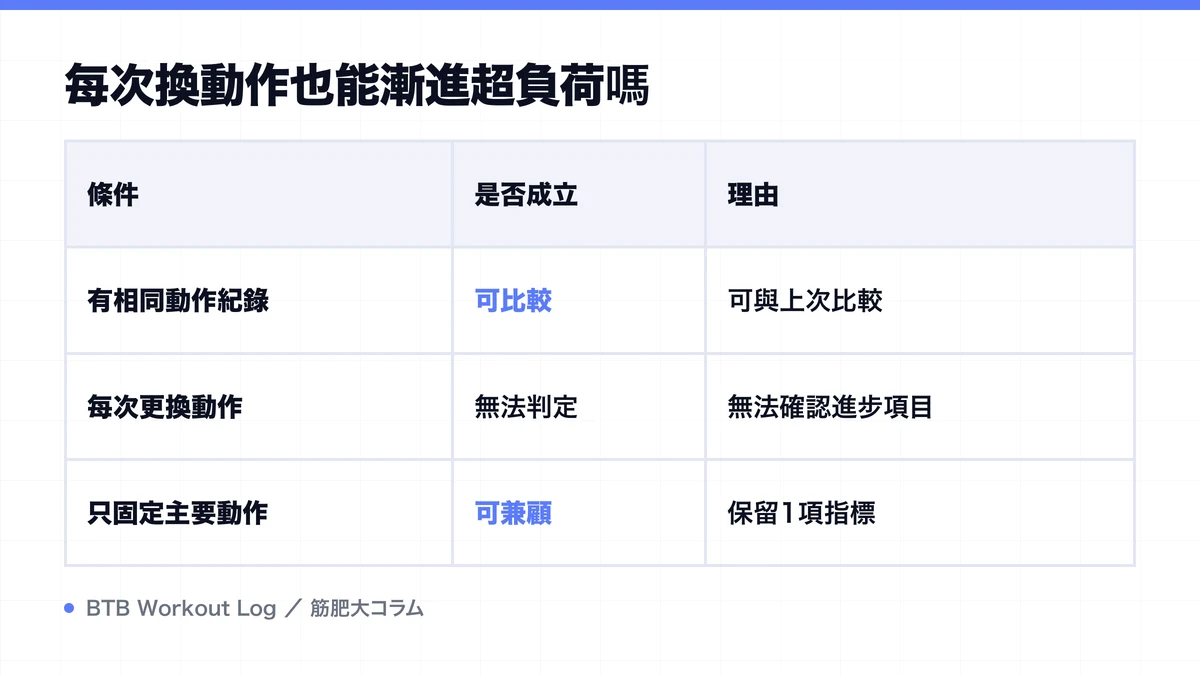
The key split: stimulus may improve versus we can verify it improved. Barbell bench one week, dumbbell flyes the next, dips after that—each hard set hits your chest, but when the tool, path, stability, and range all shift at once, you can't line up weights and reps side by side. Variety feeds stimulus; randomness breaks verification.
The real question isn't "does mixing exercises work?" It's does your plan include repeated, identical measurement points even though exercises rotate? With those, you track overload across exercise changes. Without them, effort is real but progress stays guesswork.
Research Backs Planned Progress Over Random Change
Resistance training models adjust load, reps, sets, and frequency based on training age and adaptation. This does not mean lock in one exercise forever—nor does it mean swap everything each session to shock the body. It means plotting variables to match your goal, then reading the response to pick the next stimulus.
Hypertrophy responds to intensity, volume, frequency, and movement pattern—multiple levers. Changing exercise is one way to shift pattern or load trajectory, yet change alone doesn't guarantee harder stimulus. New lifts spike reps and weight through motor learning alone, so early gains may not reflect muscle growth. Caution is wise.
Fixed versus rotated programs affect both stimulus type and tracking ease. Fixed exercises hold conditions steady; rotation handles joint discomfort, facility limits, monotony, and muscle length or arc targeting. Both have roles. The issue isn't change itself, but whether your design lets you measure progress after the change.
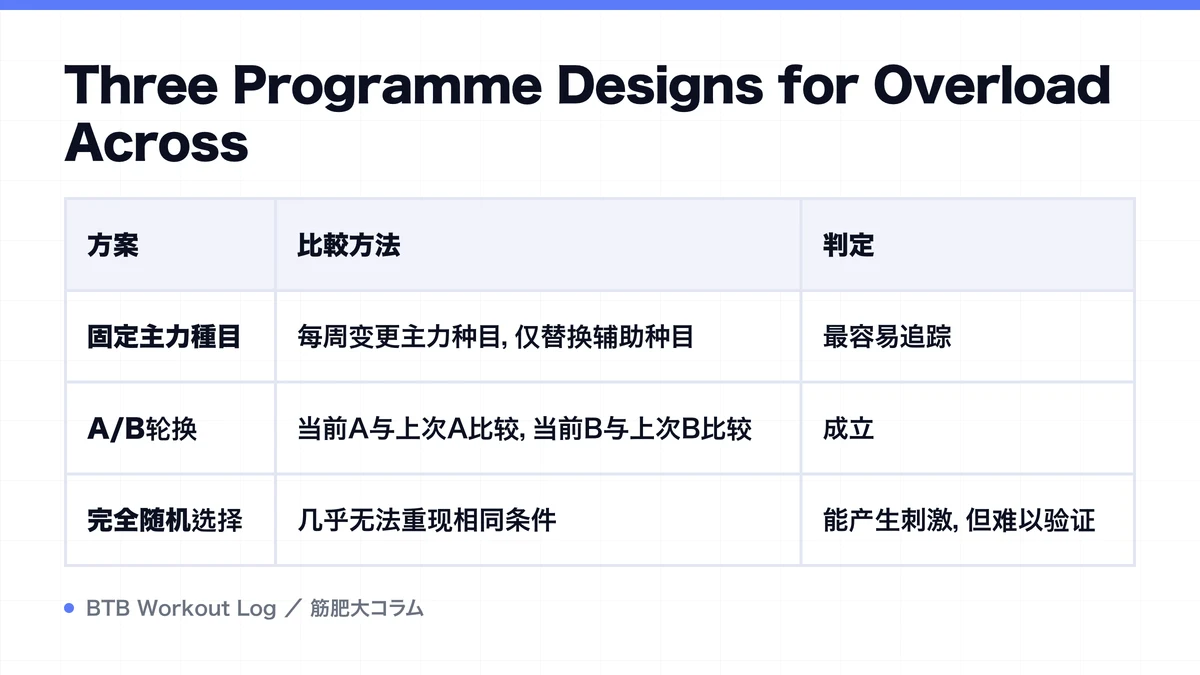
Three Programme Designs for Overload Across Exercise Swaps
| 方案 | 比較方法 | 判定 |
|---|---|---|
| 固定主力種目 | 每周变更主力种目,仅替换辅助种目 | 最容易追踪 |
| A/B轮换 | 当前A与上次A比较,当前B与上次B比较 | 成立 |
| 完全随机选择 | 几乎无法重现相同条件 | 能产生刺激,但难以验证 |
保留主力种目
胸部保留一个压力动作,背部保留一个拉力动作——这样你有了衡量进度的基准。辅助种目可以替换,但只要主力种目的器械、设定、动作幅度和次数范围保持一致,你的性能数据就不会断裂。这种方法既保留了选择的灵活性,又能追踪数据。
将A/B作为独立系列处理
如果第1周用80kg杠铃卧推8次,第2周用60kg机械推胸10次,第3周再用80kg杠铃卧推9次,第4周用60kg机械推胸11次,那么比较时不是与1周前对比,而是与2周前的同一种目对比。每个种目的出现频率会降低,但只要A和B各自都有独立的进度,整个轮换循环仍然体现了超负荷。
替换种目要保持「相同角色」
如果因为器械繁忙而改换种目,尽可能匹配目标肌肉、动作模式、次数范围和组的努力程度。但不要把80kg杠铃和60kg机械的数字相加或进行比例换算——它们的机械结构和杠杆条件不同。替换那天,要管理好周间硬组数和RIR,重量和次数的进度在各自种目内单独判定。
不同种目用同一尺度衡量
记录时,按种目分别记下重量、各组的次数、RIR、动作幅度和器械设定。座椅位置或握法改变了,即使种目名称相同也是不同条件,所以影响比较的设定要用简短笔记固定下来。反面来说,如果每次都改变节奏或休息时间,你就分不清到底什么进步了。至少在判定进度的周期内,要保持主要条件一致。
执行不需要复杂。比如说定下8~12次的范围,在相近的RIR和良好动作下增加次数,达到上限后就小幅加重。如果是A/B轮换,这个流程分别应用在A和B上。不确定是加重还是加次数时,可以提前制定重量和次数的进度规则,这样训练当天就不会因为心情而改变标准。
總負荷量也要注意。同一种目、同一动作幅度时,重量×次数×组数的变化是个参考指标;但不同种目间的總負荷量代表不了相同的刺激量。100kg深蹲和50kg腿部伸展机用到的肌群不同,外部负荷的含义也不同。不要把异种目的数字加起来说「比上周超负荷10%」,而要分开看种目内的趋势和每个肌群的周间硬组数。
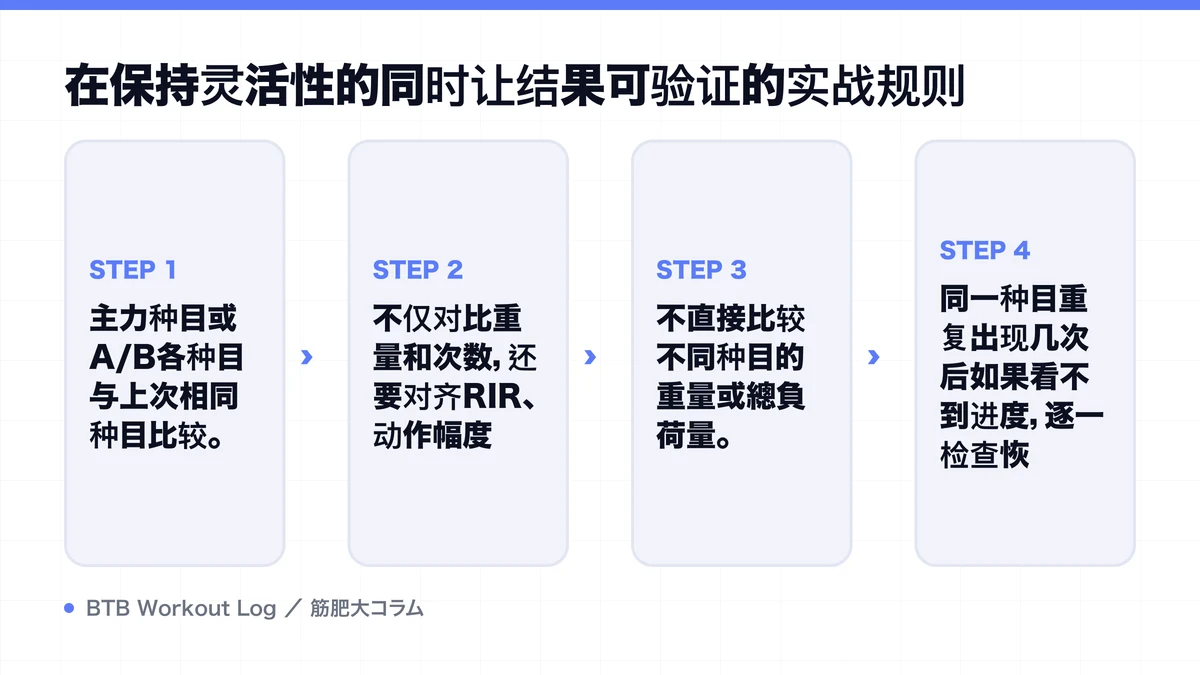
在保持灵活性的同时让结果可验证的实战规则
如果每次换种目是为了保持训练的热情和坚持,那就没必要放弃这个优势。但也别把所有内容都设成自由选择,按肌群至少固定一个主力种目,或者预先定好2~3个种目的轮换序列。如果某周因为临时调整改变了计划,就别急着下结论说有进度,改作「完成了预定训练量的一周」处理,这样才不会过度解读数据。
合理的换种目原因包括:疼痛或不适感、器械限制、长期停滯期、目标肌肉不匹配、坚持度下降等。反过来,要是只因为「怕超不过上次的数字」或「就想换个刺激」就每次都改,那你其实是在逃避比较。就像种目数过多会模糊进度一样,选项越多,观测数据就越分散。
- 主力种目或A/B各种目与上次相同种目比较。
- 不仅对比重量和次数,还要对齐RIR、动作幅度、器械设定。
- 不直接比较不同种目的重量或總負荷量。
- 同一种目重复出现几次后如果看不到进度,逐一检查恢復、训练量和种目是否适合。
应用程序本身不能生成超负荷,但能帮你在轮换中不丢失可比较的数据线索。即使每次种目都不同,只要同一种目再次出现时有历史记录,就能进行比较。BTB Workout Log 会按种目整理履历。
常見問題
- 每次换种目也能产生肌肉肥大吗?
- 如果每组都能充分刺激目标肌肉,周训练量和恢復得当,即使种目不同肌肉肥大也能发生。不过完全随机的话,长期刺激是否真的进步会很难验证,所以实际操作中还是要放一个主力种目或定期的轮换框架比较实用。
- A/B轮换要拿什么和什么比较?
- A种目与上次执行的A种目比较,B种目与上次执行的B种目比较。不和1周前的别种目相比。器械设定、动作幅度、次数范围和RIR都要保持一致,检查各系列的重量或次数是否在长期趋势上有增长。
- 不同种目的總負荷量加总就能判定超负荷吗?
- Direct comparison isn't reliable. When you switch exercises, your range of motion, leverage, stability, and the muscles involved all change—so 1 kg means something different. Use 總負荷量 as a reference within the same lift, but track weekly progress across muscle groups by counting 硬組s per muscle and monitoring each lift's trend separately.
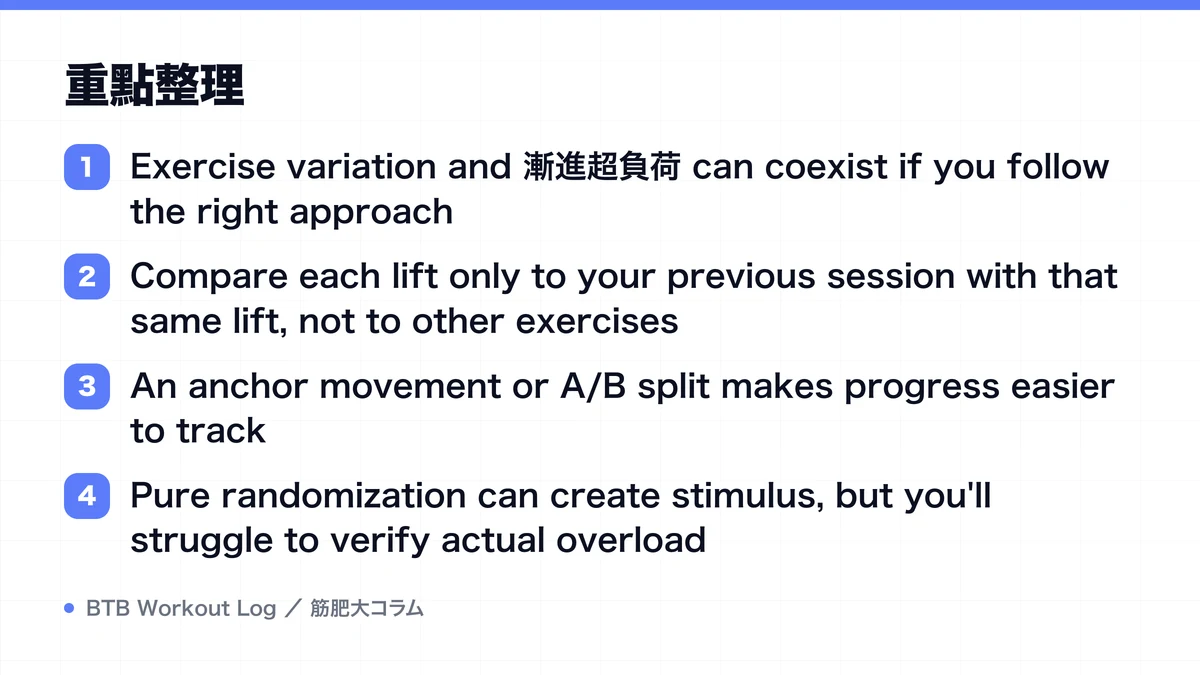
重點整理
- Exercise variation and 漸進超負荷 can coexist if you follow the right approach
- Compare each lift only to your previous session with that same lift, not to other exercises
- An anchor movement or A/B split makes progress easier to track
- Pure randomization can create stimulus, but you'll struggle to verify actual overload