沒有肌肉痠痛也能肌肉肥大|不用因為「今天沒練到」而沮喪的原因
即使沒有肌肉酸痛,只要目標肌肉承受足夠的機械張力,並在可恢復的範圍內反覆這個刺激,肌肉肥大就會發生。肌肉酸痛是運動後的感覺反應,不是成長刺激本身。
隨著習慣同一個訓練,酸痛傾向減弱,但適當的負荷和努力度不會消失。判斷刺激有無應該從訓練內容和數週的進度來看,而不是靠酸痛。
為什麼把肌肉酸痛當作「有效的證據」
加入新動作的第二天,或久違地完成高訓練量之後,目標部位有時會出現明顯的延遲性肌肉痠痛。因為痛的地方正好是練到的地方,就容易覺得「越痛說明刺激越強,肌肉也長得越大」。但這裡其實把身體感知到運動的訊號和長期適應的大小混為一談了。
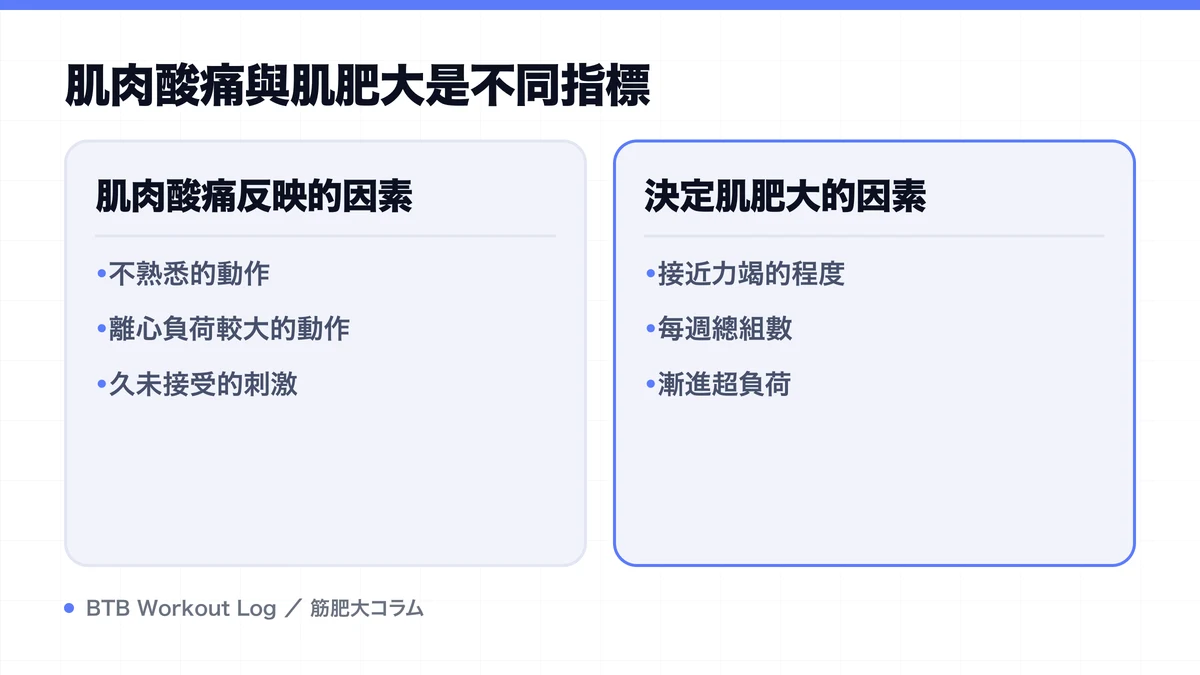
肌肉痠痛更容易出現在不熟悉的收縮方式、尤其是肌肉在發力同時被拉長的階段、動作幅度突然擴大,或組數比平時多的情況下。它的強弱也受運動經驗、對動作的熟悉程度、睡眠、痛覺敏感度等因素影響。而肌肉肥大,是阻力訓練持續數週、數月之後,肌肉橫截面積增加的適應結果。第二天的主觀感受和長期的形態變化,既不在同一時間尺度上,決定因素也不相同。
肌肉痠痛強烈的那天,確實更容易讓人感覺「有練到」,但光靠這一點,沒辦法評估有效組數、RIR、動作姿勢,以及到下次訓練前的恢復情況。痠痛可以當作輔助資訊,卻不能當成訓練效果的評分表。把體感當成效果標尺的誤解,並不只出現在肌肉痠痛上,這篇統一檢驗各種迷思的文章整理了同類型的誤解,看過之後判斷會更穩。
沒有酸痛也能保留成長刺激的機制
肌肉肥大的核心是機械張力——肌纖維出力時承受的刺激。施加負荷,目標肌肉足夠用力,那個物理刺激就被轉化成細胞反應,啟動肌蛋白質蓄積的過程。詳細的機制可以在肌肥大機制的研究解說找到。
另一方面,肌肉損傷是陌生運動導致的肌組織變化,與肌肉酸痛有關但不相同。修復被損傷的組織和增加肌蛋白質儲存讓肌肉變大的適應過程也要分開看。損傷修復增加了並不代表肌肉肥大的淨增長會按比例增加。
因此,沒有肌肉酸痛不是「什麼都沒發生」,而是「引發強烈疼痛反應的情況不明顯」。用足夠的努力度完成組數,在穩定的動作幅度和姿態下施加張力,就能在沒有酸痛的情況下累積成長刺激。不需要每次都訓練到力竭的原因可以參考力竭反覆與肌肉肥大的關係。
同樣訓練只有酸痛減少的原因
重複同一個動作、動作幅度、組合構成,身體會習慣那個負荷的受力方式。初次做時酸痛很強的訓練,反覆幾次後酸痛就減輕了——這很常見。這不是訓練失效了,而是身體對同樣運動的防護性適應進展了,能更好地抑制過度損傷和酸痛。
這時,同樣重量能做更多次數、同樣次數用更重的重量做、同樣RIR下動作更穩定,就代表刺激還在。RIR 是「還能做幾次」的餘力指標。比如 RIR2 表示保持動作品質還能再做約 2 次的感覺。酸痛減少不代表組末的出力需求消失了,這點要單獨確認。
反過來,為了找回酸痛而每週換動作,或突然加重伸張階段的強度,新鮮感帶來的酸痛增加了,但無法在相同條件下比較進度。動作技術每次都要重新學,還會增加恢復成本,拉低下次的表現。動作變更不是製造酸痛的手段,而是在需要解決停滯期、保護關節、改進目標肌的接觸時才用的決策。
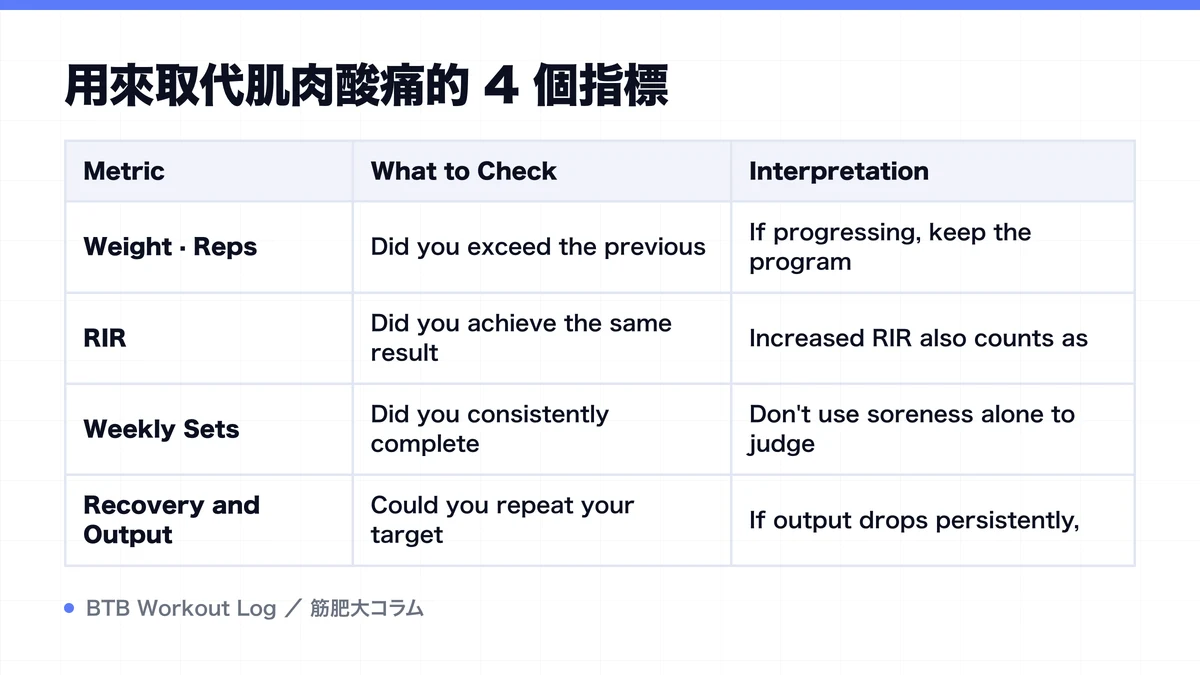
用來取代肌肉酸痛的 4 個指標
Before changing your program when soreness is absent, compare these metrics under the same conditions. Rather than judging a single session, track trends over at least several weeks to distinguish daily variation from a true plateau.
| Metric | What to Check | Interpretation |
|---|---|---|
| Weight · Reps | Did you exceed the previous session at the same form and range of motion? | If progressing, keep the program |
| RIR | Did you achieve the same result with more reps in reserve? | Increased RIR also counts as progress |
| Weekly Sets | Did you consistently complete hard sets for the target muscle? | Don't use soreness alone to judge volume adequacy |
| Recovery and Output | Could you repeat your target weight and reps next session? | If output drops persistently, adjust the load |
- No soreness · records improving: Your stimulus and recovery are in balance—maintain the program.
- No soreness · records stalled: Check effort level, form, weekly volume, and nutrition in that order. Change one factor at a time.
- Severe soreness · records declining: Before adding new stimulus, reduce the recovery cost from sudden exercise swaps or set increases.
You don't need to rush up in weight. Adding reps at the same weight is also progressive overload. Build your weekly set count on volume principles, then adjust your effective range based on RIR, exercise selection, frequency, and recovery.
If you have no soreness, weight or reps are climbing, and output holds next session, there's little reason to change. If soreness is absent and records haven't budged for weeks, check whether RIR is too high, whether load is truly reaching the target muscle, or whether weekly volume is too low—one factor at a time.
Use soreness as a recovery cost, not a growth metric
肌肉痠痛不能用來替肌肉成長打分數,但也不是應該忽略的資訊。如果強烈疼痛限制了動作幅度,連熱身時的重量或次數都下降,代表該部位可能還沒從上次的負荷中充分恢復。與其忍痛硬做原定課表,更合理的做法是改練其他部位、減少組數或降低負荷。訓練頻率的安排也可參考休息日與恢復。
判斷重點不是「痛或不痛」的二選一,而是疼痛在多大程度上限制了下一次訓練的品質。即使略有緊繃,仍能維持正常動作幅度與輸出的情況,不能和連日常動作都受到影響的疼痛一概而論。此外,如果不是運動後逐漸擴散的鈍痛,而是在特定動作中出現刺痛,或只有關節周圍疼痛,就不要直接認定是肌肉痠痛,應考慮停止訓練並諮詢專業人士。
只要訓練紀錄持續進步,也能反覆完成身體可恢復的訓練量,那麼與其刻意重新製造肌肉痠痛,繼續推進目前的課表,才是更符合肌肉肥大目標的判斷。
反過來說,如果長期完全沒有肌肉痠痛,重量和次數也毫無進展,問題就不在於有沒有痠痛,而是刺激量不足。判斷順序應該是先確認訓練紀錄有沒有進步;只有在沒有進步時,才檢查組數、動作幅度,以及接近力竭的程度。
把「肌肉痠痛=練得好」當成標準,會忽略什麼?
隔天仍有肌肉痠痛,常會讓人覺得前一次訓練做得很好。原因很簡單:肌肉痠痛是少數能立即感受到的回饋。但疼痛的強弱,也會因為新動作、不熟悉的伸展位置,或很久沒訓練某個部位等「不適應」因素而大幅改變。
一旦用痠痛替訓練打分數,就可能出現兩種誤判。一種是假陽性:剛換動作後只是因為不適應而產生強烈痠痛,卻誤以為刺激增加了。另一種是假陰性:持續執行同一套課表後,痠痛只是因身體適應而減輕,卻誤判課表已經失效,進而打亂原有安排。
實際訓練時,疼痛不代表成果,而應視為評估恢復成本的輔助資訊。如果疼痛強烈,導致下一次訓練的重量或次數下降,就可以據此重新檢視訓練量或動作選擇。即使痠痛很輕,只要數字持續進步,就代表這套課表有效。真正的判斷依據,是重量、次數、RIR與每週組數的變化趨勢。
常見問題
- Should I change exercises if I stop getting sore from the same routine?
- Not necessarily. If soreness disappears but weight or reps climb at the same form and range of motion, and you're loading the target muscle properly, keep going. Switch exercises only after weeks of stalled progress, and only if you also see joint strain or uneven stimulus distribution.
- Does stronger soreness always mean better hypertrophy?
- Not always. New exercises or sudden volume jumps create heavy soreness easily, but long-term muscle growth relies on mechanical tension and repeatable training. If soreness tanks your next session's output, recovery cost probably outweighs the stimulus benefit.
- Can I train the same muscle if mild soreness is still present?
- If stiffness is light, you can warm up fully, and planned weight and reps don't drop significantly, often yes. Severe soreness that limits motion or output calls for rest or reduced intensity. Sharp pain or joint pain shouldn't be called DOMS—stop and seek advice.
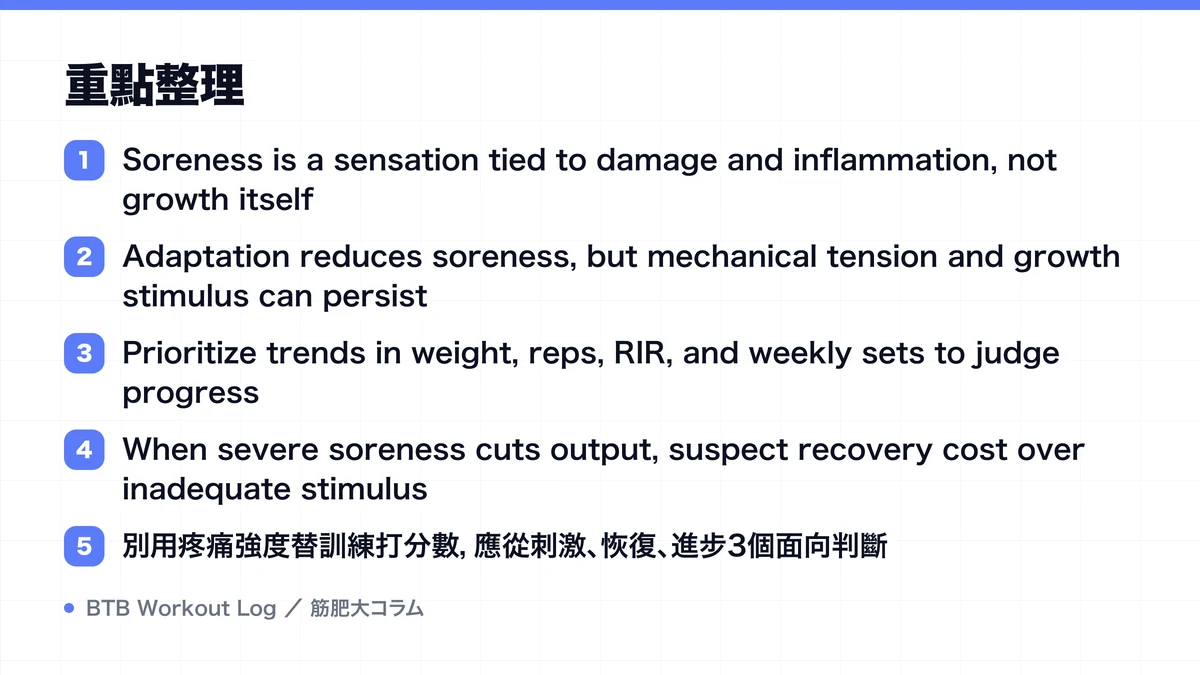
重點整理
- Soreness is a sensation tied to damage and inflammation, not growth itself
- Adaptation reduces soreness, but mechanical tension and growth stimulus can persist
- Prioritize trends in weight, reps, RIR, and weekly sets to judge progress
- When severe soreness cuts output, suspect recovery cost over inadequate stimulus
- 別用疼痛強度替訓練打分數,應從刺激、恢復、進步3個面向判斷