
1個月重量沒漲,該換訓練計畫嗎?在你急著換之前該確認的事
一個月重量停滯,不代表要立刻全盤改變計劃。應該用 4~8 次條件一致的試行,檢查重量以外是否也沒有進展,先只改變一項相關因素。
要驗證的不是「滿 30 天沒」,而是同一動作試過幾次、條件是否一致,這段期間重量、次數、RIR、動作幅度是否有變化。一個月可以當作檢視的信號,但不是計劃的截止期限。
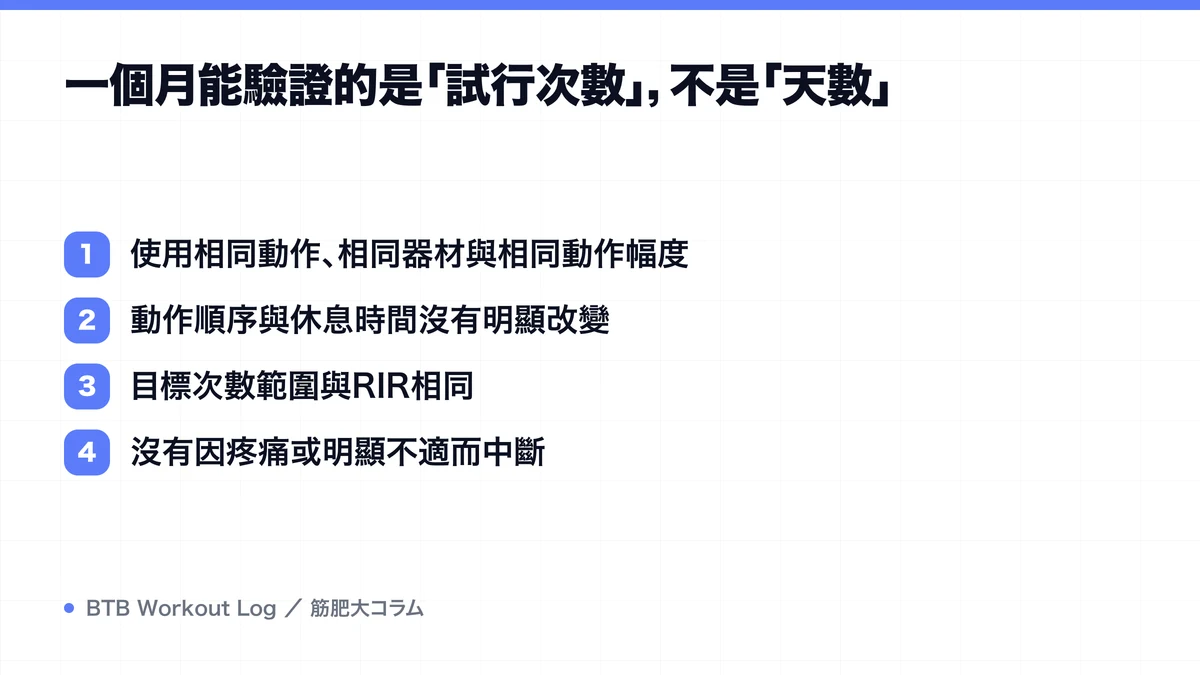
一個月能驗證的是「試行次數」,不是「天數」
同樣是1個月,臥推每週練1次,大約只有4次可供比較;每週練2次,則約有8次。如果期間又碰上出差、睡眠不足,或健身房太擁擠而更換器材,真正有效的比較次數還會更少。每週1次、僅憑4筆資料看不出上升趨勢,和每週2次、在條件一致的8筆資料中持續持平,不能一概視為相同的「1個月停滯期」。
進入中階後,有些動作本來就不會快到每週都能加槓片。使用小肌群的動作,或健身房最小槓片仍偏重時,光是升到下一級重量,增幅就可能遠超過你目前能負荷的程度。因此,只看日曆決定是否更換課表,很容易把正常而緩慢的進步誤判為停滯期。
先算清楚「可比較的訓練紀錄」
- 使用相同動作、相同器材與相同動作幅度
- 動作順序與休息時間沒有明顯改變
- 目標次數範圍與RIR相同
- 沒有因疼痛或明顯不適而中斷
不符合這些條件的訓練日不必當成失敗刪除,而應保留為不同條件下的紀錄。如果可比較的訓練次數太少,比起更換課表,更該先把測量條件統一。
重量相同也有進展的情況要排除
使用重量是清楚的指標,但無法單獨衡量肌肉肥大訓練的全部進展。80kg 一個月未變,但次數從 8 增到 10、動作幅度和姿勢維持、RIR 仍為 2,能力其實已升級。這是漸進超負荷以次數而非重量推進的狀態。
| 記錄變化 | 解讀 | 暫時對應 |
|---|---|---|
| 同重量次數增加 | 明確進展 | 繼續至次數上限 |
| 同重量、同次數 RIR 增加 | 比之前輕鬆 | 下次嘗試增加次數 |
| 姿勢或動作幅度改善 | 工作品質提升 | 固定條件重新評估 |
| 重量、次數、RIR、動作不變 | 可能停滯 | 診斷疲勞和刺激量 |
| 多個動作次數下降 | 疑似疲勞或恢復不足 | 不增加負荷,確認恢復 |
RIR 不是完美的測量值,也有主觀習慣。但每次用同一標準記錄,就能追蹤次數看不到的餘裕變化。有時在安全動作上校準感覺,方法可參考RIR 的使用方法。
研究支持「一個月全換」嗎
抗阻訓練的進程模型不只能增加外部重量。可以調整反復次數、組數、頻率,為現階段的適應創造適切刺激。換句話說,重量一個月停滯是調整的參考,但不是理由把動作、分離訓練都全換。
週期訓練研究指出,計劃性改變負荷對筋力有利,但若總訓練量相近,對肌肉肥大的優勢不必然一致。要衝重量紀錄而轉向低次數、高重量,動作習熟度和筋力表現會改變。但這不等於原計劃肌肉肥大已完全停止。
論及訓練量,每週組數在較多條件下肌肉肥大反應傾向較佳,但「停滯就必加組」不是答案。已超過可恢復量的人再增量,輸出會更差。每週組數要合併同肌群全動作計算,考慮恢復狀態和組的品質。
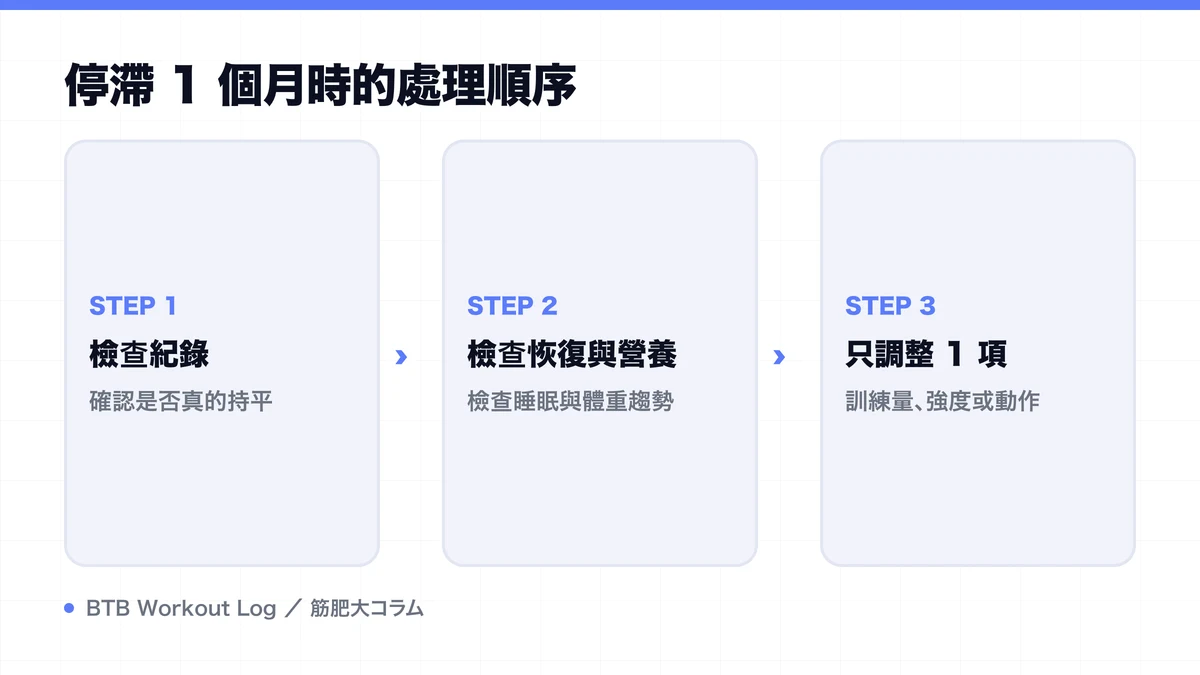
停滯的是什麼,就改什麼
When deciding whether to make changes, how the plateau spreads matters. Did just one lift stall, or multiple exercises for the same muscle group, or all your main lifts drop? Each pattern points to different causes.
Only one exercise plateauing
First suspect the lift's progression increment, technique, 動作幅度, and exercise order. Often small fixes work: extend reps to the top of your 次數範圍 before adding weight, use microplates, lock in your set order. Change the exercise only if pain is present, the target muscle doesn't load well, or the movement can't structurally progress further.
Multiple exercises for the same muscle group stalling
Check weekly set volume, frequency, and overlap between exercises. If every set runs near failure, cutting fatigue comes before adding volume. If RIR is high and you have few 硬組 for that muscle group, either match effort across existing sets or add small volume while monitoring 恢復.
Your main lifts across the whole body dropping
Before blaming the program's design, audit sleep, calorie intake, weight changes, life stress, and accumulated fatigue first. If multiple lifts fell in the last 2–3 sessions and even warmups feel heavy, a Deload 週 is easier to test than adding sets or swapping exercises. When numbers bounce back after recovery, fatigue—not program structure—likely caused it.
When and how to modify your program
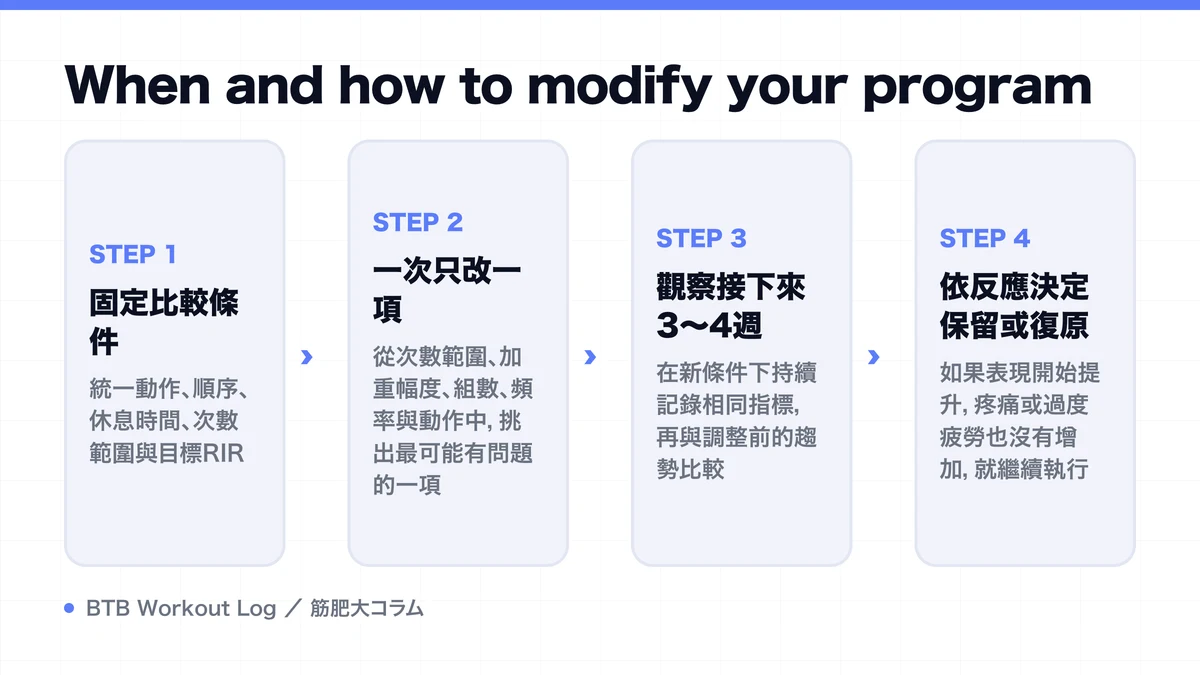
當你累積約4〜8次條件一致、可供比較的訓練後,重量、次數、RIR、動作品質與動作幅度都沒有任何進步,而且睡眠、營養、體重或疼痛等重大干擾因素也無法解釋時,就可以考慮調整課表。不過,每週只練1次的動作,即使累積4次,資訊仍然有限,因此也要一併觀察其他動作及整個肌群的趨勢。相反地,如果多項指標同時惡化,就不必等滿4〜8次,應優先處理疲勞或疼痛。
- 固定比較條件:統一動作、順序、休息時間、次數範圍與目標RIR。
- 一次只改一項:從次數範圍、加重幅度、組數、頻率與動作中,挑出最可能有問題的一項。
- 觀察接下來3〜4週:在新條件下持續記錄相同指標,再與調整前的趨勢比較。
- 依反應決定保留或復原:如果表現開始提升,疼痛或過度疲勞也沒有增加,就繼續執行。
若同時更改所有項目,就算之後進步,也無法判斷真正有效的是哪一項。更完整的可能原因可參考重量停滯期整理;這裡最重要的原則,是「用一次改動驗證一個假設」。
做這項判斷時,長期趨勢比單次刷新個人最佳紀錄更有用。你可以找出停滯期發生在哪個區段,並在相同條件下比較調整前後的變化。只要有完整紀錄,就更容易判斷自己是否真的整整1個月毫無進展。BTB Workout Log 能讓你直接回顧這1個月的訓練紀錄。
常見問題
- Is a month with zero weight gain a true plateau?
- It's a candidate for stalling, but time alone doesn't decide. You've progressed if reps climbed at the same weight, RIR loosened at the same reps, or form and 動作幅度 improved. Check your trial count and whether multiple metrics moved.
- What should I change first in my program?
- Just the one item closest to your root cause. Big weight jumps? Try finer increments or microplates. Weak stimulus? Add a small volume increase. Whole-body output down? Try a Deload 週. Switching exercises, split, and volume at once makes it impossible to tell what helped.
- Can you build 肌肉肥大 while your lifts don't go up for a month?
- Yes. If reps, form, or 動作幅度 improve, training stimulus changes even when the bar weight stays put. Also, 肌肉肥大 and specific lift numbers don't track perfectly. If other metrics stay frozen too, start thinking about adjustments.
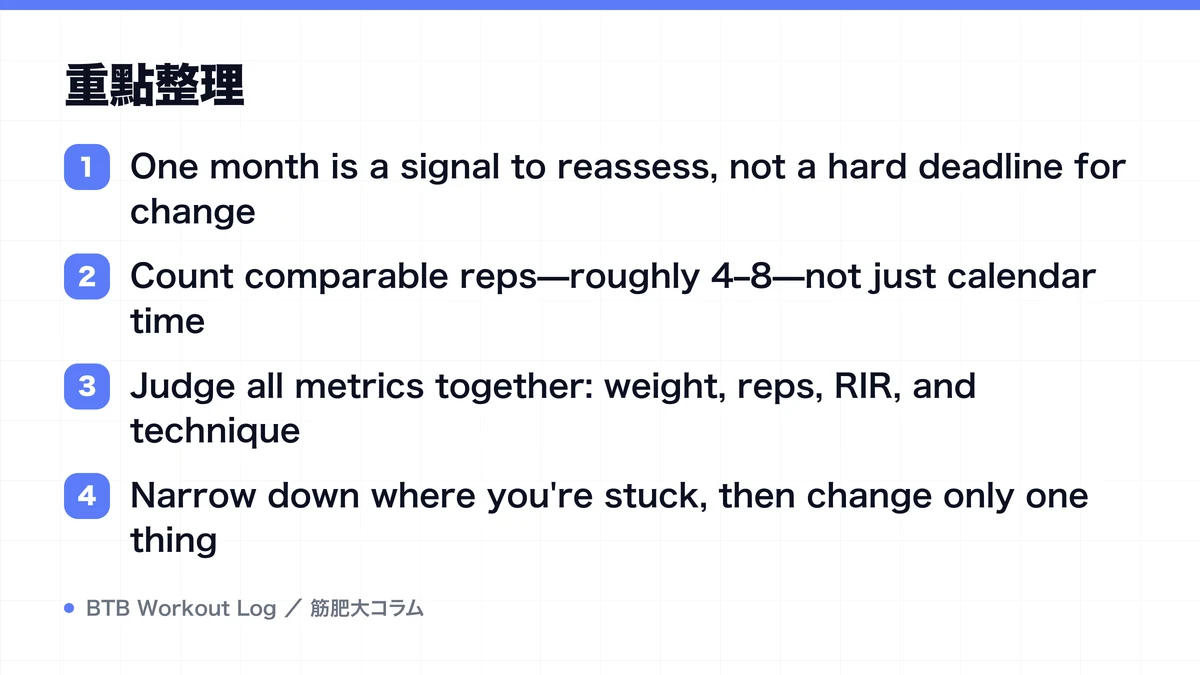
重點整理
- One month is a signal to reassess, not a hard deadline for change
- Count comparable reps—roughly 4–8—not just calendar time
- Judge all metrics together: weight, reps, RIR, and technique
- Narrow down where you're stuck, then change only one thing
參考文獻
- ACSM Position Stand: Progression Models in Resistance Training for Healthy Adults
- Periodization, Strength and Muscle Hypertrophy: Systematic Review and Meta-analysis
- Linear vs Daily Undulating Periodized Training and Hypertrophy: Meta-analysis
- Dose-response Relationship Between Weekly Resistance Training Volume and Muscle Mass
- Resistance Training Volume Enhances Muscle Hypertrophy in Trained Men