每週10組 vs 每週20組,哪個更利於肌肉肥大?翻倍練真的值得嗎
條件相同的情況下,每週20組確實能增加肌肥大效果,但不會是10組的雙倍成長。如果10組還在進步,保持現狀即可;如果進度停滯且恢復餘力充足,逐步增加到20組才合理。
比較的不只是組數,還要衡量額外組數帶來的小幅利益,與疲勞、時間、後期品質下降的代價。別把數字當成固定公式,要在同一肌群、同一週期內做判斷。
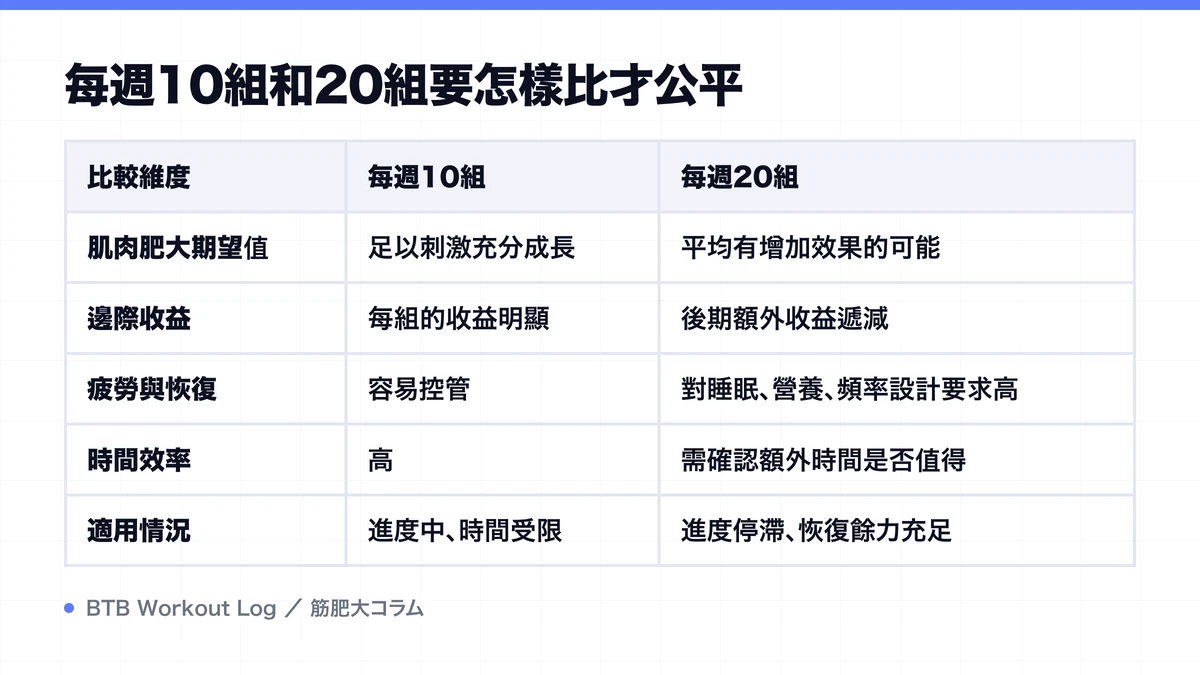
每週10組和20組要怎樣比才公平
這裡的組數是指單一肌群的每週硬組數。硬組是指以足夠的動作幅度充分刺激目標肌肉,做到還能再做1~3次的餘力(RIR1~3)的組數。熱身組或大幅保留動作幅度的練習組不算。基本計數方式在每週組數的概念裡有詳細說明。
還要區分直接刺激和間接刺激。比如胸部推舉對大胸肌是直接刺激,但上臂三頭肌也受負荷。間接刺激全算1組或按0.5組計算,最終總數會不同。選哪種方式都行,但比較期間內必須保持一致。Pelland等人2026年的薈萃迴歸分析也採用了直接組與間接組分開計算的方式。
| 比較維度 | 每週10組 | 每週20組 |
|---|---|---|
| 肌肉肥大期望值 | 足以刺激充分成長 | 平均有增加效果的可能 |
| 邊際收益 | 每組的收益明顯 | 後期額外收益遞減 |
| 疲勞與恢復 | 容易控管 | 對睡眠、營養、頻率設計要求高 |
| 時間效率 | 高 | 需確認額外時間是否值得 |
| 適用情況 | 進度中、時間受限 | 進度停滯、恢復餘力充足 |
也就是說「10對20」只有在種目、動作、RIR、休息、頻率都基本相同時才有意義。高品質的10組跟後期動作崩位的20組比,數字差並不代表刺激差。必須先了解同樣10組也有內涵差異。
平均上20組更優,但利益邊際遞減
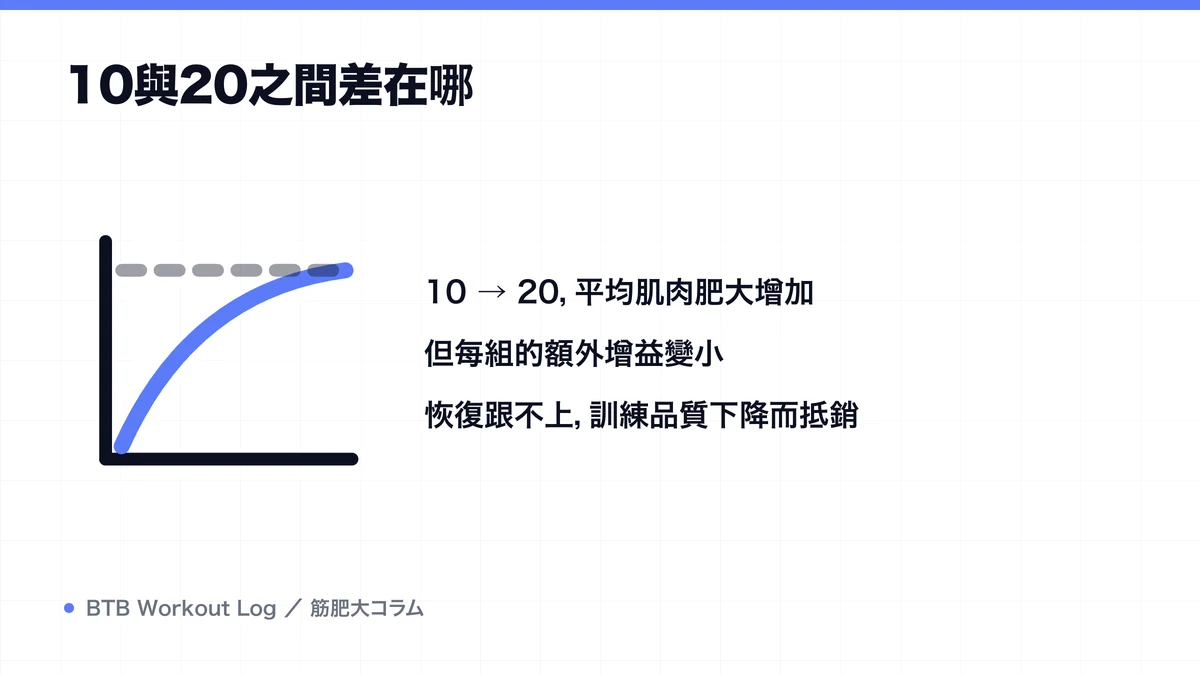
每週體積與肌肥大呈劑量反應關係,體積越大平均肌肥大效果越好。Schoenfeld等人2017年薈萃分析顯示,較高的每週組數比低組數產生更大的肌量增長。2019年針對阻力訓練經驗者的研究對比多個體積條件,部分測量部位也顯示高體積組有優勢。
但不能理解為「20組就是10組的雙倍肥大」。2026年薈萃迴歸表明,每週組數越多肌肥大估計值越高,但每增加1組的邊際收益逐漸減少。從10組加到11組和從19組加到20組,效果價值明顯不同。
研究平均值並不能直接指定個人最適量。對象者的訓練經歷、動作選擇、組數計算方式、干預週期、測量部位(肌厚)等都不同,相同高體積下個人反應也不一致。每週20組既不是「上限」也不是「必須量」,而是在追求平均增加效果的同時承擔更多成本的選擇。
額外10組不只增加刺激,疲勞和時間也跟著增加
The problem with 20 sets isn't just more soreness. If rep counts drop on the same weight in later sets, secondary muscles tire before your target, or the pump doesn't clear by next session, the quality of those extra sets tanks. Completing them anyway can interfere with next week's 漸進超負荷.
Time cost matters too. Jump from 10 to 20 weekly sets and you've literally doubled your main volume. Warm-ups carry over, so total session time won't quite double, but rest periods, equipment transitions, and logging add real minutes. Within a tight 3 days-per-week frame, adding 10 chest sets might mean cutting priority movements for back or legs. Maximizing a single body part and building a complete full-body program aren't the same goal.
If you do choose 20 sets, spread them across 2–4 sessions rather than cramming one day. Your output per set stays higher. But frequency itself isn't magic—it's just a way to deliver necessary volume while maintaining quality. How to split your week is worth checking against once-vs-twice comparisons.
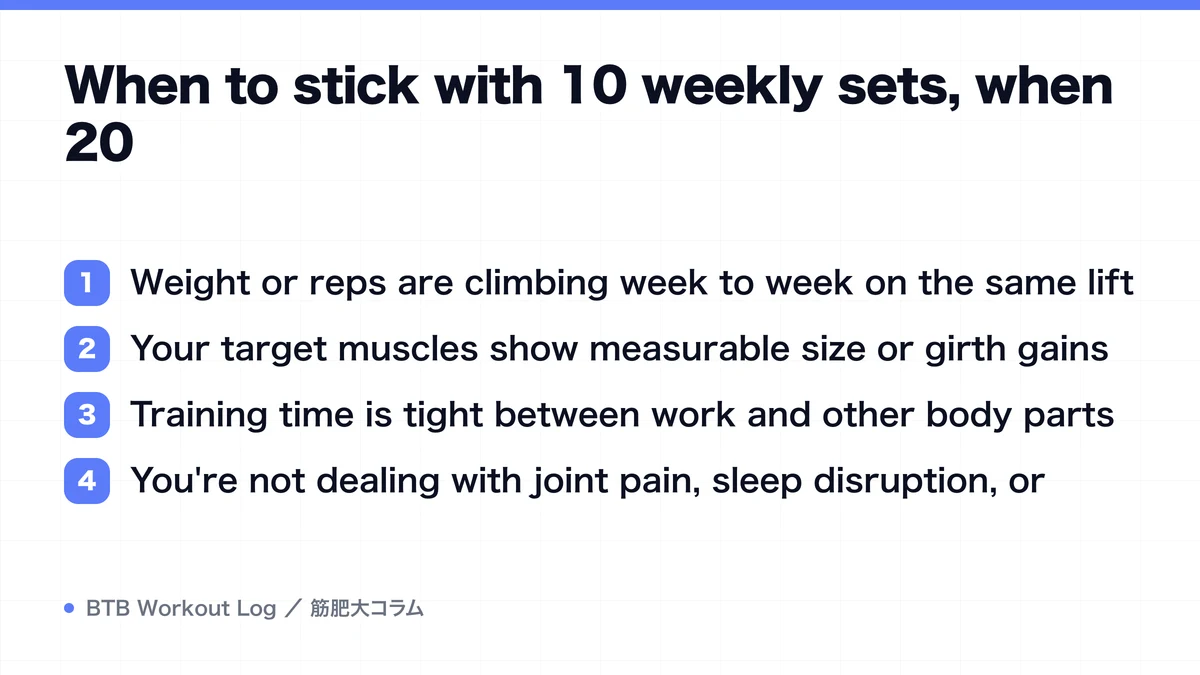
When to stick with 10 weekly sets, when 20 becomes worth testing
Conditions to keep 10 weekly sets
- Weight or reps are climbing week to week on the same lift
- Your target muscles show measurable size or girth gains over weeks
- Training time is tight between work and other body parts
- You're not dealing with joint pain, sleep disruption, or dropping output next session
In this state, staying at 10 isn't conservative—it's smart. If 10 sets move you forward, that volume works for you now. Lock in your RIR, exercise stability, and rest quality first. Squeeze every bit from the work you're already doing before you add more.
Conditions that make 20 worth considering
- You've held ~10 sets steady but weight, reps, or measurements have stopped climbing
- Sleep, calories, and protein are solid, and you're recovering between sessions
- Adding sets across multiple days won't steal priority work from other muscles
- You can keep RIR and form consistent after adding volume and still log it
Even if conditions fit, don't jump straight from 10 to 20. Add 2 sets to one exercise, keep everything else the same for a few weeks, and watch what happens. If progress returns, hold it. If fatigue climbs with no gains, drop back. Twenty isn't a finish line—it's a comparison point you approach if you need it.
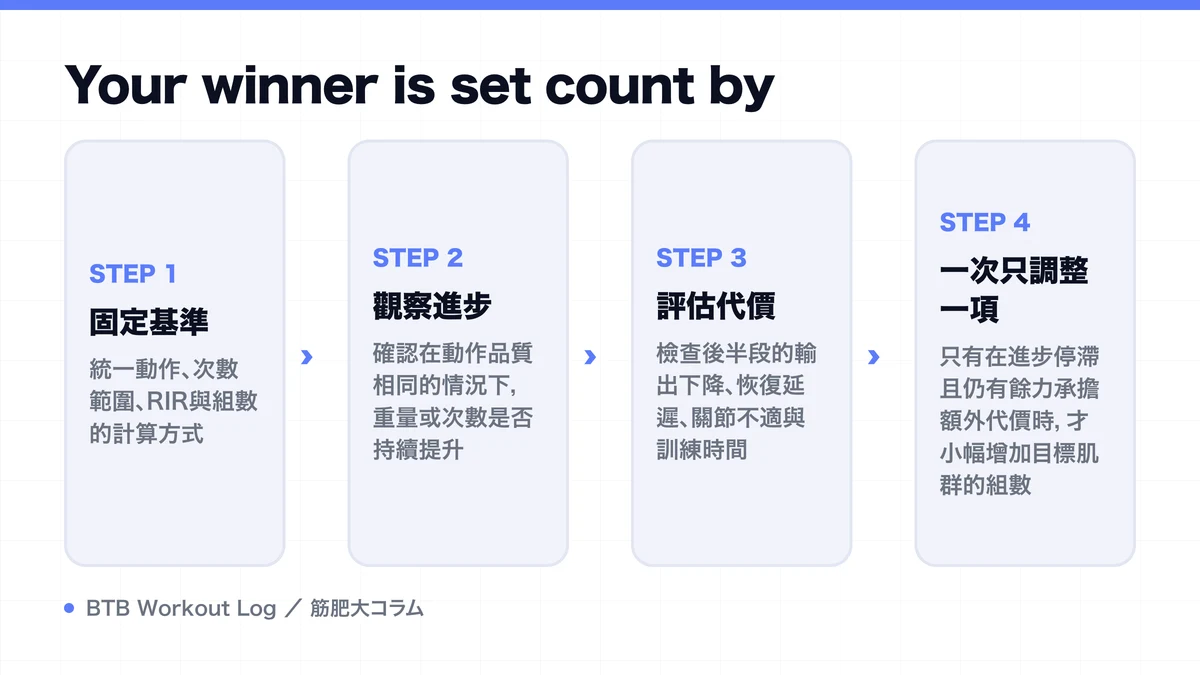
Your winner is set count by progress-per-cost, not volume alone
判斷時,不能只看各部位的組數,還要在同一段期間內追蹤每個動作的重量、次數、RIR、單次訓練中的次數下滑,以及到下次訓練前的恢復狀況。肌肉肥大的變化很難在短期內看出來,所以不要因為一次狀態好壞就更換安排;先把同一套計畫執行數週,再觀察整體趨勢。每日總負荷量與每週組數扮演的角色不同,在訓練量管理中分開思考會更清楚。
- 固定基準:統一動作、次數範圍、RIR與組數的計算方式。
- 觀察進步:確認在動作品質相同的情況下,重量或次數是否持續提升。
- 評估代價:檢查後半段的輸出下降、恢復延遲、關節不適與訓練時間。
- 一次只調整一項:只有在進步停滯且仍有餘力承擔額外代價時,才小幅增加目標肌群的組數。
訓練紀錄不是用來合理化20組,而是幫你判斷該維持10組繼續進步,還是嘗試增加組數。增加後持續觀察數週,才能找出真正適合自己的訓練量。BTB Workout Log 能以肌群為單位,追蹤每週硬組數。
增加訓練量的前提,是不要一次直接翻倍。如果從每週10組直接加到20組,就無法判斷結果的改變究竟來自成效還是疲勞。每2週增加2〜4組;只要重量與次數持續高於上次,就維持目前安排。開始無法超越前次表現之前的訓練量,可視為你現階段的上限。這種判斷方式更容易重現。
常見問題
- Will beginners build muscle faster if they do 20 weekly sets instead?
- Beginners respond to low volume and often haven't nailed technique or 恢復 management yet. Start around 10 weekly sets, confirm weight and rep progress, then add small amounts only if progress stalls and you have spare recovery. That makes extra volume's effect clearer to judge.
- Can you do all 20 weekly sets in one training session?
- It's possible if you hold output and form all the way through, but 20 sets are built to split across multiple days to keep quality high. If reps or RIR crater by the end, spread them across 2–4 sessions.
- How many weeks should I give 10 sets before deciding to add more?
- Don't switch after one weak session. Watch the same lift, same RIR, same counting method for several weeks and spot the trend. Hold it if weight or reps climb and 恢復 is solid. When progress flatlines and sleep, nutrition, and spare time are all good, that's your moment to test an add-on.
重點整理
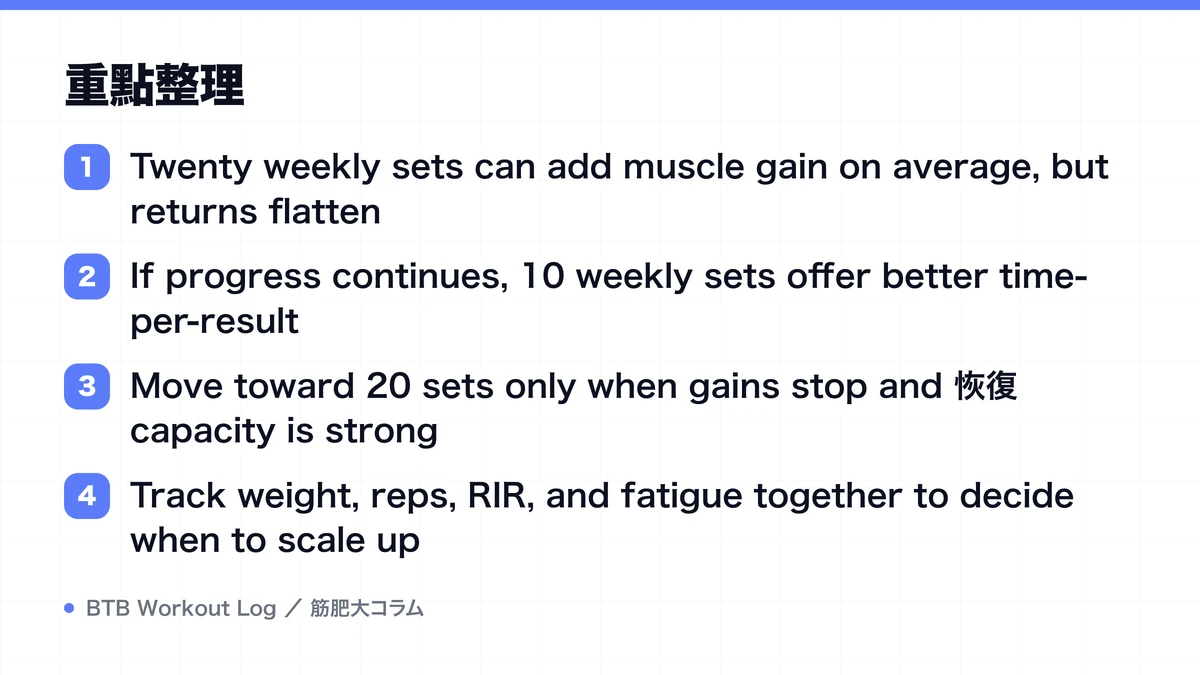
- Twenty weekly sets can add muscle gain on average, but returns flatten
- If progress continues, 10 weekly sets offer better time-per-result
- Move toward 20 sets only when gains stop and 恢復 capacity is strong
- Track weight, reps, RIR, and fatigue together to decide when to scale up
參考文獻
- The Resistance Training Dose Response: Meta-Regressions Exploring the Effects of Weekly Volume and Frequency on Muscle Hypertrophy and Strength Gains
- Dose-response Relationship Between Weekly Resistance Training Volume and Muscle Mass
- Resistance Training Volume Enhances Muscle Hypertrophy in Trained Men