「有泵感就代表在長肌肉」不一定對|不被泵感騙的知識
充血感是血液和水分集中在目標部位的信號,但不能證明肌肉長期增長。
充血感明顯的日子容易產生成就感,但充血感不明顯的日子同樣可能完成有效組數。與其放棄這種感覺,不如限定它的用途。
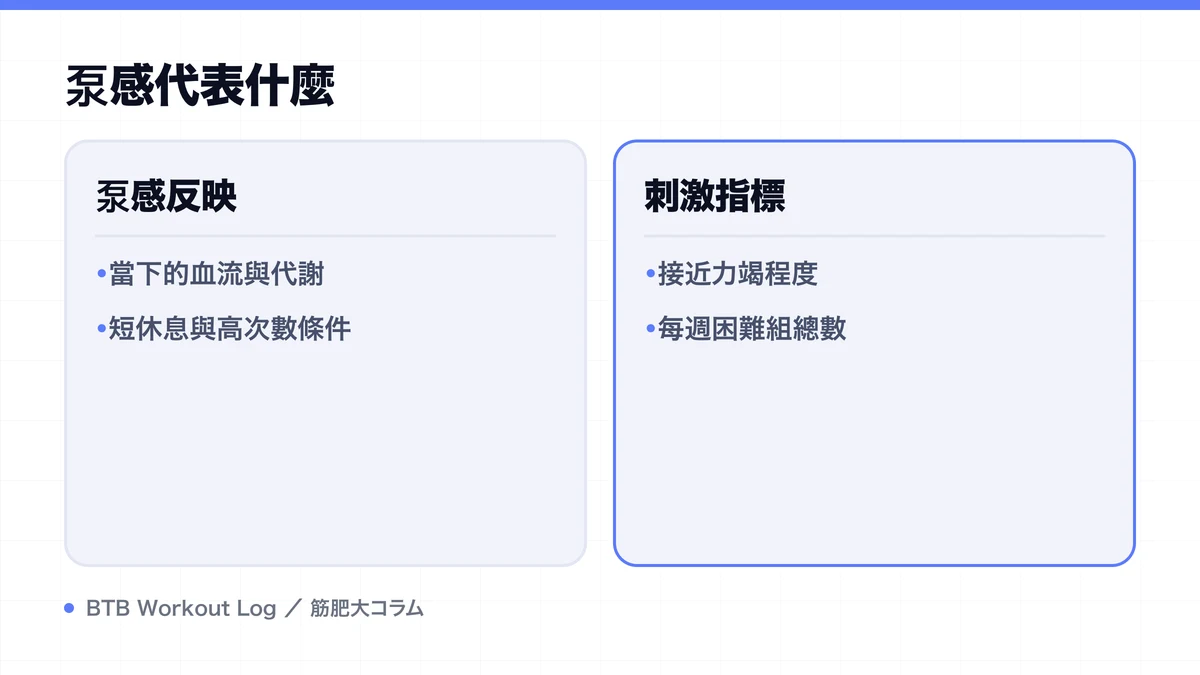
充血感告訴你的是「此刻發生了什麼」
充血感是反覆運動導致活動肌肉血流增加、肌肉內水分移動,臨時產生的張感和膨脹。高反覆次數、短組間休息、維持一定張力的動作會使充血感更明顯,訓練後逐漸消退。
這種感覺確實有用處。例如做側平舉時只有斜方肌疲勞、三角肌完全沒有張感,就是重量、動作軌跡、動作幅度需要調整的信號。左右差異比平時明顯,也值得檢查訓練設置是否偏離。換句話說,充血感是判斷目標部位在此次訓練中是否參與的輔助訊息。
但部位參與和承受足夠肌肉肥大刺激是兩回事。充血感單獨無法判斷肌纖維承受多大的張力、恢復能力如何、數週後肌量是否增長。
暫時膨脹和長期肌肉肥大的時間軸不同
充血感是數分鐘到數小時的急性反應。肌肉肥大是訓練和恢復反覆進行的結果——收縮相關蛋白質等長期蓄積的適應。雖然表面相似,觀察的時間尺度和內在機制卻截然不同。
充血感的大小還受反覆次數、休息時間、運動順序、碳水化合物和水分攝入、室溫等影響。同一個人訓練同一塊肌肉,條件不同充血感就不同,因此不能作為組間的穩定評分標準。短休息下能製造強烈充血感,但下一組次數可能大幅下滑,無法完成必要的硬組,整個程序反而吃虧。
專門探討肌肉肥大機制的研究回顧已不再將代謝應激和細胞膨脹視為獨立的成長開關,而是以機械張力為核心。「膨脹了就成長」是把急性反應和長期適應硬生生連在一起。
輕重量高反覆也能增肌,不代表充血感是原因
強調充血感的觀點看似合理,原因之一是輕重量高反覆組數確實能促進肌肉肥大。實際上,21項研究的統合分析比較低負荷和高負荷,在所有組數都做到暫時性反覆無力的條件下,肌肉肥大變化沒有顯著差異。這裡要區分的是,容易產生充血感的方法有效,和充血感本身引起肌肉肥大。
輕負荷組數中,持續反覆接近極限時,疲勞肌纖維需要更多運動單位參與補償,結果目標肌肉承受張力。具體機制詳見輕重量為何也能增肌,關鍵不在重量或充血感,而在目標肌肉是否承受足夠努力。
實踐中配合RIR更容易理清思路。RIR是「還能做幾次」的估計值。高反覆且充血感明顯但RIR還有很多,說明作為肌肉肥大硬組可能力度不足。反之6~10次反覆、充血感不明顯,但姿態穩定、接近極限,同樣能產生有效刺激。RIR標準和充血感應分開評估。
為什麼充血感容易被誤認為肌肉肥大的證據
The pump is immediate—you see it, feel it, and get instant satisfaction. Muscle growth, by contrast, stays hidden week to week, masked by body weight fluctuations, lighting, posture, and measurement error. It's natural to treat a strong, fast signal as proof of a delayed outcome.
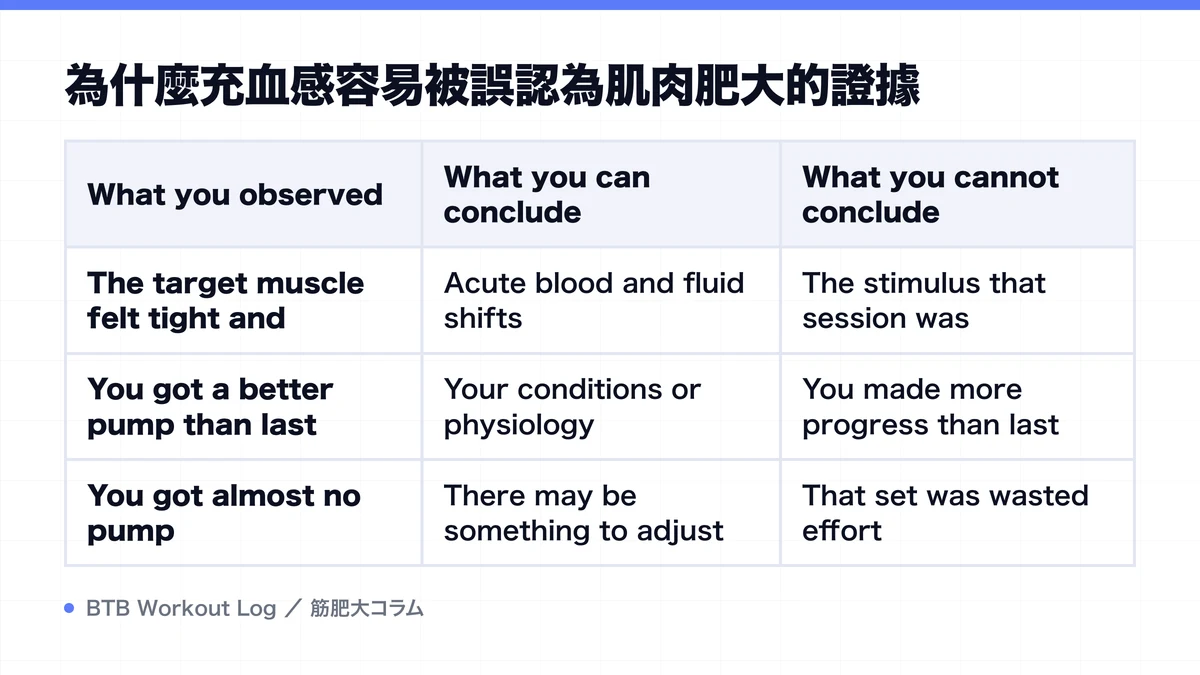
| What you observed | What you can conclude | What you cannot conclude |
|---|---|---|
| The target muscle felt tight and full | Acute blood and fluid shifts occurred in that area | The stimulus that session was sufficient for growth |
| You got a better pump than last time | Your conditions or physiology differed from last session | You made more progress than last time |
| You got almost no pump | There may be something to adjust with the exercise or conditions | That set was wasted effort |
There's also a trap of confusing difficulty with effectiveness. Short rest periods, drop sets, and back-to-back single-joint movements are reliable ways to create a burn and pump locally. But generating acute discomfort is not the same as accumulating long-term growth stimulus at an acceptable fatigue cost. When you chase pump intensity, you often overlook movement stability and your output on the next set. Strong pain and meaningful stimulus are not the same thing.
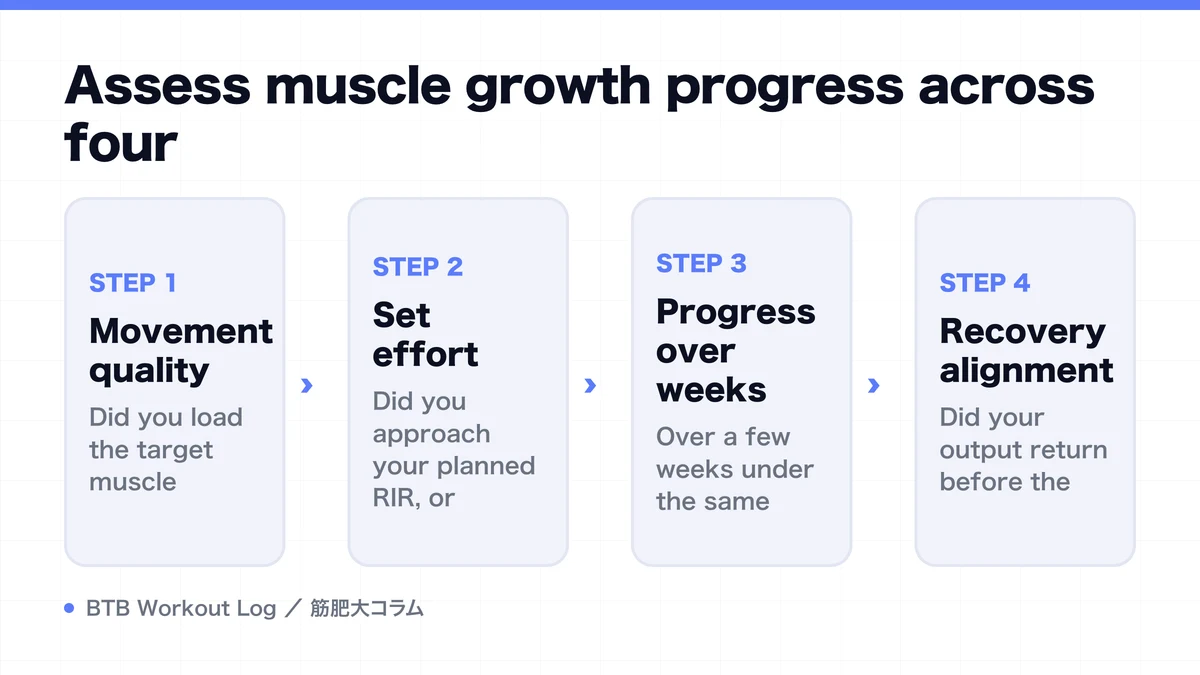
Assess muscle growth progress across four levels
When you review a session, check these in order before you consider the pump.
- Movement quality: Did you load the target muscle properly, and did you maintain consistent form and range of motion across sets?
- Set effort: Did you approach your planned RIR, or did you just go through the reps?
- Progress over weeks: Over a few weeks under the same conditions, did weight, reps, or set quality trend upward?
- Recovery alignment: Did your output return before the next session, and can you sustain the weekly volume you need?
Once all four are solid and you also notice a moderate pump in the target muscle, the pump becomes a supporting signal that your form choice is working. Conversely, if you get a big pump every session but weight and reps haven't budged in weeks, don't chase more pump—audit your load, rest intervals, weekly set volume, and exercise selection instead. This is where distinguishing effort from 漸進超負荷 matters most.
When comparing exercises, don't decide based on one session's pump. Use the same form, range of motion, and RIR over several weeks. Track whether weight or reps climb, and whether joint stress or recovery lag increases. Only then does it become clear whether the exercise deserves a spot in your program.
Think of the pump as a diagnostic starter, not an outcome
If the pump felt weak, don't immediately add another set. First, check whether your warm-up, movement, rest, and overall condition were normal. If weight, reps, and RIR all matched plan, don't call the session failed. Piling on drop sets just to resurrect the pump often costs more in recovery than it gains.
The opposite can matter too: if the pump is strong but your main lifts stall and later sets drop hard in reps, rest may be too short, or you may be wearing out on earlier exercises. The pump is not the answer; it's a cue to look at something else.
Good judgment lives in your log, not in single sessions. Training drives growth; the log's job is not to deny what you feel, but to put that feeling in its true place within the long view.
訓練沒有充血感,肌肉還會肥大嗎?
在高重量、低次數的訓練日,或組間休息較充分時,肌肉可能不會出現明顯的充血感,但肌肉肥大仍可能持續發生。充血感只是血流量與水分的暫時變化,因為它或許能反映部分生長刺激,卻不等於刺激本身。
沒有充血感時,該確認的不是主觀感受,而是以下幾點。第一,能否用目標肌群控制動作。第二,每組是否做到接近力竭。第三,當週的每週組數是否如預期累積。第四,重量或次數是否在幾週內有所提升。只要這4點都做到,有沒有充血感就不具判斷價值。
反過來的情況才需要留意。如果原本會有充血感的動作突然不再出現充血感,同時重量和次數也下降,可能代表恢復不足,或動作品質變差。充血感不是結論,更實際的做法是把它當成重新檢視訓練紀錄的起點。
常見問題
- Should I add a set if I don't get a good pump?
- Not on pump alone. If form, range of motion, weight, reps, and RIR all matched the plan, finish as designed. Add volume only after you've tracked progress over weeks and confirmed your weekly set count is actually too low.
- Should I keep exercises that pump up easily?
- Keep them if you can target the muscle cleanly, move without joint stress, and add weight or reps over time. But if the muscle stays full while progress stalls and later sets suffer, reconsider the order, rest timing, or the exercise itself.
- Are high-rep sets chased for the pump pointless?
- No. Light weight taken near failure does trigger growth, and single-joint moves let you spare your joints. What matters is not the pump volume, but whether the target muscle worked hard and whether progress shows up over time.
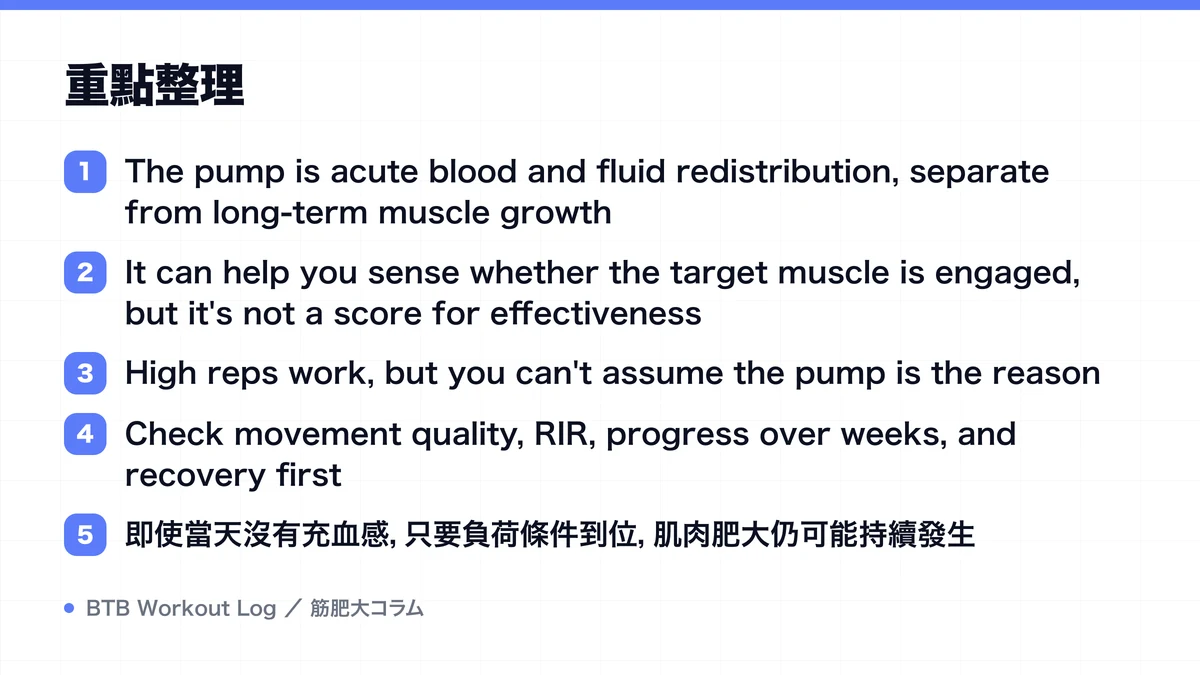
重點整理
- The pump is acute blood and fluid redistribution, separate from long-term muscle growth
- It can help you sense whether the target muscle is engaged, but it's not a score for effectiveness
- High reps work, but you can't assume the pump is the reason
- Check movement quality, RIR, progress over weeks, and recovery first
- 即使當天沒有充血感,只要負荷條件到位,肌肉肥大仍可能持續發生