肌肉肥大的選擇困難症怎麼破|頻率、動作、次數,透過對比看清各自的使用場景
「A和B哪個對肌肉肥大更有利」往往無法直接回答。研究顯示平均差異很小,實際答案取決於你優先考慮目標、恢復能力還是可用時間。
本文整理肌肉肥大容易困惑的選擇,按判斷基準分類。個別比較各有專文討論,本頁聚焦「用什麼基準決定」。
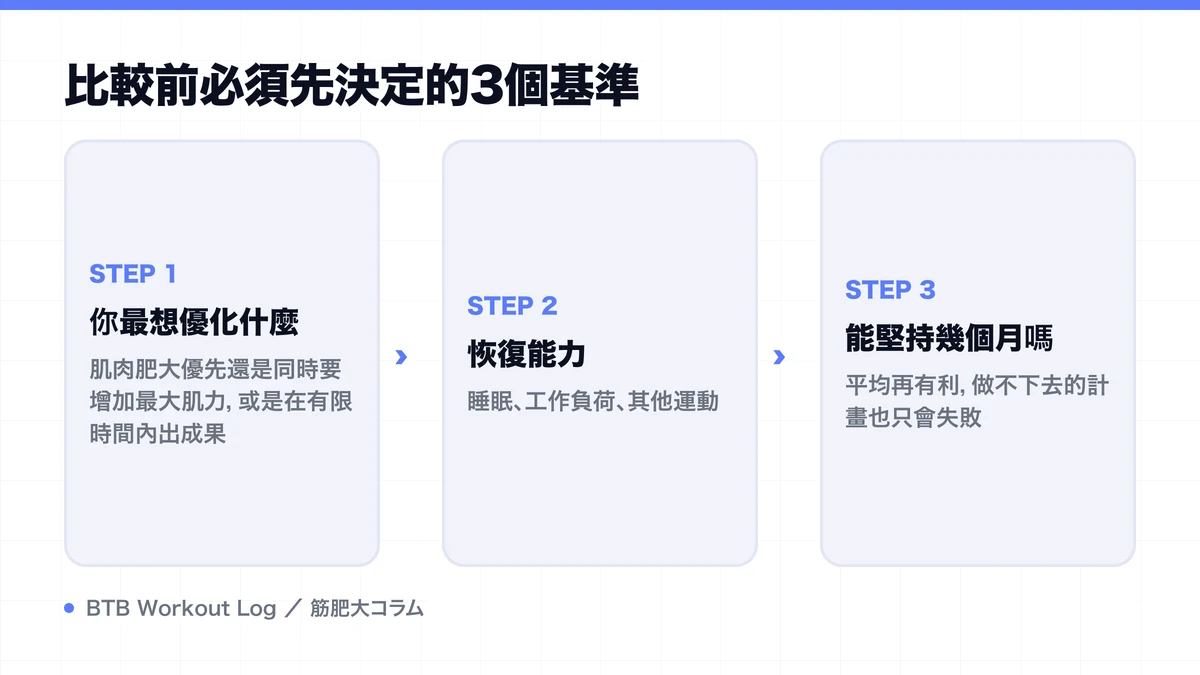
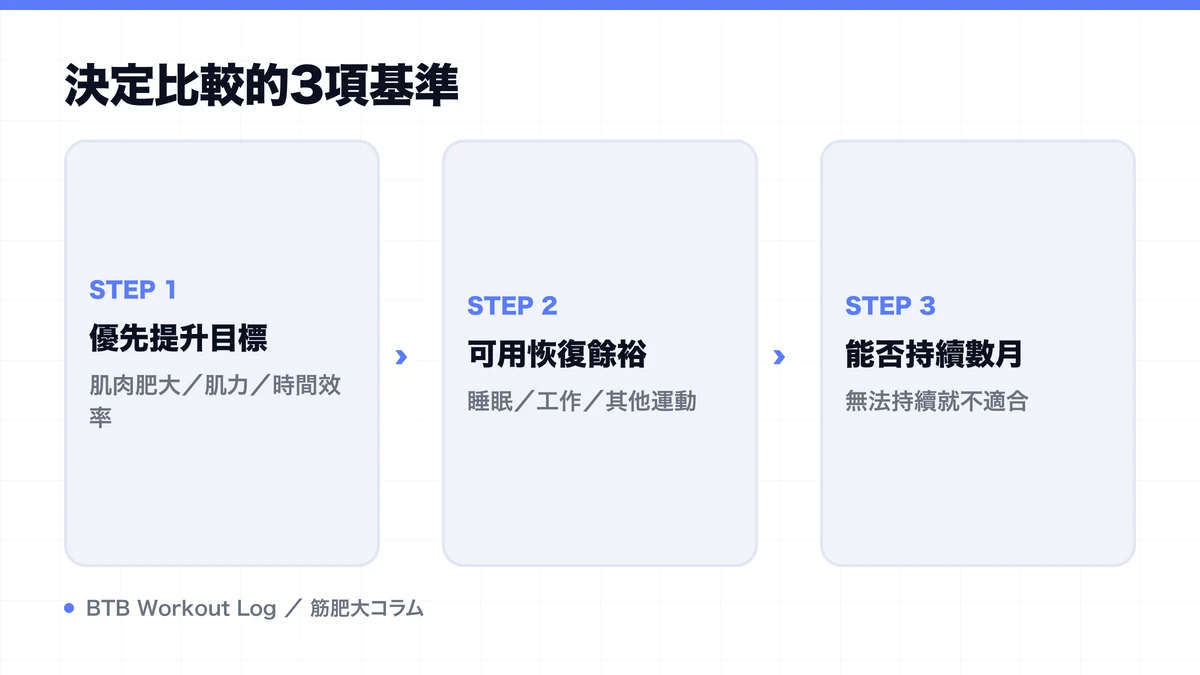
比較前必須先決定的3個基準
列出選項前,先確定自己優先什麼,否則再多比較文章也決定不了。實務上3點足夠:
- 你最想優化什麼:肌肉肥大優先還是同時要增加最大肌力,或是在有限時間內出成果。
- 恢復能力:睡眠、工作負荷、其他運動。這點越緊張,疲勞成本高的選項就越吃虧。
- 能堅持幾個月嗎:平均再有利,做不下去的計畫也只會失敗。
這3點確定後,大部分比較自動迎刃而解。比方說時間是最大制約,是先增加重量還是先增加次數這類問題,用記錄的便利性決定就行。
如何選擇負荷、次數和力竭方式
在努力程度一致的比較中,研究顯示,即使負荷區間不同,肌肉肥大的差異也很小。換句話說,這裡的重點不是「哪一種比較好」,而是「哪一種更適合自己的動作與關節狀況」。
| 常見抉擇 | 判斷依據 |
|---|---|
| 低次數 vs 高次數 | 動作的安全性,以及組內哪個因素會先達到極限 |
| 高重量 vs 低重量 | 是否也想提升最大肌力 |
| 做到力竭 vs 保留 RIR | 能接受多少疲勞延續到隔天之後的訓練 |
| 休息2分鐘 vs 休息5分鐘 | 如何取捨單次訓練的總時間,以及下一組的次數表現 |
無論選哪一種,前提都是「接近極限的程度」必須一致。如果這一點不同,只比較負荷或次數並沒有意義。做8次後還有3次餘力的一組,和做15次後餘力為0次的一組,在次數差異之外,刺激強度本來就不同。
實際安排時,關節有疑慮或使用高重量風險較高的動作,可以偏向較高次數;動作穩定、需要持續追蹤進步的主要訓練,則可以偏向較高重量。這樣的分配通常更容易執行,沒必要讓所有動作都採用相同的次數範圍。
用恢復能力反推量、頻度和分割
把每週總容量調齊時,研究指出頻度本身的獨立效果很小。所以頻度和分割不是「增強效果的手段」,而是無壓力消化所需容量的配置方式。
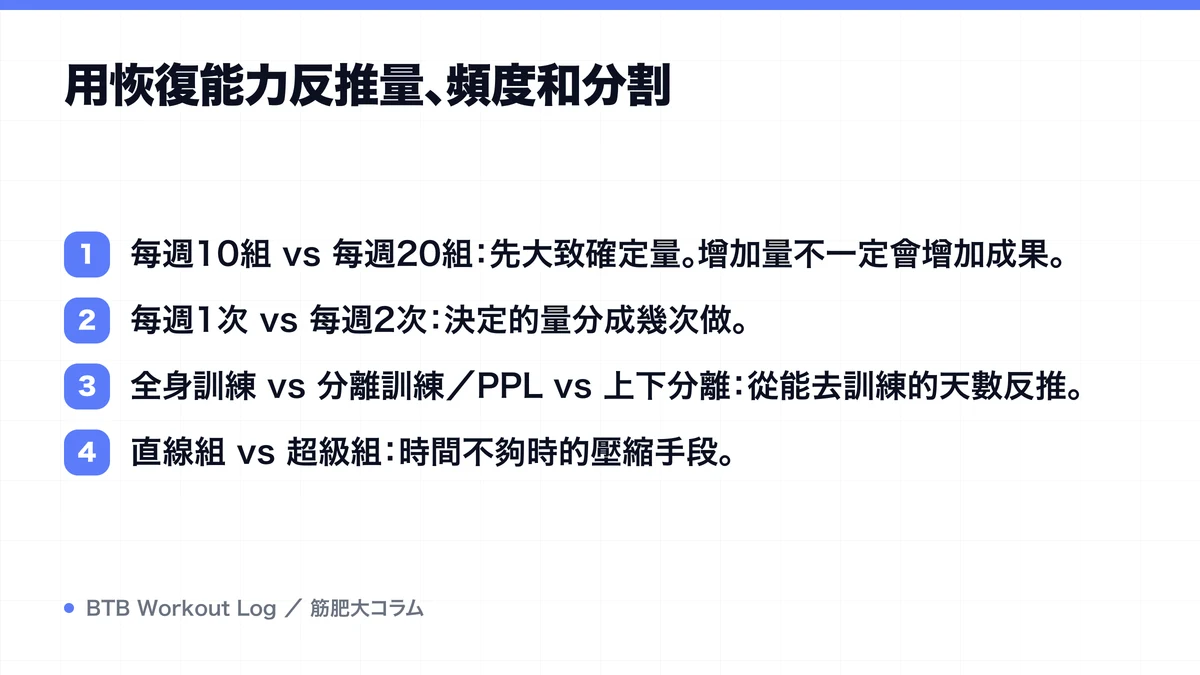
- 每週10組 vs 每週20組:先大致確定量。增加量不一定會增加成果。
- 每週1次 vs 每週2次:決定的量分成幾次做。
- 全身訓練 vs 分離訓練/PPL vs 上下分離:從能去訓練的天數反推。
- 直線組 vs 超級組:時間不夠時的壓縮手段。
順序是「量 → 分配 → 動作」。反著決定會導致動作堆積後,量破表。先列出想做的動作再編表單,會發現各部位的每週組數分配失衡。
另外,確定量時即使直接照用通用數字,也不保證適合你。有效組數會因訓練經歷、強度、動作、恢復能力而變化,所以從建議值開始,用幾週的進度調整才是現實做法。
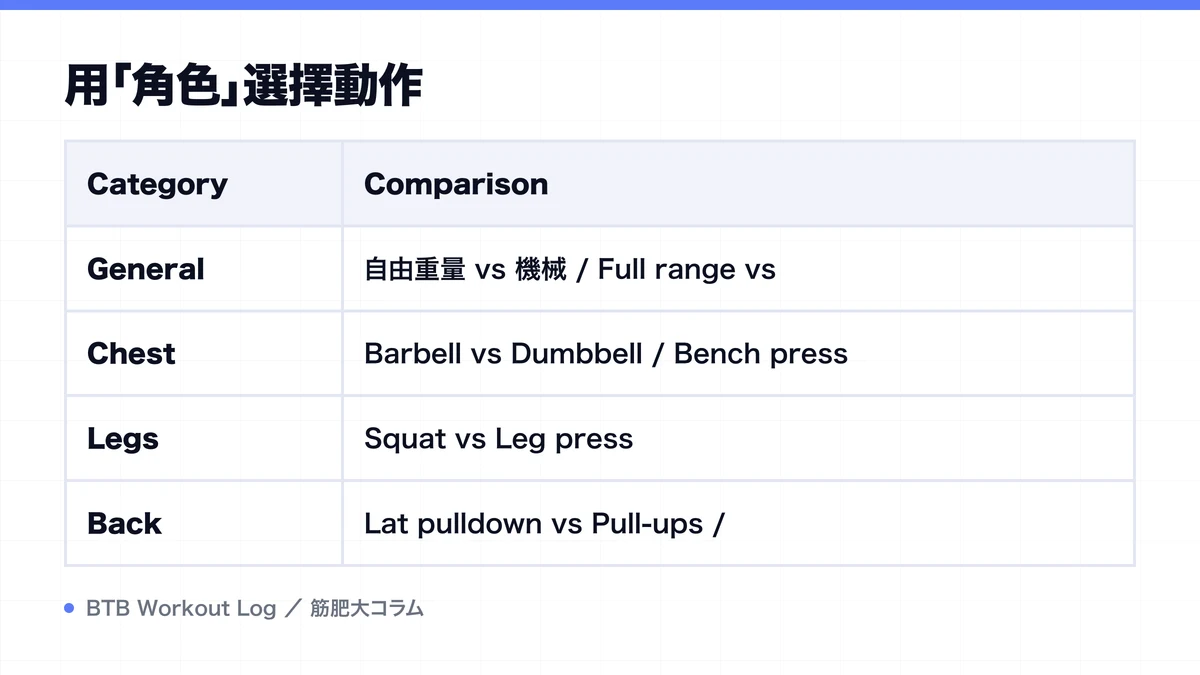
用「角色」選擇動作
Exercise comparisons often tempt you to pick a winner, but in reality each movement fills a different role in your program. You arrange them by function: a lift for heavy loading and tracking progress, a lift that stretches the target muscle, a lift that accumulates volume with less fatigue. That's the framework.
| Category | Comparison |
|---|---|
| General | 自由重量 vs 機械 / Full range vs Partials |
| Chest | Barbell vs Dumbbell / Bench press vs Chest press |
| Legs | Squat vs Leg press |
| Back | Lat pulldown vs Pull-ups / Barbell row vs Seated row |
| Arms · Shoulders | Dumbbell vs Preacher / Lateral raise loading |
When you think in terms of roles, you clarify why you'd use two similar movements for the same muscle group. Example: barbell and dumbbell for chest—one as your progress indicator, the other for stretch-focused stimulus. If two exercises serve the same role, you're just adding sets, not exercises.
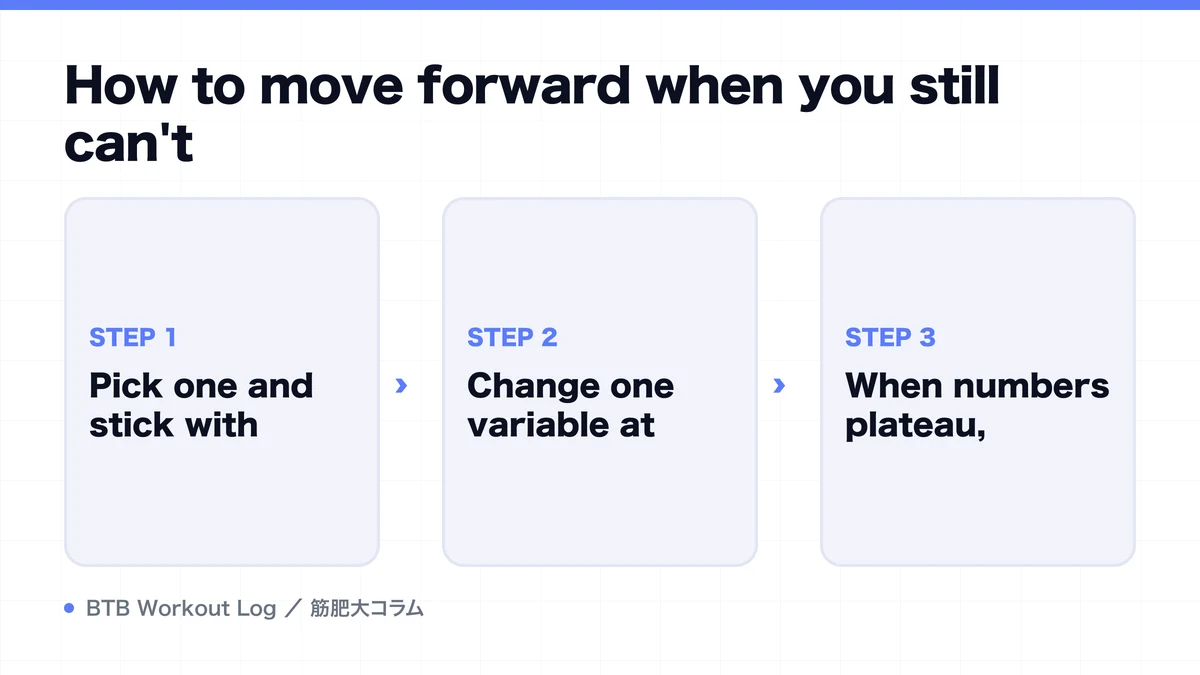
How to move forward when you still can't decide
If comparison articles don't settle it, the answer usually is: "the difference is small, so either works." Here's how to handle it:
- Pick one and stick with it for months, keeping records. Whether fixed routines or rotation suits you better can't be judged without data.
- Change one variable at a time. Swap multiple things at once and you won't know what moved the needle.
- When numbers plateau, try the next option. If they're climbing, there's no reason to change.
The real answer lives in your own records. Keep weekly set counts and track weight/rep progression per exercise, and you can verify which choice worked for you later (see logging apps).
常見問題
- Will I grow faster if I pick the option that's advantageous in comparison articles?
- Research shows average differences across groups, and most comparisons have small gaps. Even if an option is statistically better, poor adherence or 恢復 issues will undercut results. Hit your volume and proximity to failure first, then optimize the choice.
- Is more exercises better?
- Two to four exercises per muscle group with different roles usually suffice. Add more and each exercise's frequency drops, progress becomes hard to track, and you lose sight of what's working.
- How do you know when to swap an exercise?
- Three or more weeks with zero progress in weight or reps is your signal. One or two weeks of stalling is normal variation—switch too early and you'll never know if it worked.
重點整理
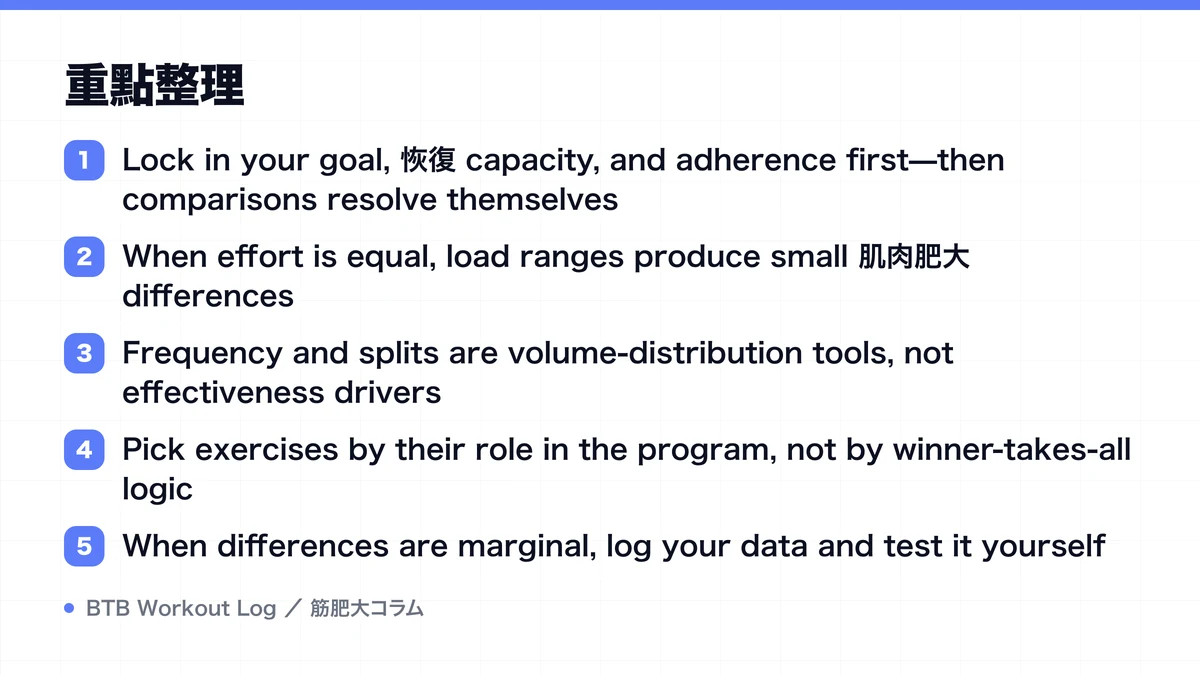
- Lock in your goal, 恢復 capacity, and adherence first—then comparisons resolve themselves
- When effort is equal, load ranges produce small 肌肉肥大 differences
- Frequency and splits are volume-distribution tools, not effectiveness drivers
- Pick exercises by their role in the program, not by winner-takes-all logic
- When differences are marginal, log your data and test it yourself