槓鈴臥推 vs 啞鈴臥推,想練大胸肌選哪個?
單純為了練大胸肌,槓鈴和啞鈴沒有絕對的高低之分。如果優先考慮輸出功率和負荷遞增性,槓鈴更容易選;如果能發揮獨立臂軌跡和更大動作幅度的優勢,啞鈴反而更適合。
應該比較的不是器械名氣或舉起的重量,而是大胸肌能否達到充分的努力程度、在同樣條件下能否持續進步,以及這種刺激週內能否恢復。
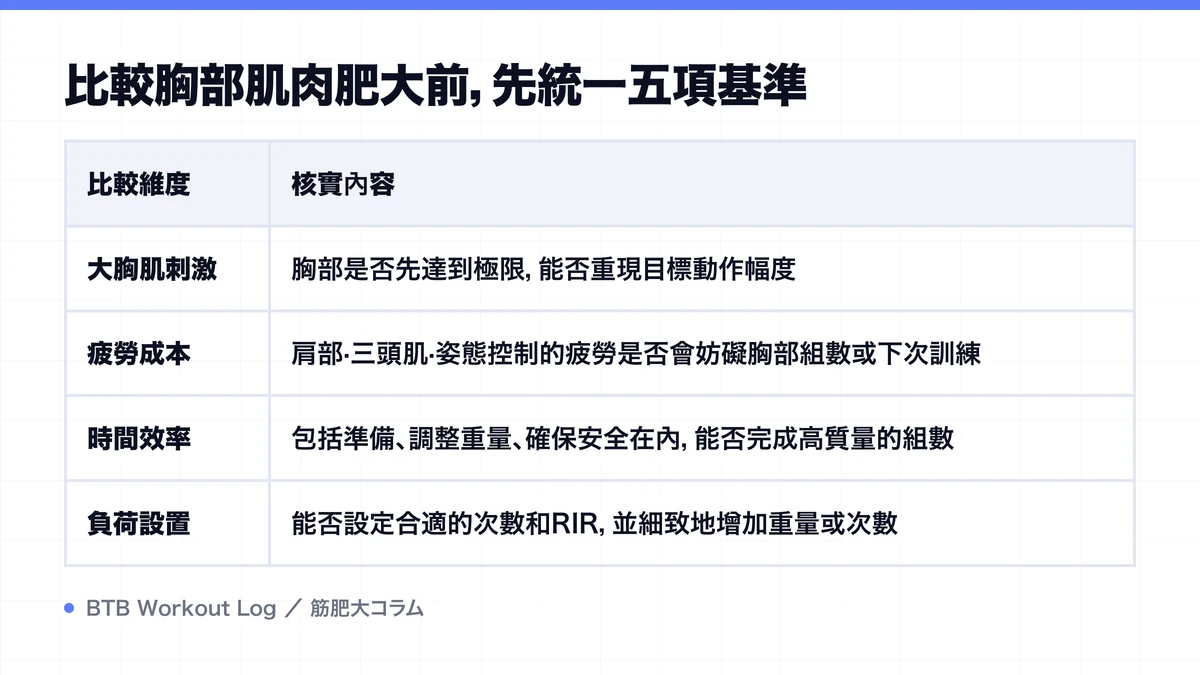
比較胸部肌肉肥大前,先統一五項基準
槓鈴舉100kg、啞鈴單手36kg,也無法從數字大小推斷肌肉肥大效果。兩隻手握著一根橫杆的動作,與左右獨立控制的動作,重量的含義和對穩定性的要求完全不同。肌肉肥大目標的比較應該看這五點。
| 比較維度 | 核實內容 |
|---|---|
| 大胸肌刺激 | 胸部是否先達到極限,能否重現目標動作幅度 |
| 疲勞成本 | 肩部·三頭肌·姿態控制的疲勞是否會妨礙胸部組數或下次訓練 |
| 時間效率 | 包括準備、調整重量、確保安全在內,能否完成高質量的組數 |
| 負荷設置 | 能否設定合適的次數和RIR,並細致地增加重量或次數 |
| 個人差異與目標 | 肩部活動度、左右差異、設備、臥推力量目標是否相符 |
RIR是對組結束時還能做的次數的估計,餘力值。同樣的次數,RIR為5的組和RIR為1的組努力程度不同。不只改變器械就決出勝負,而要在動作幅度、RIR、週間組數接近的基礎上,比較自己用哪一種能積累更多高質量的反覆動作。
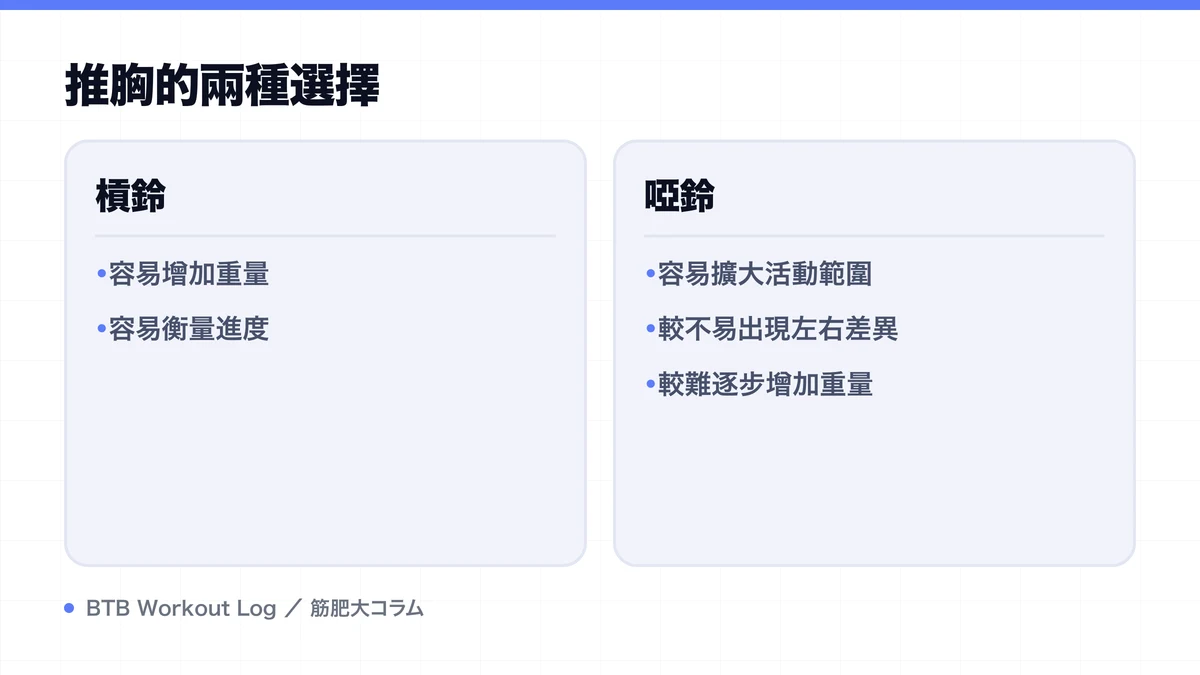
肌肉肥大效果可能打成平手,但刺激方式不盡相同
兩者都是肩關節水平內收和肘伸展的推舉動作,大胸肌之外還動員肩前部和上臂三頭肌。只要保證充分的努力程度和週間訓練量,並在同一動作內推進負荷,用槓鈴還是啞鈴都能練出胸肌。由於證據庫中沒有直接比較兩者長期大胸肌肥大的研究,我們無法給出「平均優越多少百分比」這樣的結論。
槓鈴的優勢在於兩隻手握著一根橫杆,即使負荷很大也容易保持軌跡穩定。槓鈴觸及胸部的位置就是最低點,肘部不如啞鈴那樣能下沉到軀幹深處,但這不代表刺激不足。只要胸部保持張力,每次都能下沉到接近的位置,就能形成一個高度可重複的動作幅度。
啞鈴因為沒有槓杆阻擋,在肩部允許的範圍內更容易下沉更深,而且左右臂能走不同的軌跡。手的方向也更靈活,有些人適應更接近中立的握法。但是,幅度越大越好這種想法並不對。如果肩部前滑、胸部張力消失、在最低點依靠反彈力切換,那麼增加的幅度並未提升質量。胸部動作構成也是一樣,動作幅度應該在大胸肌仍能承受負荷的範圍內確定。
一項針對12名競技臥推運動員的研究改變了槓鈴握距和臥推角度,結果發現某些肌群的肌肉激活和6RM重量存在差異。但這個結果並不能證明槓鈴對啞鈴在長期肌肉肥大中的優劣。如果三頭肌先疲勞而不是胸肌,在更換器械之前,也應該先排查三頭肌先疲勞的原因。
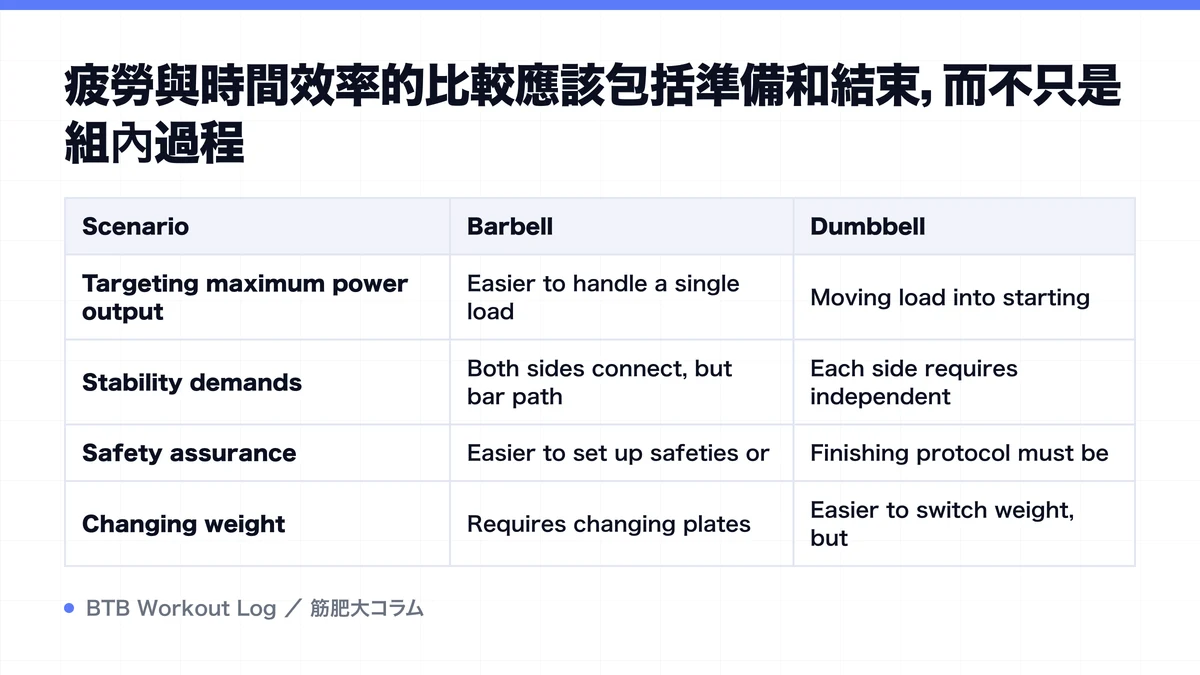
疲勞與時間效率的比較應該包括準備和結束,而不只是組內過程
With a barbell, you unrack a single load and press it with both arms. Small plates make progressive loading straightforward, and you can structure heavy sets for maximum power output. However, lifting heavy solo requires checking safety bar height and rack position beforehand. The rule is simple: never chase limit reps without a spotter or proper safety pins—manage your RIR.
Dumbbells demand independent stability in each arm. Many lifters find their forearms and shoulders fatigue before their chest does, especially at heavy weights. Getting heavy dumbbells into position and safely securing them afterward adds overhead you can't ignore. But in gyms without rack constraints or where weights are easily accessible, dumbbells let you flow through sets without waiting.
| Scenario | Barbell | Dumbbell |
|---|---|---|
| Targeting maximum power output | Easier to handle a single load with two hands | Moving load into starting position becomes the limiting factor |
| Stability demands | Both sides connect, but bar path control is necessary | Each side requires independent control |
| Safety assurance | Easier to set up safeties or arrange a spotter | Finishing protocol must be planned in advance for heavy loads |
| Changing weight | Requires changing plates | Easier to switch weight, but depends on available increments |
Fatigue isn't just "how hard it felt." Judge it by how many reps you get in follow-up chest work and how well you recover afterward. If you can load heavy on the bar but subsequent sets drop sharply, that high load may cost too much relative to your weekly volume. If dumbbells give you strong stretch sensation but stabilizing fatigue prevents your chest from reaching its limit, you're missing the target.
Barbell wins on load progression ease, but dumbbells deliver gains too
For finer progression steps, the barbell usually has the edge in most gyms. Small plates let you increase total load incrementally, and grip width plus chest contact point stay consistent and trackable. If barbell pressing strength itself is a goal, there's also the sport-specific carryover of practicing the actual movement. That's why lifters targeting both hypertrophy and pressing strength put the barbell first.
Dumbbells often jump 2kg per hand, meaning a 4kg total increase. Depending on current weight, that gap can feel huge—you hit the new weight and suddenly can't reach your target reps. A cleaner approach here is double progression: extend reps within your range (say, 8–12) across all sets, then bump to the next weight once you hit the ceiling. Dropping back to lower reps when you jump weight isn't a plateau; it's the plan.
Meta-analyses comparing high and low loads—when all sets go to temporary failure—show hypertrophy about equal at ≤60% 1RM versus >60% 1RM, while strength gains skewed heavy. This isn't a direct barbell-versus-dumbbell comparison, but it does refute "heavy barbell = guaranteed chest growth" or "light dumbbells = inferior." Either way, match your RIR, apply 漸進超負荷 within the same tool, and watch progress accumulate.
Don't waste energy converting weights across tools. It's not about barbell 80kg versus dumbbell 30kg per hand. Instead, look at the same 動作幅度 and similar RIR: did you add one rep from last time or move to the next weight? If you changed grip, bench angle, or 動作幅度, don't count just the kilogram shift as progress.
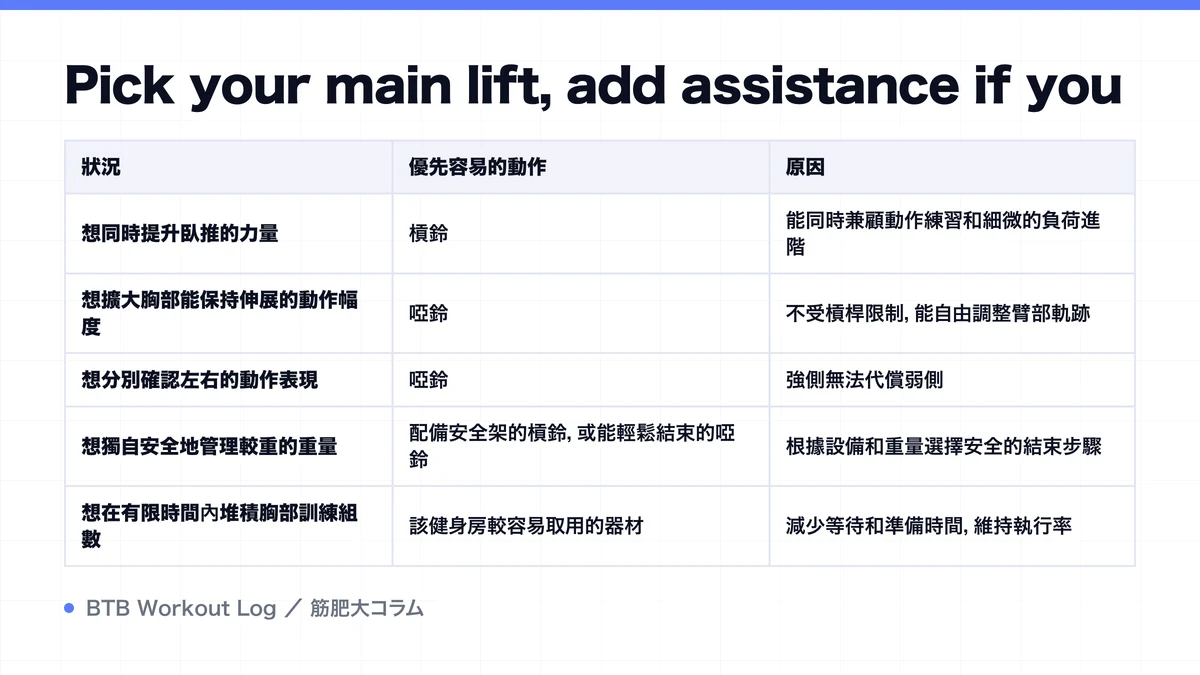
Pick your main lift, add assistance if you need it — programming by situation
| 狀況 | 優先容易的動作 | 原因 |
|---|---|---|
| 想同時提升臥推的力量 | 槓鈴 | 能同時兼顧動作練習和細微的負荷進階 |
| 想擴大胸部能保持伸展的動作幅度 | 啞鈴 | 不受槓桿限制,能自由調整臂部軌跡 |
| 想分別確認左右的動作表現 | 啞鈴 | 強側無法代償弱側 |
| 想獨自安全地管理較重的重量 | 配備安全架的槓鈴,或能輕鬆結束的啞鈴 | 根據設備和重量選擇安全的結束步驟 |
| 想在有限時間內堆積胸部訓練組數 | 該健身房較容易取用的器材 | 減少等待和準備時間,維持執行率 |
若同一天使用兩種器材,應區分角色。以槓鈴作為低~中次數的主力來追求高輸出,再用啞鈴做中次數的輔助以調整臂部軌跡和動作幅度,這種配置較容易執行。相反地,如果啞鈴對胸部的刺激更穩定,也可以先做啞鈴。若兩種都做純粹為了「都練一遍」,而實際上刺激相似、只是週間訓練組數增加,那一種器材就夠了。
判斷適合自己的主力動作需要固定四~八週的條件。記錄重量、次數、RIR、先停止的部位、肩膀的反應、下一次的輸出儲備,觀察胸部訓練組數是否進展。當進展停滯時,在比較器材優劣前,應先檢查臥推停滯期的原因。
若優先高輸出和細微進階,選槓鈴;若要發揮獨立軌跡和適合自己的活動範圍,選啞鈴。只要兩種都能給胸部充足的刺激,就根據目標、設備、肩膀相容性和進度續航力決定主力,另一種只在需要補足缺失功能時再加入。
常見問題
- 初學者應該從槓鈴還是啞鈴開始?
- 選擇能用輕重量安全練習起始位置和結束步驟的器材。如果能正確設定安全架,槓鈴較容易學軌跡;如果能穩定控制輕啞鈴,也能確認左右動作。初期無需競爭重量。
- 同一個胸部訓練日能同時做槓鈴和啞鈴嗎?
- 可以,但前提是不要讓角色重疊。主力追求輸出和進展,輔助改變動作幅度和臂部軌跡。若後半次數大幅下降或恢復到下一次訓練時不完全,應在不增加總組數的前提下調整。
- 肩膀不適時,啞鈴是否更安全?
- 手掌方向和軌跡可調整會讓某些人感到舒適,但啞鈴並不必然安全。應檢視重量、下降深度和肘部位置,限制在無痛範圍內。若出現尖銳疼痛或持續不適,應停止訓練並諮詢專家。
重點整理
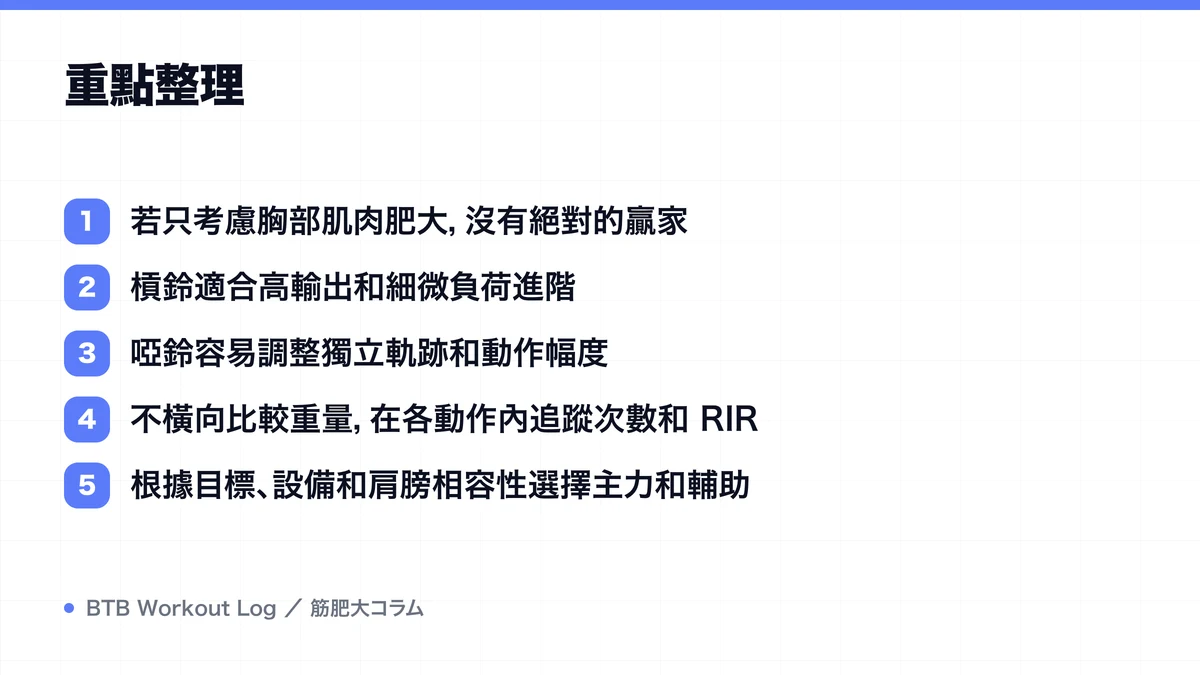
- 若只考慮胸部肌肉肥大,沒有絕對的贏家
- 槓鈴適合高輸出和細微負荷進階
- 啞鈴容易調整獨立軌跡和動作幅度
- 不橫向比較重量,在各動作內追蹤次數和 RIR
- 根據目標、設備和肩膀相容性選擇主力和輔助