
熱量不足時為什麼肌肉肥大更難?減脂期訓練卻沒有回報的原因
熱量不足導致肌肉肥大困難,不是因為製造肌肉的原料突然消失。而是身體陷入補足能量缺口的狀態,使得淨增肌肉量和持續執行高品質訓練都變得困難。
熱量收支不是肌肉肥大的開關,而是促進或阻礙成長的條件。我們從肌肉內部的收支開始,一路追蹤到每週的表現水準。
肌肉肥大是合成大於分解的結果
肌肉蛋白質不是固定的組織,而是不斷進行合成與分解的迴圈。長期來看,當肌肉蛋白質合成超過分解,累積的差值會使肌纖維變粗。抵抗訓練會提高合成,食物蛋白質則提供新組織的原料。細節上的合成反應可以參考蛋白質攝入後肌肉內部的變化,會更容易理清思路。
不過,光有充足蛋白質也不能忽視熱量收支。蛋白質合成、受損組織修復、肝糖恢復、為下一次訓練做全身恢復,這些都涉及能量。熱量不足是指一段時間的攝入能量低於消耗能量的狀態。缺口主要從體脂肪等儲備能量補充,所以只缺一天不會讓肌肉合成停止。
關鍵是訓練刺激→肌蛋白質重建→恢復後再度施加充足刺激這個循環能持續多少週。赤字越大或越持久,身體越傾向把資源分配到填補缺口,而非增加體重。因此淨增肌肉的空間就變小了。
處於填補缺口的狀態時,肌蛋白質難以積累
抵抗運動後,肌蛋白質合成會高於靜止狀態,這種反應可能持續超過24小時。但急性合成反應發生,和數週後肌肉增長,是兩回事。長期來看,每次的合成減去分解必須保持正數。
處於熱量赤字時,身體要同時維持基礎代謝、體溫、日常活動、訓練和恢復,從儲備組織動員不足的能量。即使在這種狀態下訓練後也能產生合成反應,但環境會比能量充足時更不利於持續新增組織。赤字越深,保留現有肌肉比增加肌肉更現實。
「熱量成為肌肉原料」的說法不準確。原料的中心是胺基酸,熱量提供了用這些原料進行重建的環境。所以充足蛋白質必要,但單靠它無法完全抵銷重度能量不足的影響。評估營養時,總熱量和蛋白質應結合評估,而非分開看。

熱量不足從訓練的入口就開始限制成長
肌肉肥大的影響不只停在肌肉內部的合成。長期攝入不足,根據飲食組成和訓練量,可能難以充分恢復肌肉肝糖,導致動作中的輸出和組間恢復下降。熱量不足和低碳水不是同義,但總量受限時,分配給訓練前後的碳水空間就變小。
因果鏈是能量攝入不足→可恢復的工作量下降→同重量能做的次數或高品質組數減少→全週獲得的刺激下降。比如即使同樣RIR2(距離極限還有2次的餘力),減脂前100kg能做8次的動作,現在只能6次,持續多週的話,給肌肉的刺激就減少了。
一次表現不佳不能判定為熱量不足。睡眠、壓力、動作順序、休息時間都會影響次數。體重降低時,徒手動作的次數可能增加。用來判斷的是同一動作、動作幅度、休息、RIR條件下,重量和次數在數週內的趨勢。這套對比的思路也適用於漸進超負荷的管理。
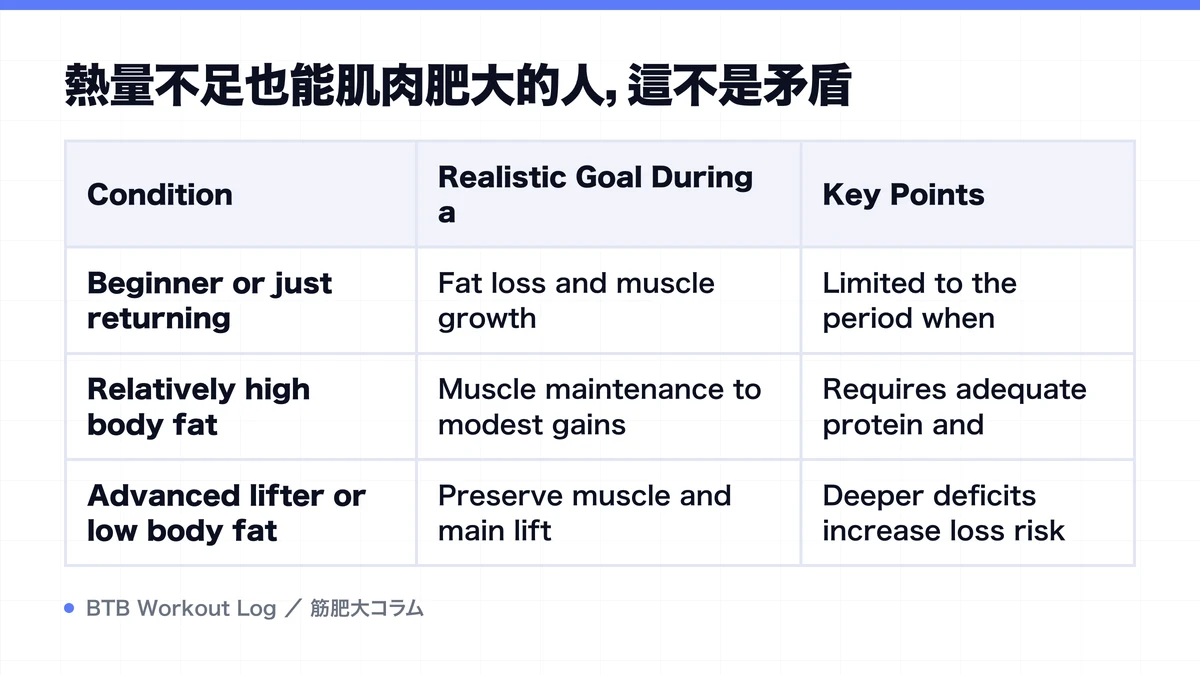
熱量不足也能肌肉肥大的人,這不是矛盾
A calorie deficit does not make muscle growth impossible. For training beginners, those returning from extended breaks, lifters who previously lacked adequate stimulus, and those with substantial body fat reserves, the new stimulus from resistance training can be significant enough to build muscle while drawing down stored energy—a process called body recomposition, where you reduce fat while increasing lean mass simultaneously.
Conversely, experienced lifters with already-low body fat who maintain stimulus similar to their current muscle mass have less room for new growth. This is why the same deficit produces different outcomes for beginners versus advanced lifters, and for those with high versus low body fat. You cannot treat a case where an experienced lifter merely preserved muscle during a cut the same way as a beginner who added muscle during one.
| Condition | Realistic Goal During a Cut | Key Points |
|---|---|---|
| Beginner or just returning | Fat loss and muscle growth together | Limited to the period when stimulus is new |
| Relatively high body fat | Muscle maintenance to modest gains | Requires adequate protein and resistance work |
| Advanced lifter or low body fat | Preserve muscle and main lift output | Deeper deficits increase loss risk |
Note that early-cut drops in lean mass partly reflect muscle glycogen and accompanying water loss, not pure muscle tissue loss. Do not rely on body composition scale readings alone; track weekly weight averages, limb circumference, photos, and training performance over several weeks.
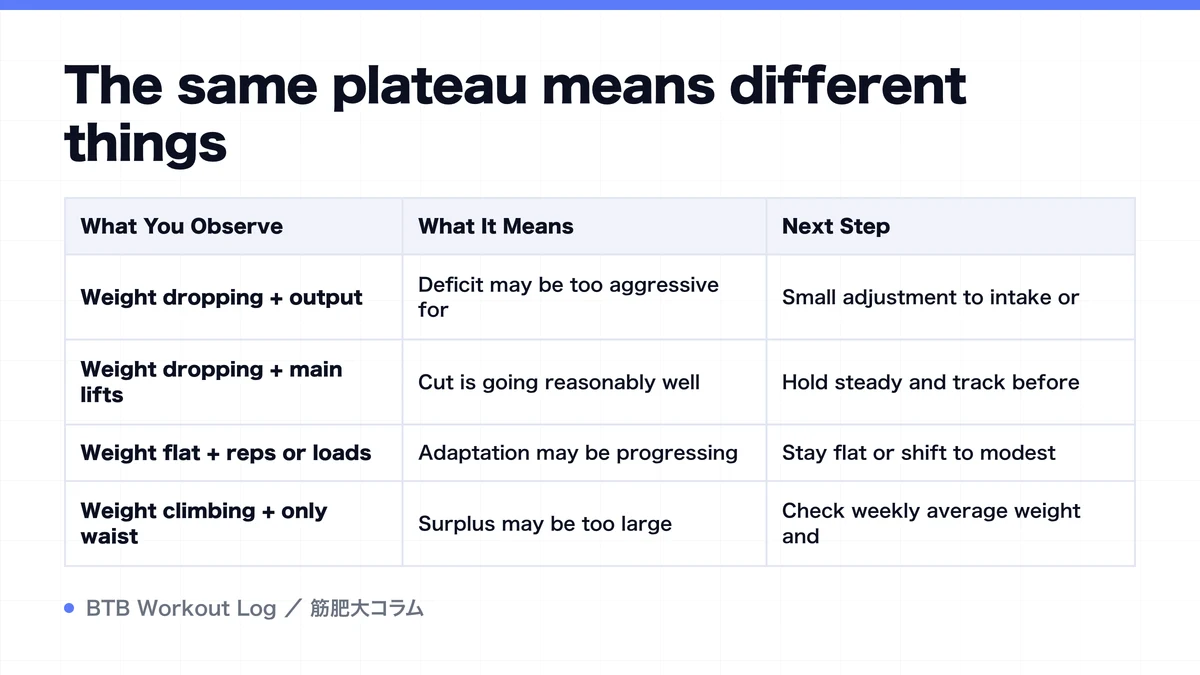
The same plateau means different things during a bulk versus a cut
Decide whether to eat more by working backward from your current goal. If muscle growth is your priority but your weight is dropping consistently and your main lifts are weakening, undereating is a candidate for adjustment. Bring intake back toward maintenance or into a small surplus, then reassess weight and performance. How to set surplus intake connects to the logic of bulking calories.
If fat loss is the priority, do not expect personal records on main lifts throughout the cut. Preserve the weight and form on your main compounds, and reduce volume on demanding assistance work if needed. The deeper the deficit, the harder it becomes to protect training output and lean mass; those at low body fat especially find a gentler pace more sustainable.
| What You Observe | What It Means | Next Step |
|---|---|---|
| Weight dropping + output declining steadily | Deficit may be too aggressive for your goal | Small adjustment to intake or training volume |
| Weight dropping + main lifts holding | Cut is going reasonably well | Hold steady and track before changing |
| Weight flat + reps or loads improving | Adaptation may be progressing near maintenance | Stay flat or shift to modest surplus if growth is priority |
| Weight climbing + only waist expanding | Surplus may be too large | Check weekly average weight and trim intake slightly |
Whether in a muscle-building diet or a cut, the calorie expenditure from any app is just a hypothesis. Your actual weight trend and training performance are the reality check.
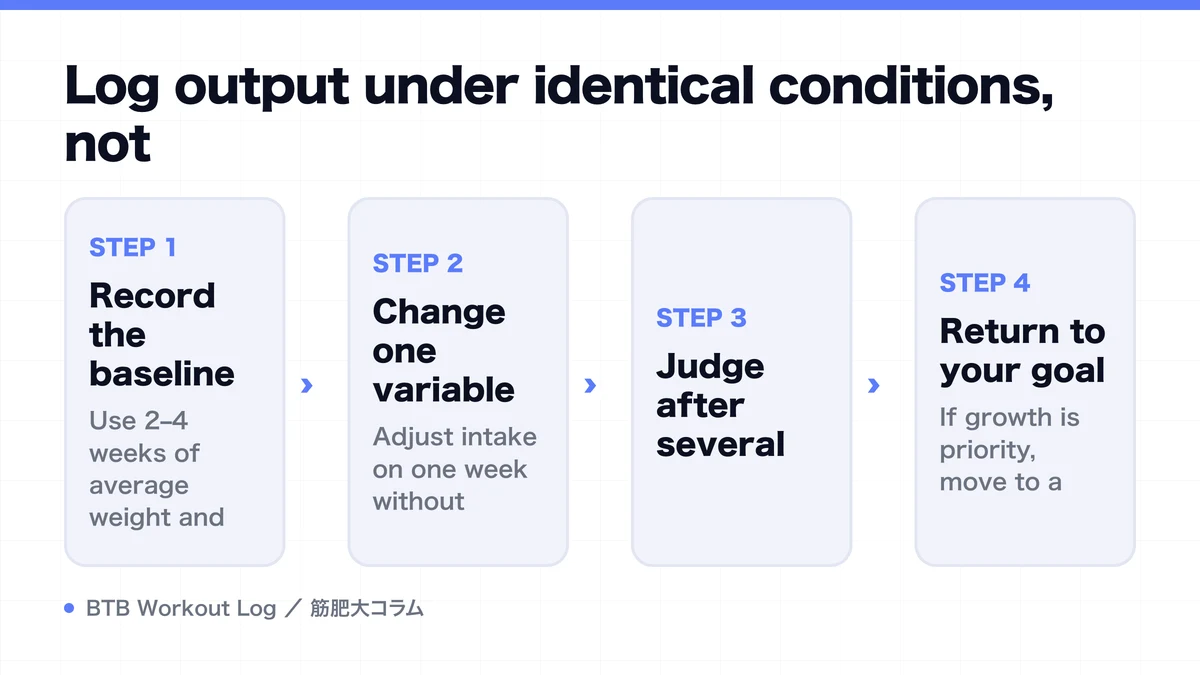
Log output under identical conditions, not just body weight
To spot the real impact of undereating, weigh yourself each morning under consistent conditions and follow the 7-day rolling average. Layer this with your main lift numbers, reps, RIR, and weekly 硬組 count per muscle group. Poor sleep also tanks output, so if sleep varies widely that week, separate sleep loss from performance as well.
- Record the baseline: Use 2–4 weeks of average weight and main lift set records as your reference point.
- Change one variable: Adjust intake on one week without simultaneously shifting exercise selection, rest, or RIR.
- Judge after several weeks: Look at whether weight is moving the right way and whether you recovered strength at the same conditions.
- Return to your goal: If growth is priority, move to a surplus that allows it; if cutting, protect the output you can sustain.
Comparing the same lifts before and after a diet change shifts your mindset from "my weight is dropping, so I must be losing muscle" to "am I still producing force and volume?"
Calorie deficit does not first strip muscle itself. It narrows the margin for synthesis, the work capacity your body can recover from, and the output you can repeat in the next session. These squeeze progressively tighter, eventually showing up as slower growth or harder muscle maintenance. That is why tracking weight and training logs together matters most.
常見問題
- Can you build muscle in a calorie deficit?
- Yes. Beginners, lifters returning to training, and those with higher body fat can often build muscle while spending down stored energy. However, it becomes harder as you advance and lower your body fat, and the bigger your deficit, the more realistic the goal shifts toward simply preserving what you have.
- Can eating more protein make up for a calorie deficit?
- Adequate protein is crucial for preserving muscle mass during a cut, but it won't fully offset a significant energy deficit. You need to combine it with maintained output on compound lifts, a reasonable deficit pace, and solid sleep.
- How do you know if calories are too low?
- Don't judge from a single meal or one bad day. If your average weight over 2–4 weeks keeps dropping and you're also losing strength and reps on the same lifts with identical 動作幅度, rest periods, and RIR, your intake is likely too low for your goal.
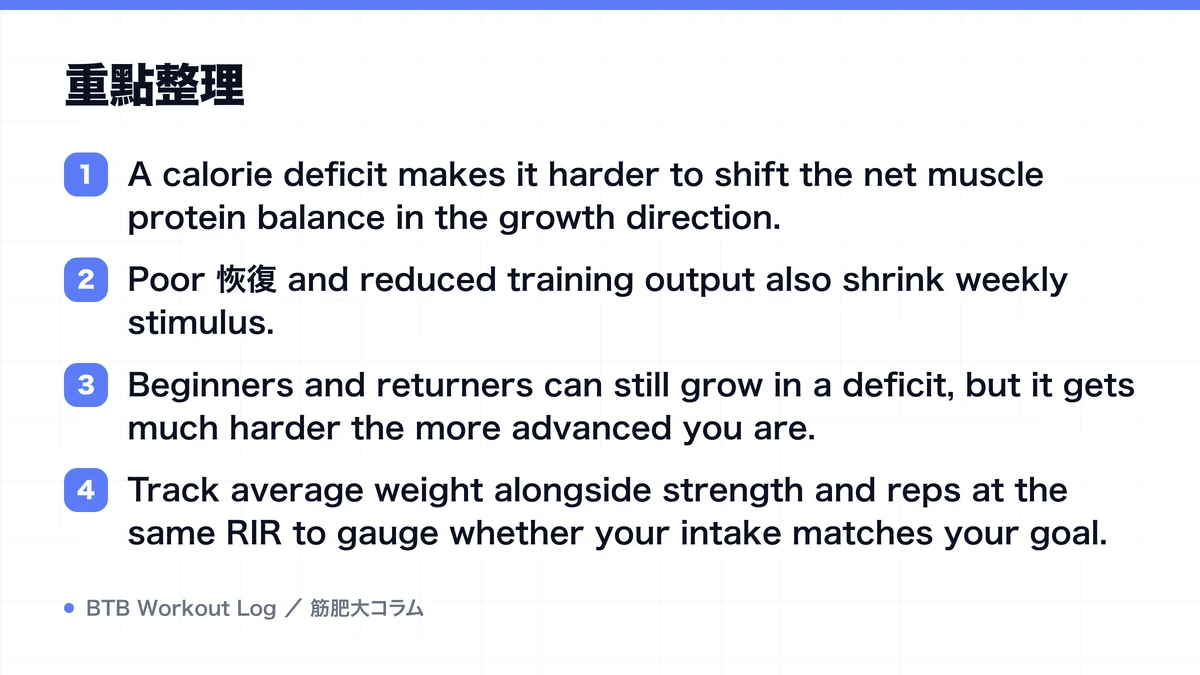
重點整理
- A calorie deficit makes it harder to shift the net muscle protein balance in the growth direction.
- Poor 恢復 and reduced training output also shrink weekly stimulus.
- Beginners and returners can still grow in a deficit, but it gets much harder the more advanced you are.
- Track average weight alongside strength and reps at the same RIR to gauge whether your intake matches your goal.