增加組數會怎樣影響肌肉肥大?訓練量與成長「見頂」的關係
增加組數時,目標肌肉承受高張力的機會增多,平均而言能帶來肌肉肥大的進一步增長。但額外每一組的效果並非恆定——音量越大,邊際收益越小,最終疲勞會超過收益。
決定成長的不只是「做了幾組」。保持額外組數的品質,在恢復後能反復執行相同或更高強度的工作,才是將音量轉化為肌肉肥大的條件。
增加一組,最先增加的是什麼
增加組數直接增加的不是肌肉量,而是目標肌肉承受訓練刺激的機會。只要動作幅度充分、姿態穩定,且在不過度保留 RIR 的情況下訓練到接近力竭,肌纖維就會暴露在高機械張力下。每週增加相同條件的一組,那個機會就增加一次。
但組數並非衡量刺激的完整單位。熱身組、保留過多 RIR 的準備組、目標肌受力不足的組,全都算作一組時,數字會虛增。反過來說,若第一組就訓練到力竭導致後續組次數大幅下降,組數相同但每組的實質內容卻改變了。首先要增加的不是單純的總組數,而是對目標肌給予充分負荷的硬組。相同週 10 組為何效果不一致的原因就在於刺激的實質差異。
額外刺激如何轉化為肌肉肥大
肌肉肥大的過程不是「增加組數就肌肉增長」這一個步驟。實際上涉及以下因果鏈:
- 執行額外組數:目標肌肉承受張力的時間和重複機會增加。
- 細胞內發生應答:機械刺激轉化為信號,涉及肌蛋白質合成與分解等重構過程。
- 恢復期間重構:能量、蛋白質和睡眠充足時,刺激後的修復和適應才得以進行。
- 重複數週至數月:堆積可恢復的刺激,結果是肌纖維橫斷面積的變化達到可測量的程度。
因此,單次增加組數帶來的強烈疲勞感與長期肌肉肥大不能畫等號。增加之後仍須維持重量、次數和動作條件,下週也能重現刺激,增加的機會才會積累為長期適應。這是訓練刺激轉化為肌肉肥大的基本流程加上週音量操作的結果。
為何增加組數的增益會逐漸變小
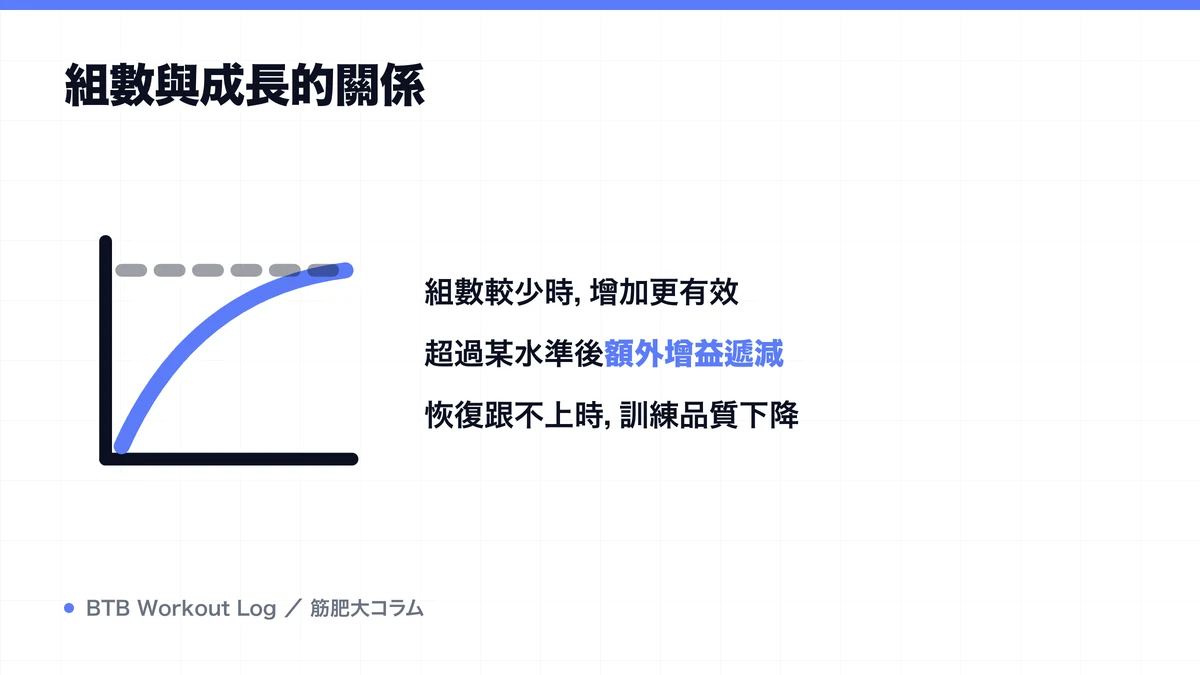
週音量與肌肉肥大之間平均顯示劑量-反應關係。訓練量少的人增加組數時,能彌補刺激不足,容易產生成長差異。但已完成充足音量的人,額外部分帶來的增益逐漸縮小。這不是「10 組變 20 組效果就翻倍」的線性關係。
原因之一是前面的組數已對許多肌纖維施加高張力。後面的組仍有刺激,但重複使用相同肌群會累積局部疲勞,可發揮的次數和重量容易下降。增加的組數並非毫無價值,但相對於投入的時間和恢復資源,獲得的刺激增量變小了。
研究顯示「高音量組平均成長更多」,並不代表每人都需相同的追加量。起始組數、訓練經驗、動作、RIR、飲食、睡眠差異都會改變劑量-反應曲線的斜率。週 10 組與週 20 組的比較不是選擇固定答案的問題,而是判斷自己是否處於能從額外音量獲利的位置。
額外組數何時變成妨礙成長的量
Adding sets increases fatigue alongside stimulus. Within a session, depleted energy substrates and local fatigue reduce rep performance and invite compensation patterns. Between sessions, muscles and connective tissue may not recover fully, causing next session performance on the same lift to drop in weight or reps.
What matters is not fatigue intensity itself, but whether fatigue reduces the next stimulus you need. If adding two chest sets drops not just that day's later work but press performance days later, your weekly quality reps might actually shrink. Worse, if joint discomfort or sleep disruption tanks consistency, short-term extra volume costs more in long-term loss.
Recoverable capacity is not fixed. The same person's limit drops during a cut, sleep-deprived weeks, or high work stress, then rises when diet and rest stabilize. So rather than drawing a line at "X sets per week," track performance and recovery after the increase. How excess sets backfire offers more on splitting this distinction.
Same weekly volume, different placement—quality shifts with distribution
增加每週組數時,不必把新增的組數全塞在同一天。如果單次訓練進入後半段後,表現明顯下滑,把新增組數分到其他天,會更容易維持每組的重量、次數與動作品質。提高訓練頻率的主要好處,不是自動增加每週訓練量,而是讓你更容易在狀態良好時完成所需的訓練量。
例如,你原本週一練胸10組,但後4組的次數大幅下降,就可以改成週一6組、週四4組。每週仍是10組,但週四能在恢復良好的狀態下完成4組,更容易維持施加在目標肌群上的張力。相反地,如果改成每週2次後,每次都做到力竭,連每週總訓練量也增加一倍,就會把頻率調整與訓練量增加混在一起,無法判斷效果來自哪一項改變。
想增加訓練量時,每次只小幅調整組數,其他變因如動作、RIR、休息時間與頻率都盡量固定。若只想改善訓練量的分配方式,就維持每週組數不變,再分散到不同訓練日。把兩者分開調整,是實際掌握訓練頻率與每週組數的關係的基本原則。
Decision framework for turning added sets into growth
If current volume still drives weight or rep gains, there's no rush to add sets. When progress stalls for a few weeks, first check each set's RIR, 動作幅度, rest, form, food, and sleep. Once those stabilize and there's no joint issue or carried fatigue, you have room for just one to two weekly sets on the target muscle.
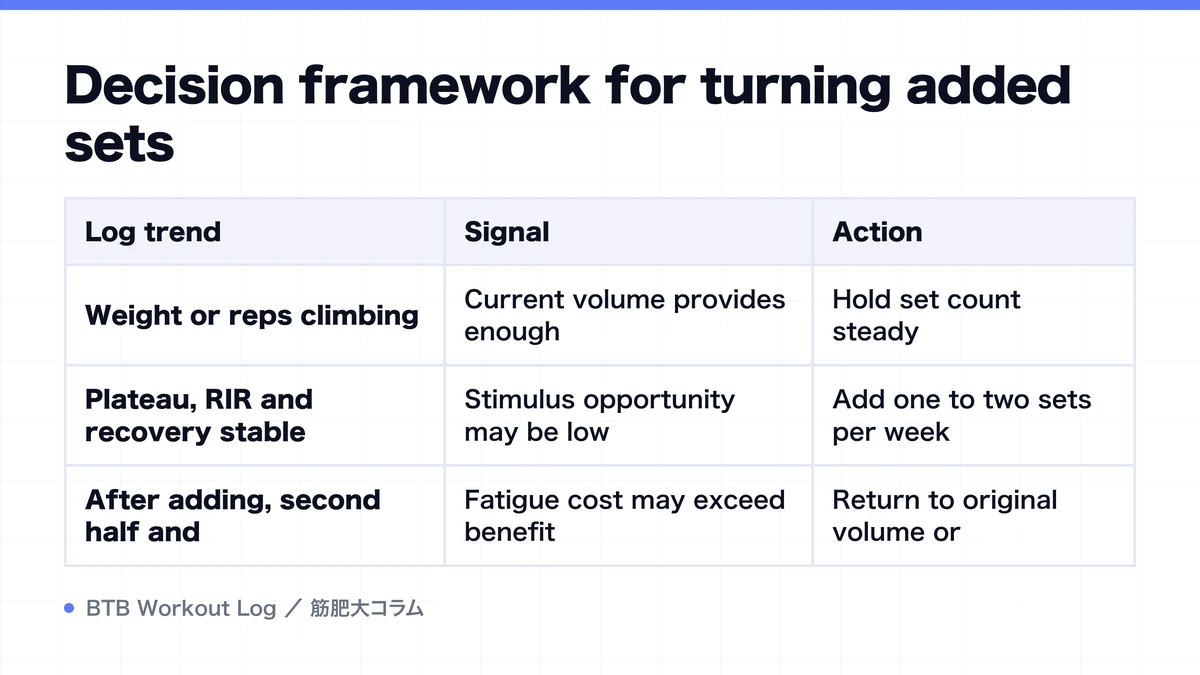
| Log trend | Signal | Action |
|---|---|---|
| Weight or reps climbing | Current volume provides enough stimulus | Hold set count steady |
| Plateau, RIR and recovery stable | Stimulus opportunity may be low | Add one to two sets per week |
| After adding, second half and next session output drops | Fatigue cost may exceed benefit | Return to original volume or distribute |
After changing, line up weight, reps, and RIR for the same lift plus weekly set counts per muscle group. Don't decide on one session; compare trends across several weeks before and after. BTB Workout Log lets you align before-and-after shifts side by side. The added set worked if weight and reps continue moving afterward.
常見問題
- If I add sets, do I gain muscle faster that week?
- Adding sets immediately raises stimulus opportunity, but muscle doesn't proportionally jump that week. Growth appears after weeks or months of repeating the stimulus while keeping each set's quality and recovery intact.
- How many sets should I start adding from?
- There's no universal starting point. If current weight or reps still climb, maintain it. If plateaued but RIR, rest, food, and sleep check out fine, adding just one to two weekly sets to the target muscle is a simple, trackable move.
- Do added sets work if my reps drop?
- Minor dips don't kill efficacy, but if 動作幅度 or form breaks down and tension leaks off the target, quality suffers. If the crash or next-session decline persists, move the addition to another day or return to the original volume.
重點整理
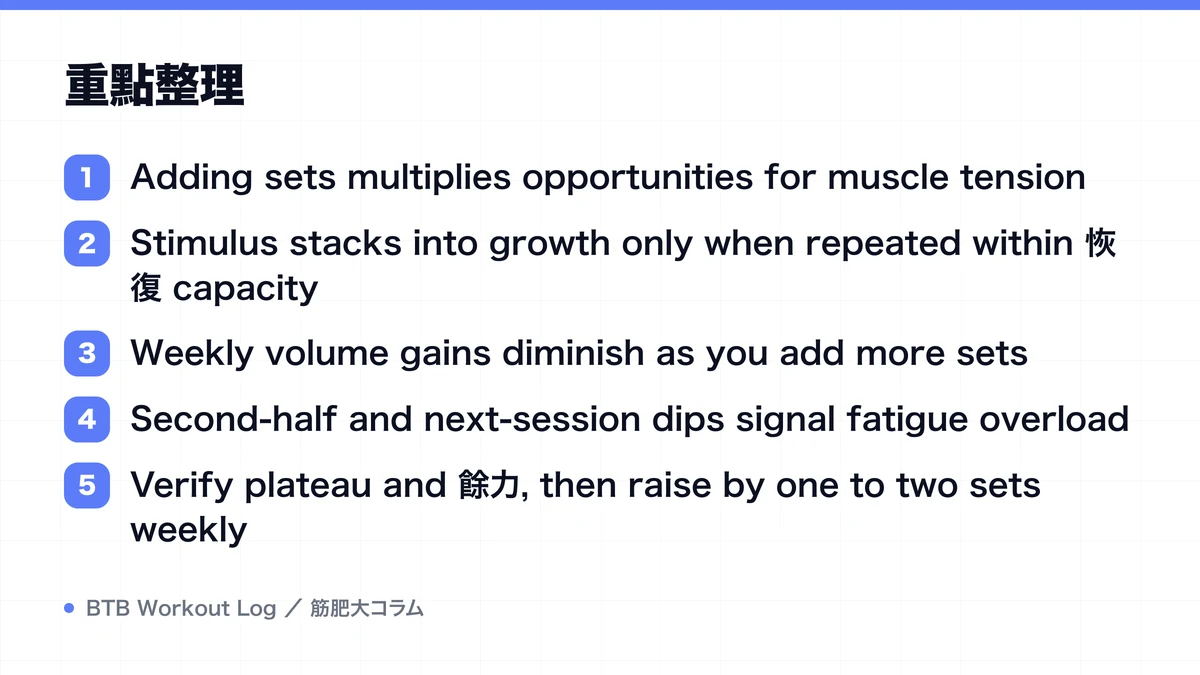
- Adding sets multiplies opportunities for muscle tension
- Stimulus stacks into growth only when repeated within 恢復 capacity
- Weekly volume gains diminish as you add more sets
- Second-half and next-session dips signal fatigue overload
- Verify plateau and 餘力, then raise by one to two sets weekly
參考文獻
- The Resistance Training Dose Response: Meta-Regressions Exploring the Effects of Weekly Volume and Frequency on Muscle Hypertrophy and Strength Gains
- Dose-response Relationship Between Weekly Resistance Training Volume and Muscle Mass
- Resistance Training Volume Enhances Muscle Hypertrophy in Trained Men
- Mechanisms of Muscle Hypertrophy: Current Understanding and Future Directions
- The Mechanisms of Muscle Hypertrophy and Their Application to Resistance Training