
只換動作順序,肌肉肥大效果也會不同?「第一個動作」佔優勢的原因
首先進行的種目處於疲勞最少的狀態,能保證更高的輸出表現和穩定的動作執行,因此當你想優先發展某個肌群時特別有利。
但這不代表「放在最前面就會自動增肌」。順序改變的是你能分配給各種目的組合品質和進步空間。
種目順序改變的是肌肉刺激的「分配」
種目順序不是獨立開啟肌肉生長的開關。即使在同一次訓練中,前半期身體和心理疲勞較少,後半期受前面種目的影響越來越大。因此改變順序會改變每個種目的使用負重、反覆次數、RIR(還能做幾下的餘力)、動作幅度、技術再現性。
這種差異如果持續數週,放在前面的種目容易積累高品質的硬組,放在後面的種目進度則會停滯。也就是說,因果關係是:順序 → 當時的疲勞程度 → 組合的輸出和動作 → 長期累積的刺激和漸進超負荷 → 最終成果。與其遵循「大肌群先做」或「複合動作先做」這樣的死板規則,不如用程式設計的角度思考——把最佳狀態分配給哪個目標。
美國運動醫學會的漸進模型也把種目順序視為根據目標調整的變數。但專門比較肌肉肥大的研究受限,無法確定順序本身會產生巨大差異。實踐上,我們透過後面提到的輸出變化來評估效果。
前面種目如何逐步削弱後續動作的因果關係
先做的種目不只影響主動肌,也會對輔助肌、穩定肌群、握力、心肺循環和集中力留下負擔。對後續種目的影響有多個途徑:
- 局部疲勞:用到同樣肌肉時,後一個種目開始前已經消耗了部分餘力。連續做胸部按壓動作後,即使負重相同,第二個胸部種目的RIR也會下降。
- 協助肌疲勞:目標肌肉還很新鮮,但完成動作的其他肌肉先達到極限。例如臥推前做下壓動作會令三頭肌疲勞,胸肌訓練日三頭肌可能先成為限制因素。關於胸日為何三頭肌先累的機制,協作動作與先行疲勞的文章有詳細說明。
- 全身疲勞:深蹲或高次數多關節動作後,除了目標肌肉外還會出現喘息、軀幹疲勞、專注力下降,這些都會限制後續組合的表現。
結果是後面的種目會出現:降低負重、未能完成預定次數、動作幅度變小、動作代償、這些變化其實是把組內後期出現的反覆下降現象,延伸到了不同種目之間。詳細的疲勞機制與反覆下降的原理相同。
這裡要注意,「變輕了所以沒效」不一定成立。即使在疲勞狀態下,仍然可能對目標肌肉施加足夠的張力。問題在於目標肌肉還沒達到極限就被其他因素卡住,或是每週能穩定完成的訓練量減少。
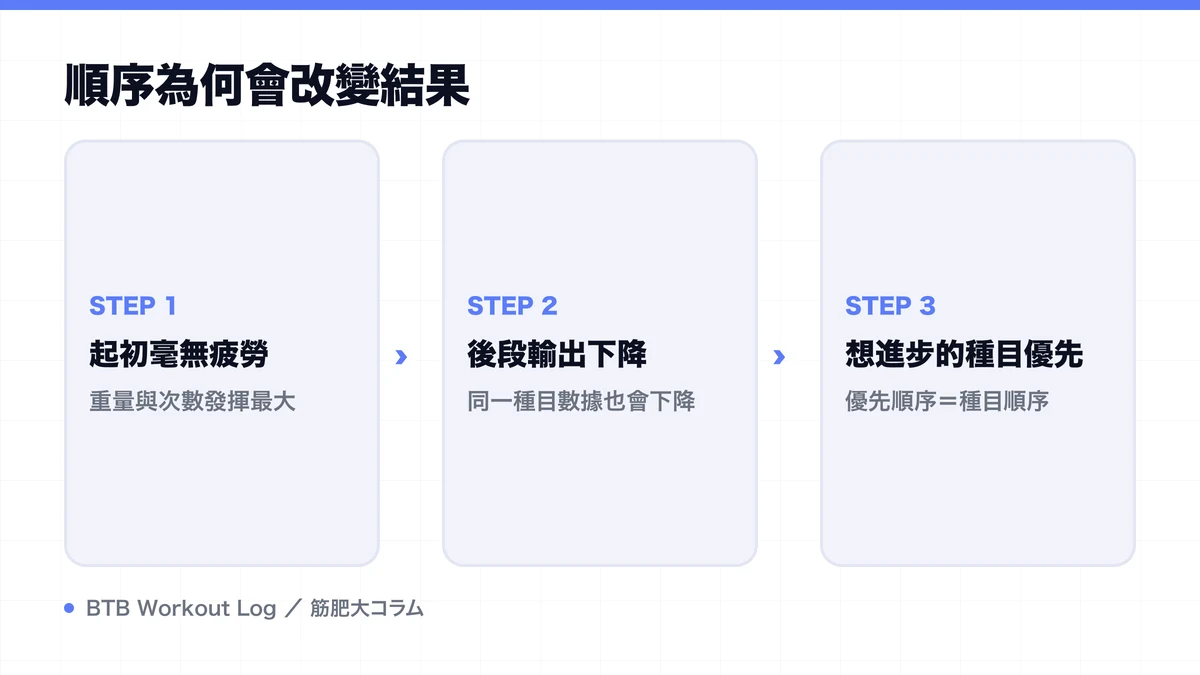
首先進行的種目享有的三大優勢
1. 容易確保負重與反覆數量
前半段疲勞較少時,相同RIR下能處理更重的負重或更多的反覆次數。由於每週訓練量與肌肉肥大存在劑量反應關係,優先種目能持續完成高品質組合非常重要。前提是不只堆砌組數,而是維持目標動作幅度和技術。關於每週訓練量的概念,見每週組數的思考方式。
2. 容易重現技術細節
臥推、深蹲、划船這類技術要求高的動作,越往後做越容易姿勢和軌跡歪斜。在最佳狀態下練習,能更精準地將負荷分配到目標肌肉,也更容易與上次的表現進行比較。
3. 更容易評估進度
每次都基本在相同位置進行的種目,受先行疲勞干擾較少,所以負重和次數的變化更容易追蹤。相反,頻繁改變順序會讓你分不清數字下降是停滯期還是單純被前面動作累著了。優先種目在一段時間內固定位置,能幫助你更清楚地判斷是否達成了漸進超負荷。
「複合動作先做」並不永遠正確
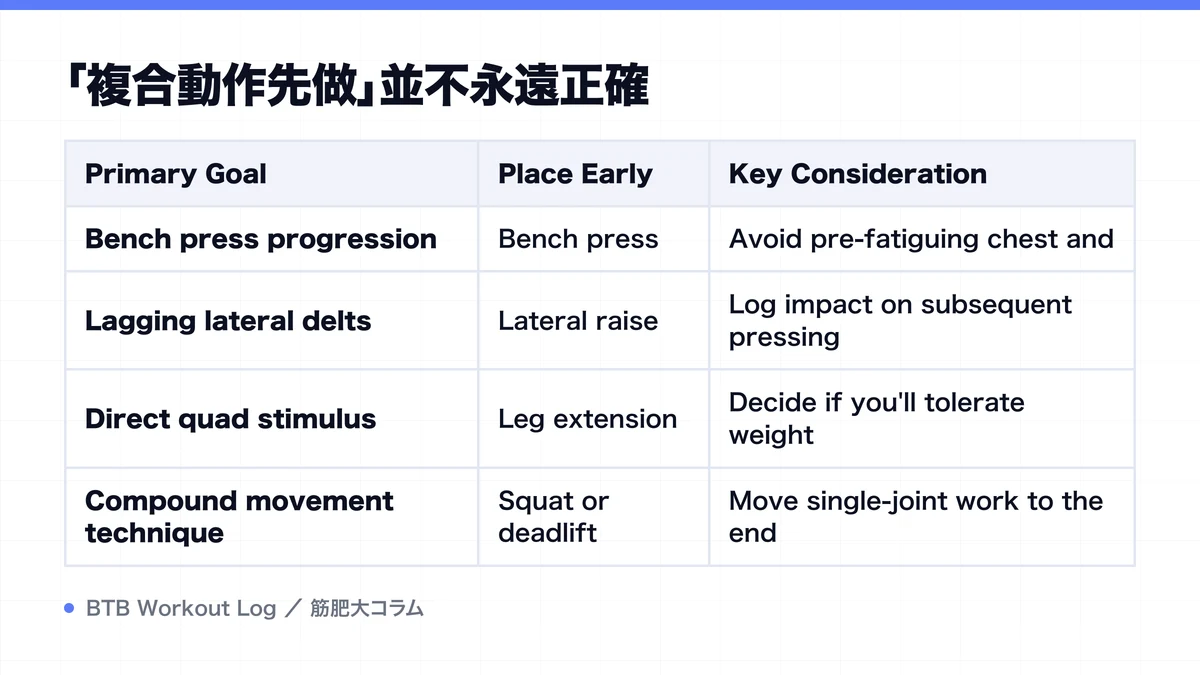
Generally, placing multi-joint, heavy-load, and technically demanding exercises first makes sense. They recruit many muscle groups, and form breakdown after fatigue directly impacts results and safety. However, if your hypertrophy priorities are clear, you can make exceptions.
| Primary Goal | Place Early | Key Consideration |
|---|---|---|
| Bench press progression | Bench press | Avoid pre-fatiguing chest and triceps |
| Lagging lateral delts | Lateral raise | Log impact on subsequent pressing movements |
| Direct quad stimulus | Leg extension | Decide if you'll tolerate weight loss in subsequent squats |
| Compound movement technique | Squat or deadlift | Move single-joint work to the end |
Pre-fatiguing with single-joint exercise can sharpen mind-muscle connection to the target muscle, but that alone doesn't guarantee more hypertrophy. If the subsequent multi-joint lift drops in weight or reps and secondary muscles fail first, you've made a trade-off. Don't call it a win just because of the pump or feeling—track whether the target muscle's hard sets and progress hold up.
If you have multiple lagging areas, don't force them all into one session. Training twice per week? Make Day A about chest pressing first, Day B about shoulders and arms first—split your priority slots across sessions. And if later exercises drop significantly in reps, check not just order but also rest between sets.
Let your log decide if order should change
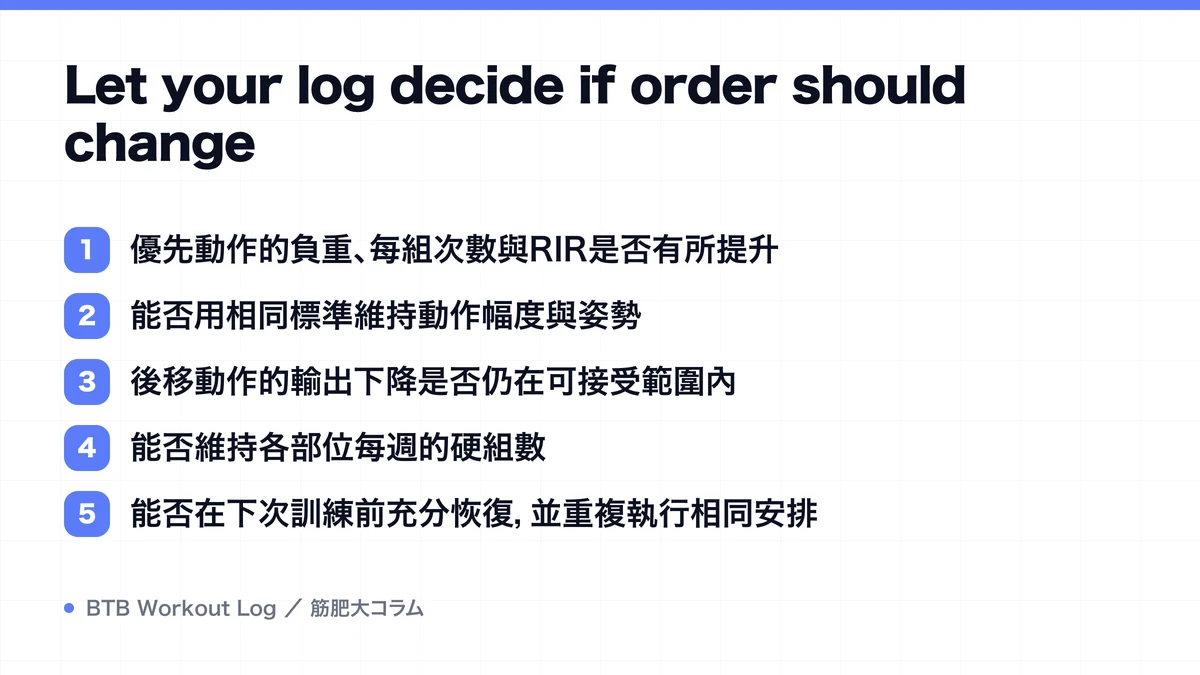
調整動作順序時,不要同時更動整套課表,而是把它當成單一假設來測試。先決定優先訓練的部位,再把該部位的主力動作移到前面,並固定在同一順序至少執行數週。不要只看單次訓練的滿足感,而要比較以下指標。
- 優先動作的負重、每組次數與RIR是否有所提升
- 能否用相同標準維持動作幅度與姿勢
- 後移動作的輸出下降是否仍在可接受範圍內
- 能否維持各部位每週的硬組數
- 能否在下次訓練前充分恢復,並重複執行相同安排
如果移到前面的動作有所進步,而後續動作的損失很小,代表這個順序符合你的目標。反過來說,如果主力動作雖然進步,另一個重要部位的組數品質卻明顯下降,就需要重新安排,例如拆到不同訓練日、輪流設定優先部位,或刪減前半段不必要的動作。
訓練紀錄不會直接告訴你唯一正解,而是幫你判斷這次調整是否真的符合自己的優先順序。
常見問題
- Should I always place a compound lift first if I'm training for hypertrophy?
- If your main goal is compound progression and technique, usually yes. But if you're prioritizing a lagging area with single-joint work, move that up instead. Then log how much the subsequent multi-joint lift loses in weight, reps, and form.
- Does pre-fatigue actually increase hypertrophy of the target muscle?
- Pre-fatiguing the target strengthens the mind-muscle feel, but won't guarantee extra hypertrophy. The following exercise may lose so much output that a secondary muscle becomes the limiting factor. Evaluate by tracking weekly hard sets and multi-week progress on that muscle.
- How long should I stick with one order before comparing results?
- Don't decide on a single workout. Maintain the new order for at least several weeks, matching weight, reps per set, RIR, and range of motion to your baseline. Then look at both the priority lift's gains and the later exercise's losses before committing to or reversing the change.
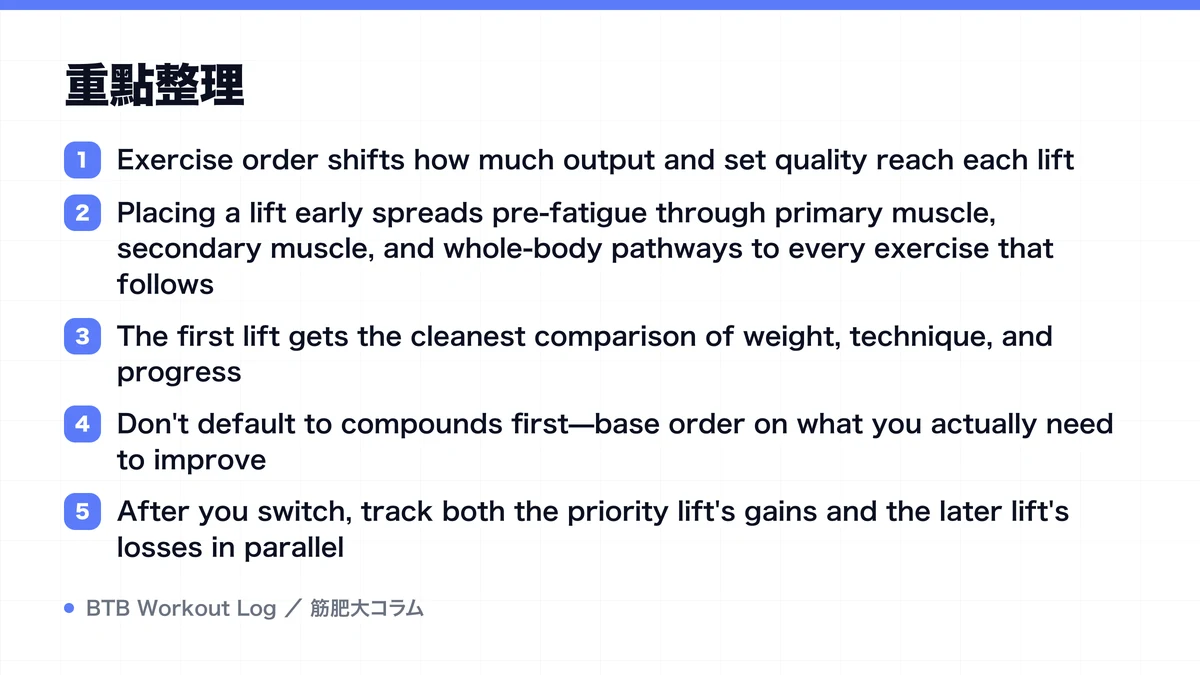
重點整理
- Exercise order shifts how much output and set quality reach each lift
- Placing a lift early spreads pre-fatigue through primary muscle, secondary muscle, and whole-body pathways to every exercise that follows
- The first lift gets the cleanest comparison of weight, technique, and progress
- Don't default to compounds first—base order on what you actually need to improve
- After you switch, track both the priority lift's gains and the later lift's losses in parallel