
같은 주 10세트인데 차이가 나는 이유는? 세트 수보다 중요한 '내용'의 이야기
주간 10세트는 트레이닝 볼륨의 지표가 될 수 있지만, 10개의 동일한 자극을 보장하는 숫자는 아닙니다. 목표근에 대한 기여도, 한계까지의 거리, 동작의 질, 세트 간 회복이 다르면, 같은 10세트라도 받는 자극과 피로는 달라집니다.
차이를 만드는 것은 "10보다 많은가 적은가"만이 아니라, 1세트를 무엇으로 정의하고 그 질을 다음 주에도 유지하고 있는가입니다.
주간 세트 수는 자극량 자체가 아니다
주간 세트 수는 프로그램을 비교하고 증감을 관리하기에 편리한 지표입니다. 연구에서도 주간 세트 수가 늘어날수록 근비대가 커지는 용량-반응 관계가 평균적으로 나타납니다. 그렇기 때문에 주간 세트 수는 메뉴 설계의 출발점이 됩니다.
다만 세트 수는 "작업을 몇 번 나누었는가"를 세고 있을 뿐입니다. 사용 무게, 반복 횟수, RIR, 가동 범위, 목표근, 휴식 시간까지는 숫자에 포함되지 않습니다. 가슴을 주간 10세트 행한 2명이 있어도, 한 명은 목표한 가동 범위를 유지하면서 한계 근처까지 반복하고, 다른 한 명은 큰 여력을 남기고 동작도 짧다면, 신체가 받는 자극을 동일하게 취급할 수 없습니다.
여기서 흔한 직관은 "하드 세트라면 1세트는 모두 같은 1표"라는 것입니다. 실제로는 세트는 화폐가 아니라 조건이 다른 시도입니다. 주간 10세트라는 합계는 프로그램의 외형을 보여주지만, 내용의 밀도까지는 보여주지 않습니다. 무게×반복 횟수×세트 수로 나타내는 총 부하량도 유용하지만, 그것만으로 목표근에 대한 자극을 완전히 표현할 수 없다는 점은 같습니다.
주동작 세트와 보조 세트로 "10"의 의미가 달라진다
가장 먼저 맞춰야 할 것은 어떤 것을 그 근군의 세트로 셀 것인가입니다. 컬은 상완이두근이 주로 힘을 내는 주동작 세트이지만, 로우에서도 상완이두근은 보조적으로 작용합니다. 컬 5세트와 로우 5세트를 "팔 10세트"로 합산한 경우와 컬을 10세트 행한 경우는, 같은 10이어도 상완이두근에 대한 기여도는 다릅니다.
2026년의 메타회귀에서는, 근비대를 측정한 근육이 주요 힘발휘근인 세트를 주동작, 보조적으로 작용하는 세트를 보조로 분류하고, 보조 세트를 일괄적으로 주동작 세트와 같은 무게로 세지 않는 방법이 검토되었습니다. 이것은 "보조 세트는 항상 0.5세트"라는 처방 규칙이 아닙니다. 종목별 기여도를 구별하면 모두를 같은 1세트로 하는 것보다 트레이닝 볼륨을 파악하기 쉽다는 연구상의 시사입니다.
실무에서는 주동작 세트와 보조 세트를 별개 항목으로 파악하면 충분합니다. 가슴 프레스를 가슴·삼두·전부 삼각근에 동시에 1세트씩 더하여 총량을 비교하면, 보조근의 부담을 과대평가하기 쉬워집니다. 먼저 주동근에 1세트를 부여하고, 보조근에 대한 기여는 "보조"로 표기하세요. 그러면 겉으로는 주간 10세트이면서 목표근이 주역이 된 주간 10세트를 구별할 수 있습니다.
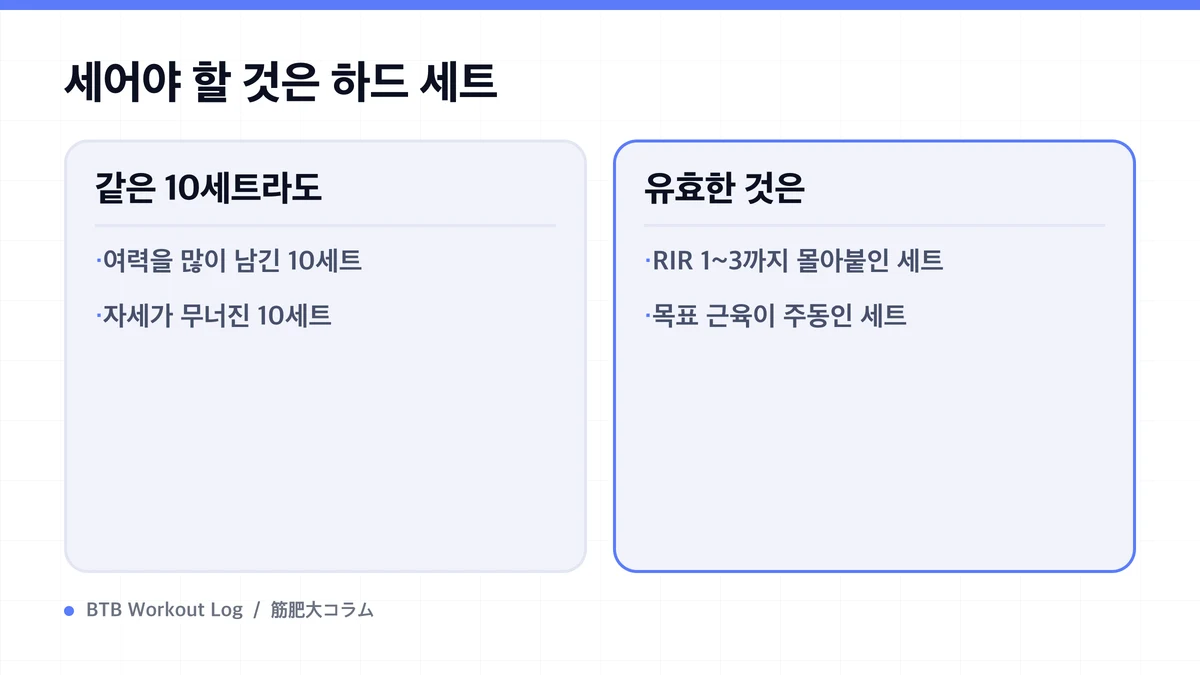
RIR과 동작 조건이 1세트의 자극을 좌우한다
다음으로 보는 것이 한계까지 남은 반복 횟수를 나타내는 RIR(Repetitions in Reserve)입니다. 같은 종목을 같은 횟수로 행해도 RIR5에서 멈춘 세트와 RIR1에서 멈춘 세트는 한계까지의 거리가 다릅니다. 큰 여력을 남기는 세트만 10번 세어도, 한계로부터 수 회 내를 중심으로 한 10세트와 같은 자극이 되지는 않습니다. RIR의 사용법은 RIR 가이드에서 자세히 확인할 수 있습니다.
한편, 매 세트마다 RIR0, 즉 반복 불가능할 때까지 행하면 자동으로 질이 올라가는 것은 아닙니다. 한계까지 행하는 트레이닝과 한계 전에 멈추는 트레이닝을 비교한 체계적 검토에서, 순간적인 근력 발휘 불가능까지 행하는 것이 근비대에서 항상 우수하다고 나타나지 않았습니다. 실패 반복은 "유효 세트로 바꾸는 스위치"가 아니라 자극과 피로를 모두 증가시킬 수 있는 선택지입니다.
더욱이 장부상의 RIR이 같아도 가동 범위를 좁히거나, 반동을 늘리거나, 목표근에서 다른 부위로 부하를 빼면 비교 조건이 무너집니다. RIR은 폼과 가동 범위를 맞췄을 때 유용한 지표입니다. 횟수만으로는 세트의 내용이 결정되지 않는 이유는 같은 10회인데도 효과가 다른 이유와도 공통됩니다.
10세트의 배치로 후반부 출력이 달라진다
Consolidating 10 sets in a single session versus splitting 5 sets across two sessions each week produces different results. Doing all 10 at once means accumulating local fatigue and cardiovascular strain during the later sets, making it harder to maintain load, reps, and 가동 범위. Splitting the volume lets you start each session fresh with higher output, but costs extra warm-up time and travel. Frequency itself isn't magic for accelerating 근비대—it's simply a scheduling variable to complete your planned sets under better conditions. More on this approach in our training frequency guide.
Rest between sets is also part of this structure. A study of 21 young male lifters performing 7 full-body exercises three times weekly compared 1-minute and 3-minute rest periods over 8 weeks. The 3-minute group gained an edge in 1RM on bench press and back squat, plus quadriceps thickness. You can't lock in 3 minutes for every lift based on one study, but it shows how shorter rest reduces reps on subsequent sets—meaning the same set count doesn't equal the same work completed. Size your rest based on set interval guidelines so you 회복 enough to hit your target load, reps, and movement quality on the next set.
When deciding whether to split volume, compare your first set to your last. If reps drop sharply in the back half, you're cutting load just to keep form, or your cardiovascular system or grip gives out before the target muscle—then jamming all 10 into one session loses its edge. Before adding sets, try longer rest or moving some work to another day. That keeps your weekly 10-set stimulus reproducible.
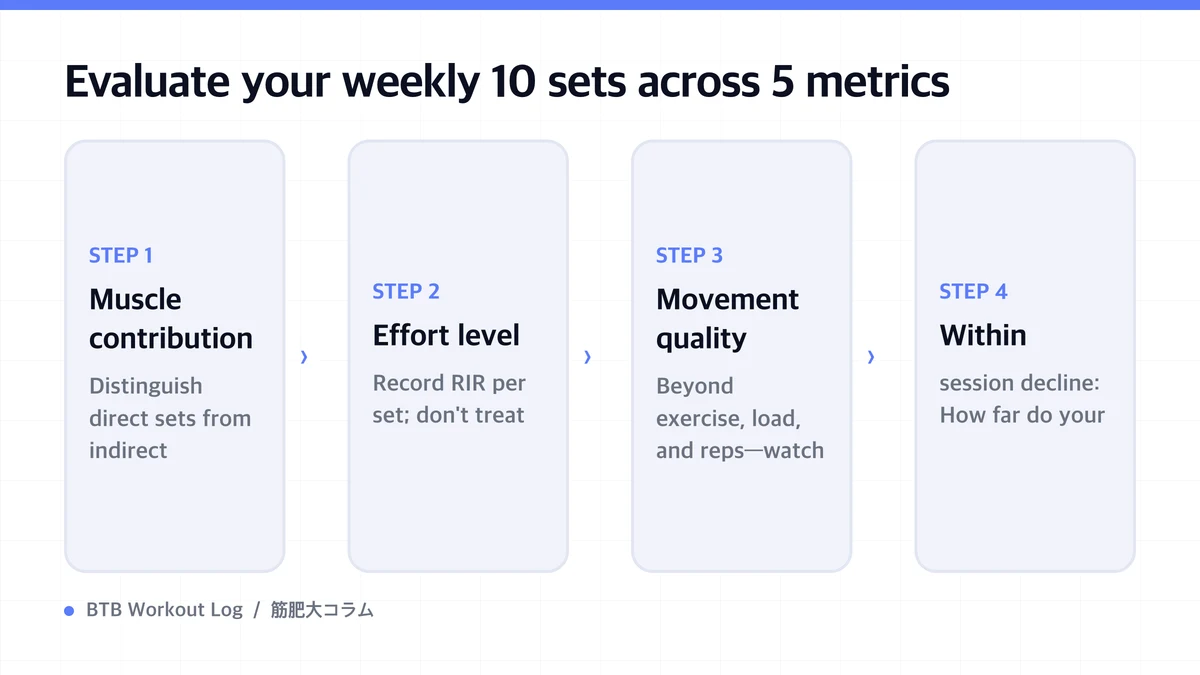
Evaluate your weekly 10 sets across 5 metrics
You can't measure 근비대 gains directly on the day. Instead, separate set execution conditions from progress afterward. If 10 sets per week is your baseline, lock in these five factors across multiple weeks.
- Muscle contribution: Distinguish direct sets from indirect ones, and fix what counts toward your 10.
- Effort level: Record RIR per set; don't treat high-여력 reps and near-failure reps the same.
- Movement quality: Beyond exercise, load, and reps—watch for loss of 가동 범위 or form breakdown.
- Within-session decline: How far do your final reps, load, and RIR slip from plan?
- Session-to-session repeatability: Are reps or load climbing at the same RIR and movement standard, or does output stay flat or drop?
If weight or reps rise at the same RIR and form, you have reason to stay at 10 sets. If early sets feel strong but late ones fall apart, adjust rest or frequency without changing the total. If all sets show high 여력, first review your load or rep target. If output or 회복 consistently lag, consider trimming before adding more. Judging after a volume increase deserves its own analysis—see why too many sets backfire.
Logging isn't about filling set quotas. It's about driving the same stimulus forward and confirming you'll reproduce it next week. The difference isn't in hitting a total of 10—it's in knowing what those 10 sets actually were when you look back. BTB Workout Log records load and reps for each set so you can audit it.
자주 묻는 질문
- Should every set in a weekly 10-set program go near failure?
- No. RIR 1–3 is a practical starting point, but taking every set to failure isn't always best. Balance exercise safety, fatigue carryover to later sets, and form integrity by keeping effort consistent within what you can sustain.
- Do secondary muscles count as one set when I do compound movements?
- Record direct sets for the prime mover and indirect sets for accessories separately—it keeps tracking simpler. Don't fix indirect volume at zero or one set; adjust it alongside direct volume and 회복 capacity.
- Weight and reps aren't climbing at 10 sets per week. Should I add more?
- Not yet. First audit RIR, 가동 범위, rest, late-set decline, and 회복 status. Only after you've verified set quality is solid, tracked multiple weeks without progress, and still have 회복 cushion should you cautiously add volume.
정리
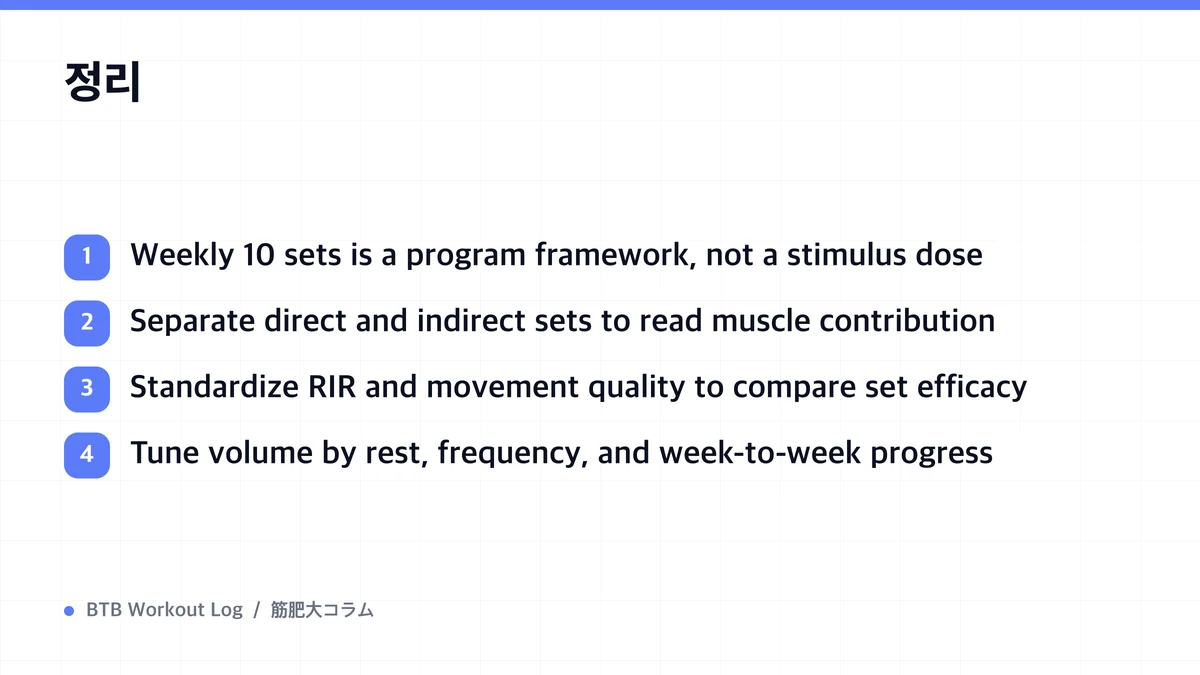
- Weekly 10 sets is a program framework, not a stimulus dose
- Separate direct and indirect sets to read muscle contribution
- Standardize RIR and movement quality to compare set efficacy
- Tune volume by rest, frequency, and week-to-week progress
참고문헌
- The Resistance Training Dose Response: Meta-Regressions Exploring the Effects of Weekly Volume and Frequency on Muscle Hypertrophy and Strength Gains
- Proximity-to-Failure and Muscle Hypertrophy: Systematic Review with Meta-analysis
- Longer Interset Rest Periods Enhance Strength and Hypertrophy in Trained Men