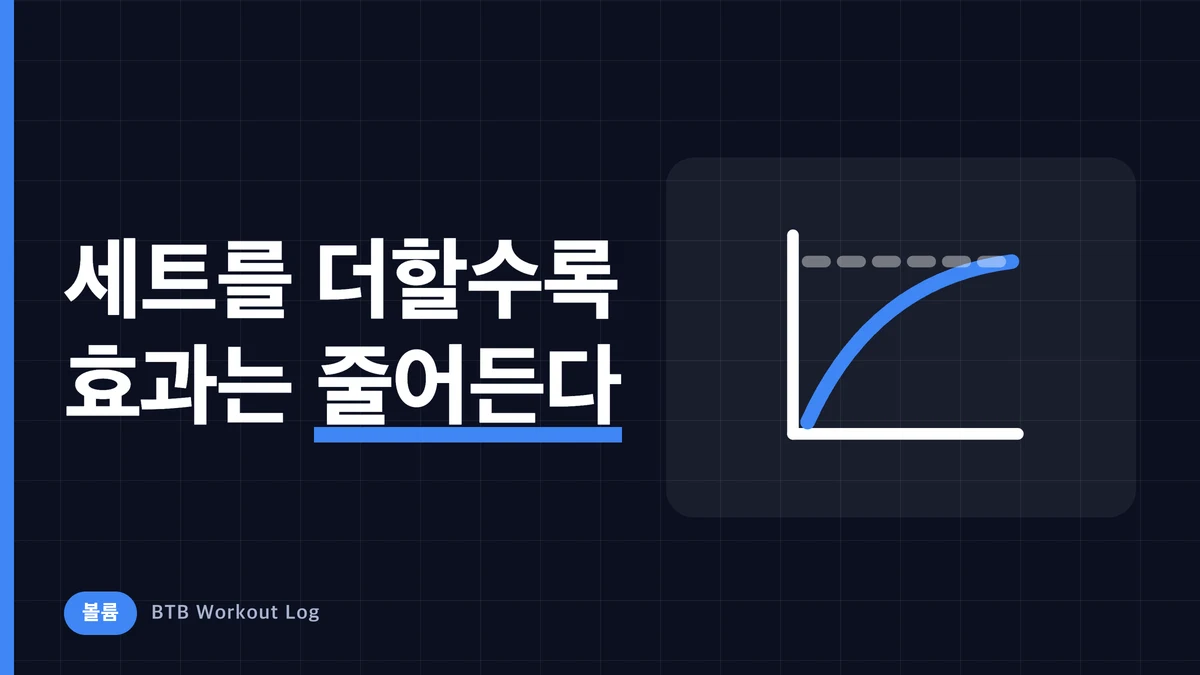
세트 수를 늘리면 근비대는 어떻게 달라질까? 볼륨과 성장의 '한계점' 관계
세트를 늘리면 근육이 높은 장력에 노출되는 기회는 증가하고, 평균적으로 근비대의 상승을 기대할 수 있습니다. 다만 추가한 한 세트의 효과는 일정하지 않으며, 양이 늘어날수록 이익은 감소하다 결국 피로가 우위를 차지합니다.
성장을 결정하는 것은 '몇 세트를 했는가'만이 아닙니다. 추가 세트의 질을 유지하고 회복 후에도 같은 수준 이상의 작업을 반복할 수 있어야 볼륨이 근비대로 변환됩니다.
한 세트를 늘리면 먼저 무엇이 증가할까
세트 추가로 직접 증가하는 것은 근육량이 아니라 목표 근육이 트레이닝 자극을 받는 기회입니다. 충분한 가동 범위와 안정된 폼으로, 한계까지 몇 회 더 할 수 있는지를 보여주는 RIR을 너무 많이 남기지 않고 수행하면 근섬유는 높은 기계적 장력에 노출됩니다. 같은 조건의 세트를 주에 추가하면 그 기회가 하나 늘어납니다.
다만 세트수는 자극을 완벽하게 표현하는 단위가 아닙니다. 워밍업, RIR을 많이 남긴 준비 세트, 목표 근육에서 부하가 빠져나간 세트까지 모두 한 세트로 세면 숫자만 증가합니다. 반대로 첫 세트부터 한계까지 수행해 이후 세트의 반복수를 크게 줄이면 세트수는 같아도 각 세트의 내용이 달라집니다. 먼저 늘려야 할 대상은 단순한 전체 세트가 아니라 목표한 근육에 충분한 부하를 준 하드 세트입니다. 같은 주 10세트도 효과가 다른 이유는 바로 이 자극의 질에 있습니다.
추가한 자극이 근비대로 이어지는 과정
근비대까지의 과정은 '세트를 추가했으니 근육이 는다'는 한 단계가 아닙니다. 실제로는 다음과 같은 인과관계가 계속됩니다.
- 추가 세트를 수행한다: 목표 근육이 장력을 받는 시간과 반복의 기회가 증가한다.
- 세포 내 반응이 일어난다: 기계적 자극이 근단백질 합성과 분해를 포함한 재구축에 관여하는 신호로 변환된다.
- 회복 중에 재구축된다: 충분한 에너지, 단백질, 수면이 갖춰지면 자극 후 수복과 적응을 진행할 수 있다.
- 수주에서 수개월 반복한다: 회복 가능한 자극을 쌓은 결과로 근섬유 단면적의 변화가 측정 가능한 수준이 된다.
따라서 일회성으로 세트를 늘려 강한 피로감을 얻는 것과 장기 근비대는 같은 의미가 아닙니다. 추가 후에도 무게·반복·동작 조건을 유지하고 다음 주에도 자극을 재현할 수 있을 때, 비로소 증가한 기회가 장기 적응으로 쌓입니다. 이는 근력운동 자극이 근비대에 이르는 기본 과정에 주간 볼륨이라는 량의 조작을 더한 것입니다.
왜 세트를 늘릴수록 상승폭이 작아질까
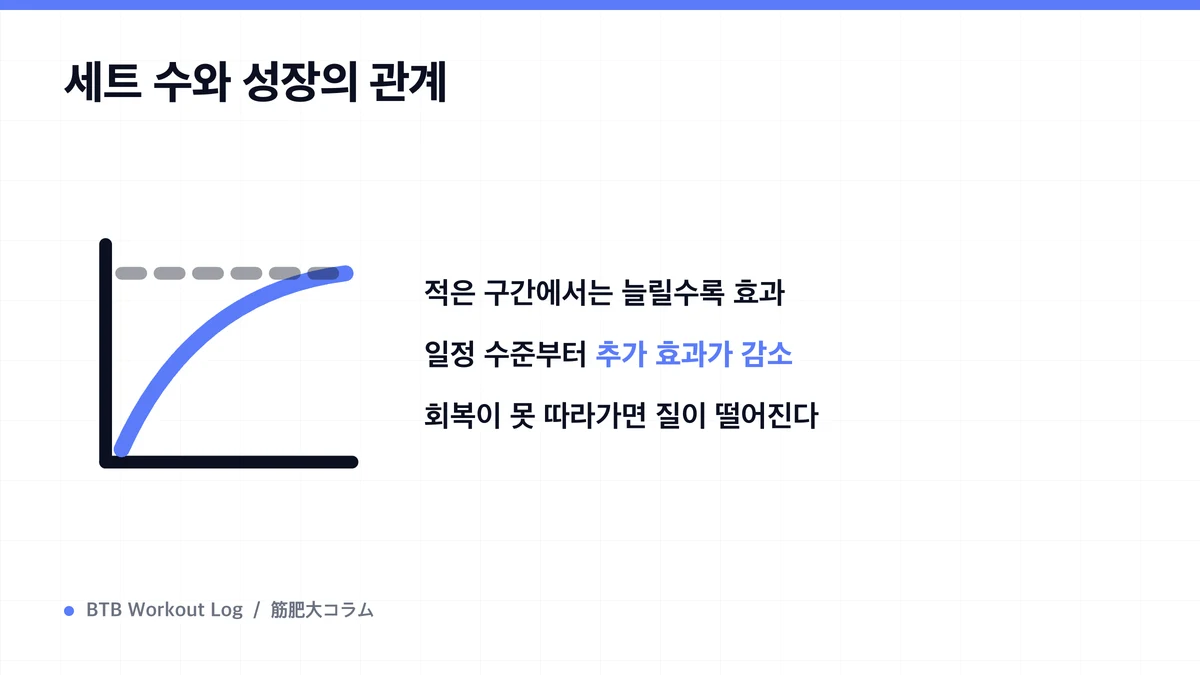
주간 볼륨과 근비대는 평균적으로 용량 반응 관계를 보입니다. 적은 양만 수행하던 사람이 세트를 늘리면 부족한 자극 기회를 채울 수 있어 성장 차이로 이어지기 쉽습니다. 반면 이미 충분한 양을 소화 중인 사람에게는 추가분이 만드는 상승폭이 점차 작아집니다. 이는 '10세트를 20세트로 늘리면 효과도 2배'라는 직선 관계가 아닙니다.
한 가지 이유는 초반 세트에서 이미 많은 근섬유에 높은 장력을 주고 있기 때문입니다. 후반 세트에도 자극이 남아 있지만, 같은 근군을 반복 사용할수록 국소 피로가 쌓여 발휘할 수 있는 반복수나 무게는 떨어지기 쉽습니다. 추가한 세트가 무가치해지는 것은 아니지만, 같은 시간과 회복 자원에 대해 얻을 수 있는 자극 증분은 작아집니다.
연구에서 '고볼륨군이 평균적으로 더 크게 성장했다'고 보여도 모두에게 같은 추가량이 필요하다는 뜻은 아닙니다. 시작 시 세트수, 트레이닝 경력, 종목, RIR, 식단, 수면이 다르면 용량 반응의 기울기도 달라집니다. 주 10세트 대 주 20세트 비교는 정답을 고르는 문제가 아니라 자신이 추가분에서 이익을 얻을 수 있는 위치에 있는지 파악하는 문제입니다.
추가 세트가 성장을 방해하는 양으로 변할 때
Adding sets increases fatigue alongside stimulus. Within a session, energy substrate depletion and localized fatigue reduce reps and invite compensation patterns. Between sessions, muscle and connective tissue recovery may lag, causing lower weights or reps on the same lift days later.
What matters is not fatigue intensity itself, but whether fatigue has reduced the stimulus you need next time. If adding two chest sets tanks not just the rest of that day but your pressing work days later, you may actually earn fewer quality reps for the week. Worse, joint discomfort or sleep disruption erodes consistency—short-term volume gains get buried by long-term losses.
Recoverable capacity is not fixed. The same person's limit drops during a cut, after poor sleep weeks, or under work stress, and rises when nutrition and rest stabilize. So rather than drawing a line at "X sets per week," you track performance and recovery after adding volume. See how excess sets backfire for practical thresholds.
Same 주간 세트 수, different layout changes stimulus quality
주간 세트 수를 늘릴 때, 모두를 같은 날에 더할 필요는 없습니다. 1회 세션의 후반에서 출력이 크게 떨어진다면, 추가분을 다른 날로 나누는 쪽이 각 세트의 무게·횟수·폼을 유지하기 쉬워집니다. 빈도를 늘리는 주된 이점은 주간 볼륨 자체를 자동으로 늘리는 것이 아니라, 필요한 양을 질 높은 상태로 배치하기 쉽게 만드는 것입니다.
예를 들어 가슴을 월요일에 10세트 수행하고 후반 4세트에서 횟수가 급락하고 있다면, 월요일 6세트·목요일 4세트로 나누는 선택이 있습니다. 주 10세트는 같아도 목요일의 4세트를 회복된 상태에서 할 수 있으므로, 대상 근육에 가하는 장력을 유지하기 쉬워집니다. 반대로 주 2회로 나눈 탓에 매번 한계까지 몰아붙이고 주간 총량까지 배로 늘리면, 빈도 변경과 볼륨 증가가 섞여서 효과를 판정할 수 없습니다.
볼륨을 늘리고 싶을 때는 세트 수만 소량 바꾸고, 그 외의 종목, RIR, 휴식, 빈도는 가능한 한 고정합니다. 배치만 개선하고 싶을 때는 주간 세트 수를 유지한 채로 분산합니다. 이 구분이 빈도와 주간 세트 수의 관계를 실전에서 다루는 기본입니다.
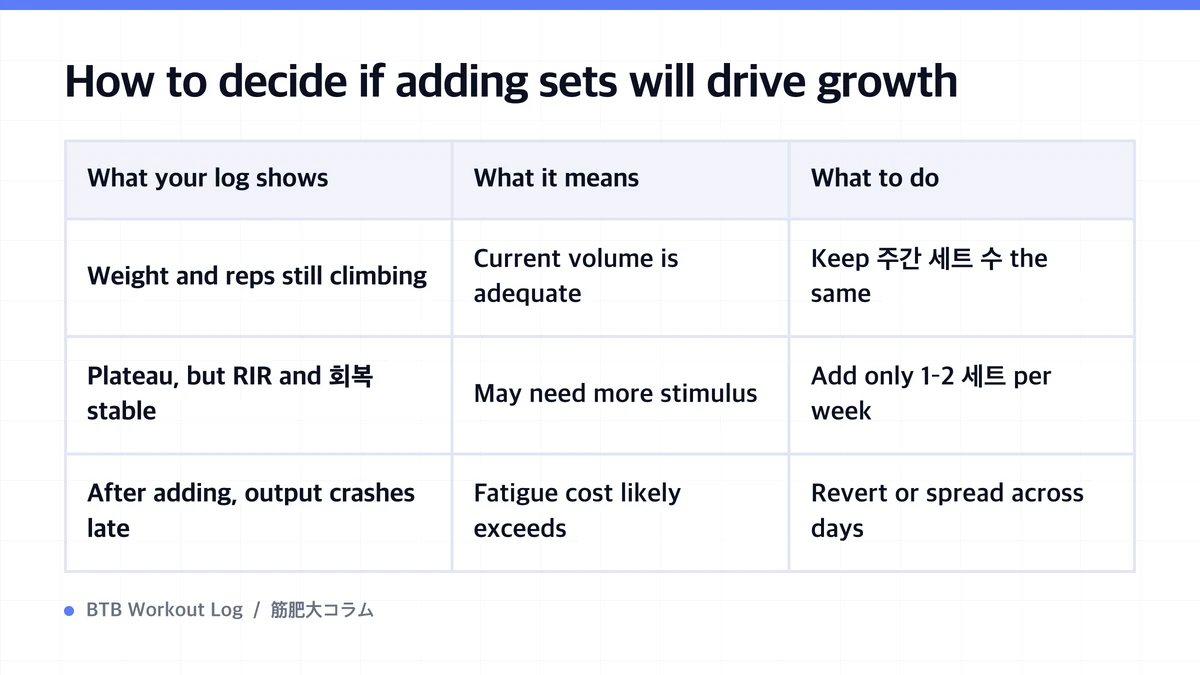
How to decide if adding sets will drive growth
If weight or reps are climbing at your current volume, there's no rush to add sets. Once progress stalls for a few weeks, first audit each set's RIR, 가동 범위, rest, form, food, and sleep. Once those check out and you feel no joint stress or lingering fatigue, you have room to add just 1–2 세트 weekly to the target muscle.
| What your log shows | What it means | What to do |
|---|---|---|
| Weight and reps still climbing | Current volume is adequate | Keep 주간 세트 수 the same |
| Plateau, but RIR and 회복 stable | May need more stimulus opportunities | Add only 1–2 세트 per week |
| After adding, output crashes late session and next time | Fatigue cost likely exceeds benefit | Revert or spread across days |
After change, line up weight, reps, and RIR for each lift alongside 주간 세트 수 per muscle group. Don't judge one session—compare multi-week trends before and after. BTB Workout Log lines up the before-and-after so you see the real pattern.
자주 묻는 질문
- Does raising set count make 근비대 faster that same week?
- Adding sets immediately increases stimulus opportunity, not muscle mass that week. Real 근비대 emerges only after weeks or months of sustaining quality per set and holding 회복, then repeating stimuli. The advantage materializes over time.
- How many sets should I start with?
- There's no universal starting point. If weight or reps are still rising, hold steady. Once 정체 hits but RIR, rest, food, and sleep are solid, adding 1–2 세트 weekly to the target muscle is a reliable move.
- Do added sets work even if reps fall?
- Minor drops don't kill the set, but if 가동 범위 and form break down so load escapes the target, quality suffers. If later sets or your next session drop sharply, either spread the addition across another day or go back to your prior volume.
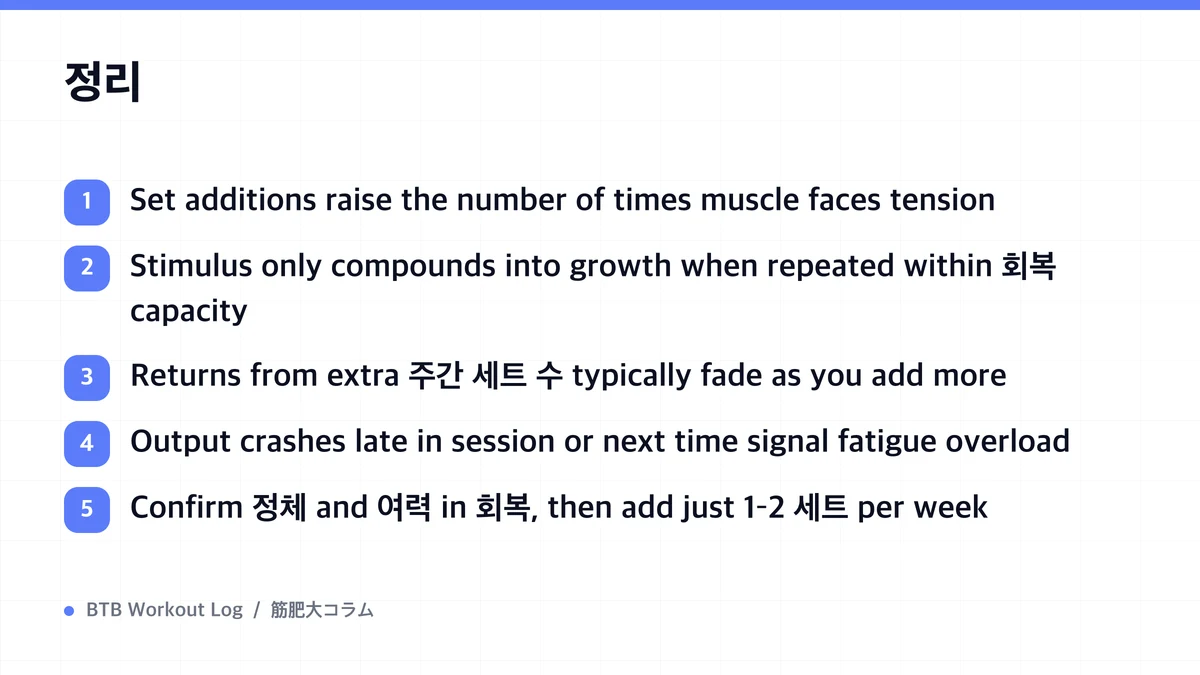
정리
- Set additions raise the number of times muscle faces tension
- Stimulus only compounds into growth when repeated within 회복 capacity
- Returns from extra 주간 세트 수 typically fade as you add more
- Output crashes late in session or next time signal fatigue overload
- Confirm 정체 and 여력 in 회복, then add just 1–2 세트 per week
참고문헌
- The Resistance Training Dose Response: Meta-Regressions Exploring the Effects of Weekly Volume and Frequency on Muscle Hypertrophy and Strength Gains
- Dose-response Relationship Between Weekly Resistance Training Volume and Muscle Mass
- Resistance Training Volume Enhances Muscle Hypertrophy in Trained Men
- Mechanisms of Muscle Hypertrophy: Current Understanding and Future Directions
- The Mechanisms of Muscle Hypertrophy and Their Application to Resistance Training