근비대 선택지에서 고민된다면 | 빈도·종목·반복수, 비교로 보이는 구분 기준
'근비대에 어느 쪽이 더 유리한가'는 그대로는 답할 수 없는 질문인 경우가 많습니다. 연구가 보여주는 평균적인 차이는 작으며, 실제 답은 목표·회복 능력·사용 가능한 시간 중 무엇을 우선하느냐에 따라 달라집니다.
여기서는 근비대에서 헷갈리기 쉬운 선택을 판단 기준별로 정리합니다. 개별 비교는 각각의 글에 맡기고, 이 페이지에서는 '무엇을 기준으로 결정할 것인가'를 다룹니다.
비교하기 전에 미리 정해야 할 3가지 기준
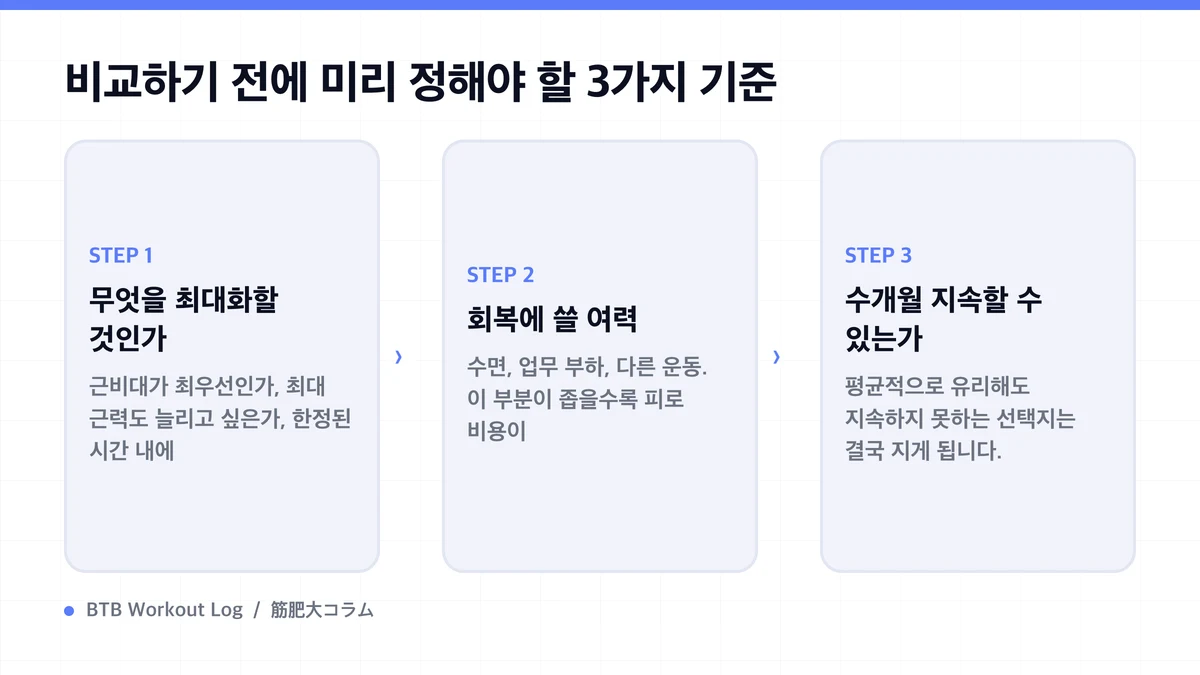
선택지를 늘어놓기 전에 자신이 무엇을 우선하는지 정하지 않으면, 비교 글을 아무리 읽어도 결정할 수 없습니다. 실제로는 다음 3가지만으로 충분합니다.
- 무엇을 최대화할 것인가:근비대가 최우선인가, 최대 근력도 늘리고 싶은가, 한정된 시간 내에 성과를 내야 하는가.
- 회복에 쓸 여력:수면, 업무 부하, 다른 운동. 이 부분이 좁을수록 피로 비용이 높은 선택지는 불리해집니다.
- 수개월 지속할 수 있는가:평균적으로 유리해도 지속하지 못하는 선택지는 결국 지게 됩니다.
이 3가지가 정해지면 대부분의 비교는 자동으로 해결됩니다. 예를 들어 시간이 최대 제약이라면, 중량과 렙 중 어느 쪽을 먼저 늘릴 것인가라는 질문도 기록하기 쉬운 쪽으로 결정해도 됩니다.
부하, 렙 범위, 몰아붙임을 어떻게 선택할까
노력도를 맞춘 비교에서는 부하대가 달라도 근비대의 차이는 작다고 보고되어 있습니다. 즉 이 영역의 선택은 '어느 쪽이 더 우수한가'가 아니라 '어느 쪽이 자신의 종목과 관절에 맞는가'의 문제가 됩니다.
| 망설이는 지점 | 판단의 축 |
|---|---|
| 저횟수 vs 고횟수 | 종목의 안전성과, 세트 중 무엇이 먼저 한계에 도달하는가 |
| 고중량 vs 저중량 | 최대 근력도 늘리고 싶은지 여부 |
| 실패까지 vs RIR을 남기기 | 다음 날 이후의 세션에 남는 피로를 어디까지 허용할 것인가 |
| 2분 휴식 vs 5분 휴식 | 1회의 총 시간과, 다음 세트의 횟수를 얼마나 지키고 싶은가 |
어느 쪽이든 '한계에 얼마나 가까워졌는가'가 맞춰져 있는 것이 전제입니다. 이 부분이 고르지 않은 채 부하나 횟수만 비교해도 의미가 없습니다. 8회에 여력 3회인 세트와 15회에 여력 0회인 세트는, 횟수의 차이 이전에 자극의 강도가 다릅니다.
실무적인 결정 방식으로는, 관절에 불안이 있는 종목이나 고중량이 위험한 종목은 횟수 쪽으로 기울이고, 폼이 안정되어 있고 진척을 추적하고 싶은 주요 종목은 무게 쪽으로 기울이는 배분이 다루기 쉬워집니다. 모든 종목을 같은 렙 범위로 맞출 필요는 없습니다.
볼륨·빈도·분할은 회복력에서 역산한다
주간 총 볼륨을 맞추면 빈도 자체의 독립적인 효과는 작다고 보고됩니다. 따라서 빈도나 분할은 '효과를 높이는 수단'이 아니라 필요한 양을 무리 없이 소화하기 위한 배치로 생각하는 것이 결정하기 쉬워집니다.
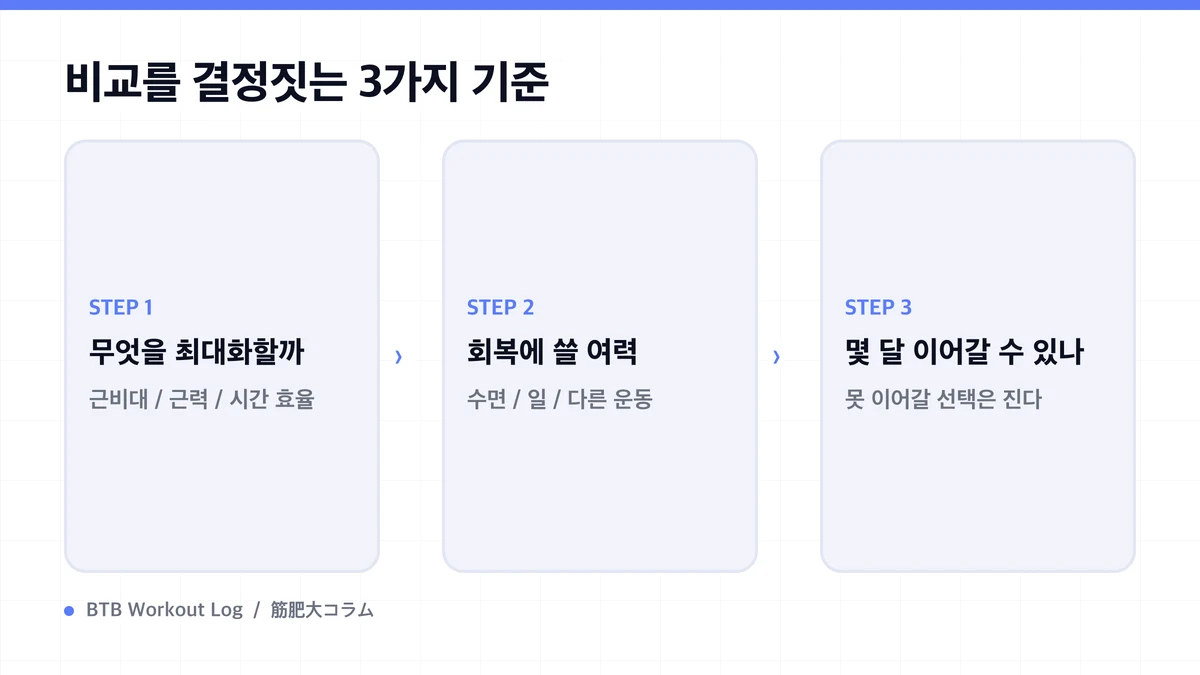
- 주간 10세트 vs 주간 20세트:먼저 양의 대략을 잡습니다. 늘릴수록 는다가 아닙니다.
- 주 1회 vs 주 2회:정한 양을 몇 회에 나눌 것인가.
- 전신 루틴 vs 분할법/PPL vs 상하체 분할:다닐 수 있는 날짜에서 역산합니다.
- 스트레이트 세트 vs 슈퍼세트:시간이 부족할 때의 압축 수단으로.
순서는 '양 → 나누는 방식 → 종목'입니다. 역순으로 결정하면 종목이 늘어난 결과 양이 어긋나기 쉽습니다. 하고 싶은 종목을 나열한 후 메뉴를 짜면 부위별 주간 세트 수가 편중되어 있는 것을 알아채지 못합니다.
한 가지, 양의 대략을 잡을 때 일반적인 숫자를 그대로 쓴다고 해서 자신에게 맞는지 알 수 없습니다. 유효한 세트 수는 훈련 경력, 강도, 종목, 회복력에 따라 달라지므로 목안에서 시작해 수주간의 변화로 조정하는 것이 현실적입니다.
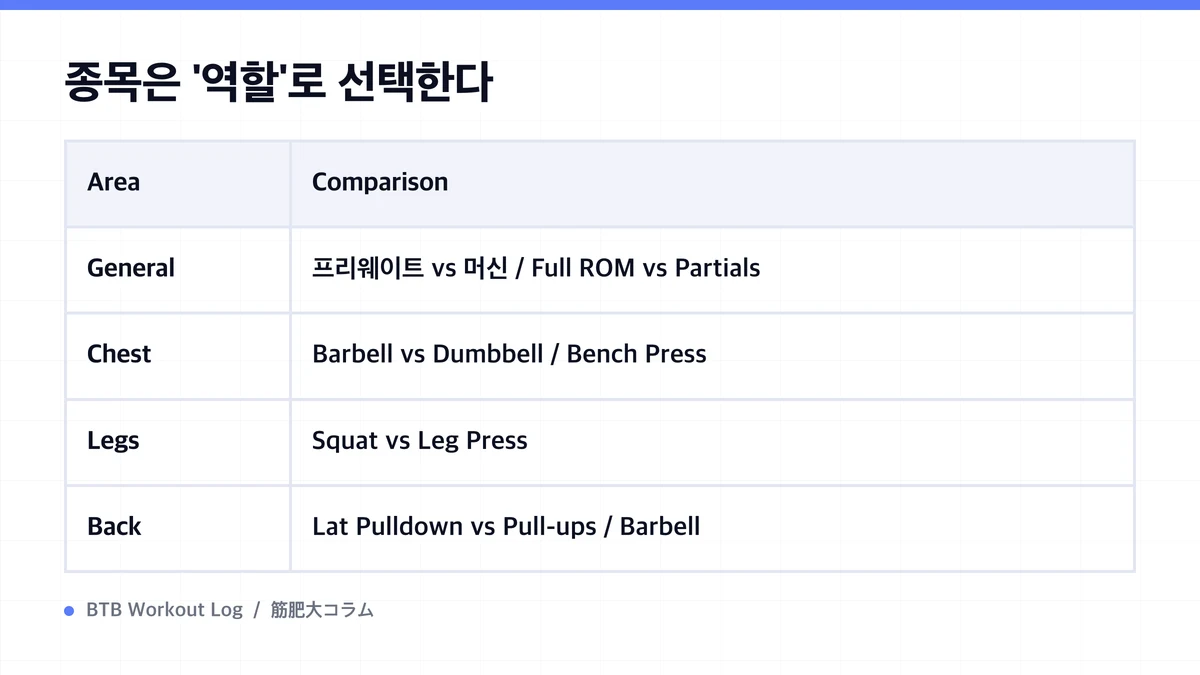
종목은 '역할'로 선택한다
Exercise comparisons tempt you to crown a winner, but the real story is usually that each lift plays a different role in your program. You position them by function: one movement for heavy loads and progress tracking, another for stretch tension on the target muscle, a third that accumulates volume with minimal fatigue. That's it.
| Area | Comparison |
|---|---|
| General | 프리웨이트 vs 머신/Full ROM vs Partials |
| Chest | Barbell vs Dumbbell/Bench Press vs Chest Press |
| Legs | Squat vs Leg Press |
| Back | Lat Pulldown vs Pull-ups/Barbell Row vs Seated Row |
| Arms & Shoulders | Dumbbell vs Preacher/Lateral Raise Loading |
Thinking in terms of role makes it obvious when two similar movements for the same muscle make sense. Running both barbell and dumbbell bench press, for instance: one drives progress, the other handles stretch stimulus. If you stack two exercises with the same function, you're really just adding sets, not variety.
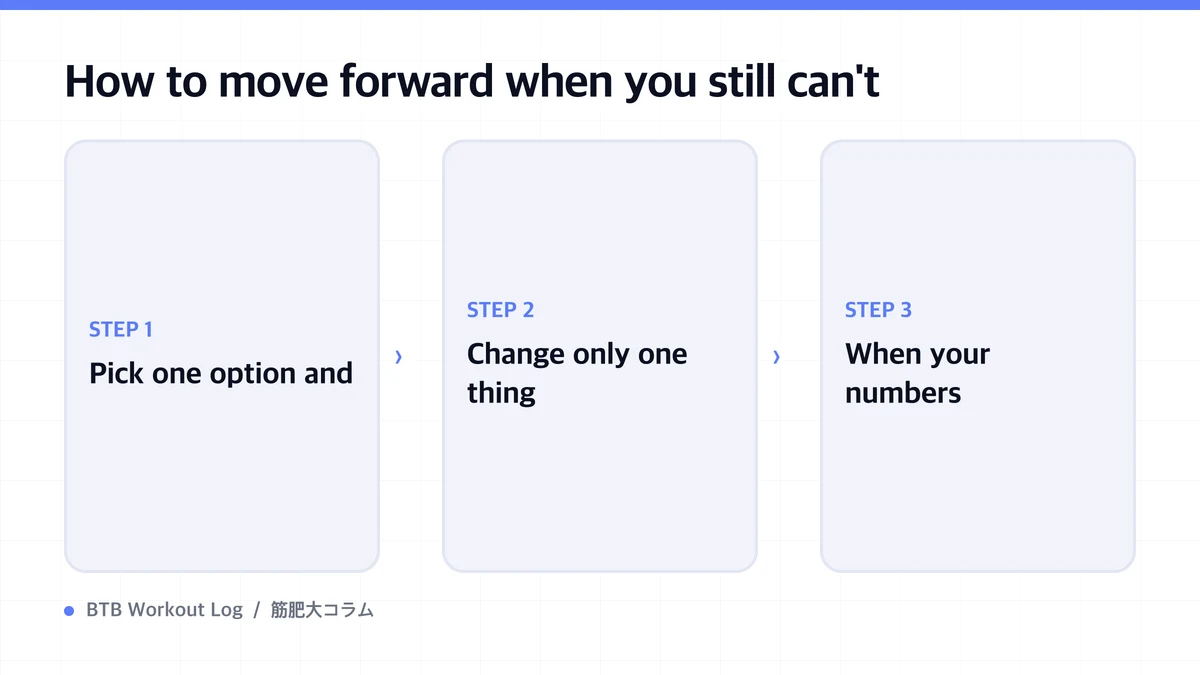
How to move forward when you still can't choose
Read every comparison article and still stuck? Most of the time, the honest answer is: "The difference is too small to matter." Here's how to handle it.
- Pick one option and stick with it for a few months while logging. Whether a fixed program or rotating exercises suits you also depends on having records.
- Change only one thing at a time. Swap multiple variables at once and you'll never know what actually worked.
- When your numbers stall, try the next option. If progress is still happening, there's no reason to change.
The real answer to any comparison lives in your own data. Keep weekly set counts and weight × reps for each exercise—this lets you verify months later which choice actually drove your progress (workout log app).
자주 묻는 질문
- Will I grow faster if I pick the "better" option from the research?
- Research shows average differences in a population. Most comparisons reveal tiny gaps. Even if an option has a slight edge on average, you won't gain if you can't stick to it or recover from it. First nail down volume and proximity to failure, then choose what fits.
- Is more exercise variety always better?
- Two to four exercises per muscle group with different roles will cover most needs. Add more and frequency drops per movement, progress becomes harder to track, and you lose sight of what's actually working.
- How do I decide when to switch an exercise?
- Use three weeks without any change in weight or reps as your benchmark. A week or two of stagnation is normal variance—switching there just muddles the signal.
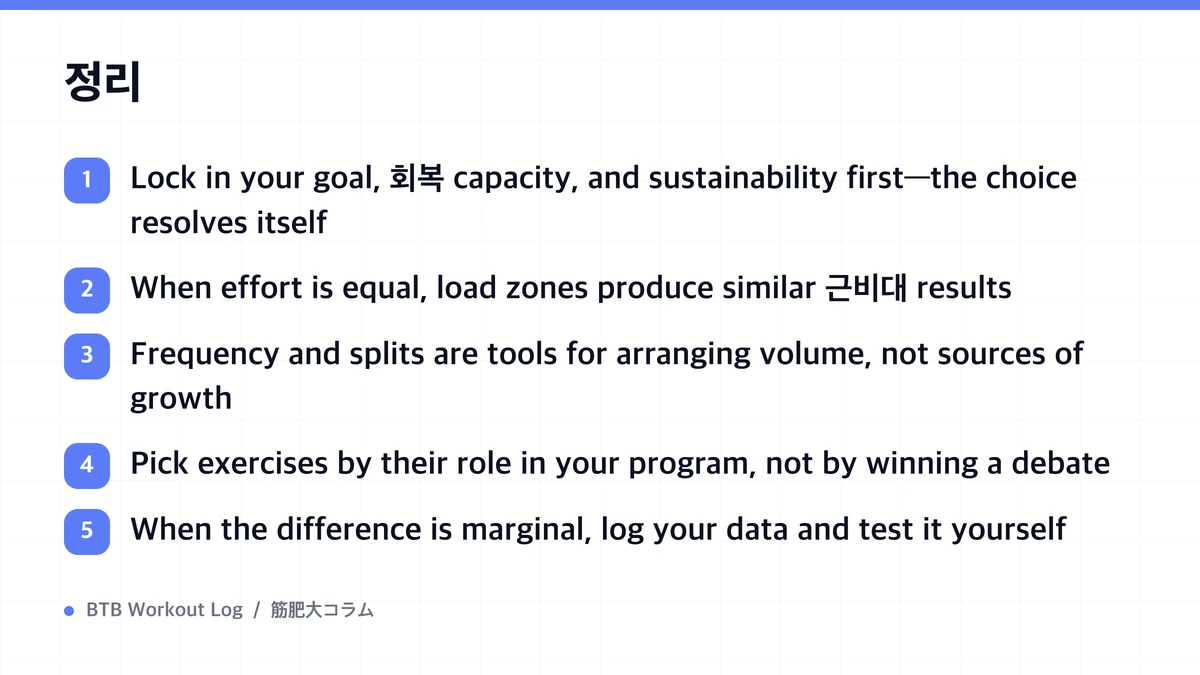
정리
- Lock in your goal, 회복 capacity, and sustainability first—the choice resolves itself
- When effort is equal, load zones produce similar 근비대 results
- Frequency and splits are tools for arranging volume, not sources of growth
- Pick exercises by their role in your program, not by winning a debate
- When the difference is marginal, log your data and test it yourself