운동 빈도를 늘려도 근비대가 빨라지지 않는 이유는? '늘릴수록 좋다'는 함정
빈도만 늘린다고 해서 주간 유효 작업량이나 각 세트의 질이 자동으로 증가하지 않기 때문입니다. 주간 세트 수가 같다면 빈도의 주된 역할은 자극을 며칠에 나누는지를 바꾸는 것일 뿐입니다.
날짜를 추가한다고 성장 속도가 올라가지 않습니다. 분산으로 질이 올라가는 사람도 있지만, 회복 부족이나 일정 복잡화로 진행 상황을 재현하기 어려워지는 사람도 있습니다.
"단련 횟수가 많을수록 성장 기회도 많다"는 직관의 함정
가슴을 주1회에서 주3회로 늘리면 근육에 성장을 촉진할 기회도 3배가 되는 것처럼 보입니다. 하지만 여기서 말하는 운동 빈도는 짐에 가는 날짓수가 아니라 같은 근군을 1주일에 몇 번 단련하는지입니다. 근비대 영향을 생각할 때는 빈도뿐만 아니라 주간 총 세트 수를 따로 봐야 합니다.
예를 들어 가슴을 월요일에 12세트 했던 사람이 월·수·금에 4세트씩 나누면 빈도는 3배지만 주간 세트 수는 같습니다. 반면 각 날에 12세트씩 하면 바뀐 것은 빈도뿐만 아니라 주간 총량도 12세트에서 36세트로 증가합니다. 후자에서 결과가 달라져도 그걸 '높은 빈도의 효과'라고 단정할 수 없습니다.
또 다른 간과는 세션 수와 유효 자극 수가 같지 않다는 것입니다. 이전 피로가 남아 무게·반복 횟수·가동 범위가 떨어진 상태에서 날짜만 늘려도 고품질 세트가 증가했다고 할 수 없습니다. 달력상 횟수가 아니라 회복한 상태에서 진행을 노릴 수 있는 기회가 몇 회인지가 중요합니다.
주간 총량을 맞추면 빈도만의 추가 효과는 작아진다
빈도 연구 해석이 갈리기 쉬운 이유는 빈도와 볼륨을 동시에 바꾼 연구와 주간 볼륨을 맞춘 연구가 섞여 있기 때문입니다. 2016년 메타분석은 주2회가 주1회보다 유리할 가능성을 보였지만, 주3회 이상이 주2회를 앞지르는지는 충분히 판단할 수 없었습니다.
이후 더 많은 연구를 포함한 2019년 메타분석에서는 주간 총량을 맞춘 조건에서 고빈도와 저빈도의 근비대 차이가 통계적으로 유의미해도 실질적 크기는 없다고 정리했습니다. 더욱이 2026년 메타회귀분석에서도 근비대에 대한 빈도의 독립적 효과가 작다는 결과와 일치했습니다. 연구 대상, 측정 부위, 운동 경력에는 편차가 있으므로 모든 사람에게 차이가 없다고 단정하는 결과는 아닙니다. 그래도 "횟수를 늘리면 그만큼 비례해서 더 빨리 커진다"는 견방은 지지하기 어렵다고 할 수 있습니다.
이것이 빈도가 무의미하다는 뜻은 아닙니다. 연구가 구분하려는 것은 같은 작업량을 몇 회에 나누는가의 독립적 효과입니다. 현장에서는 빈도를 올림으로써 1회에 몰아넣은 세트를 분산할 수 있고, 그 결과로 후반 세트의 질이나 일정 적합도가 개선될 수 있습니다. 빈도의 가치는 성장 자극을 직접 2배 증가시키는 마법이 아니라 필요한 작업을 좋은 상태에서 반복하기 쉽게 만드는 점에 있습니다.
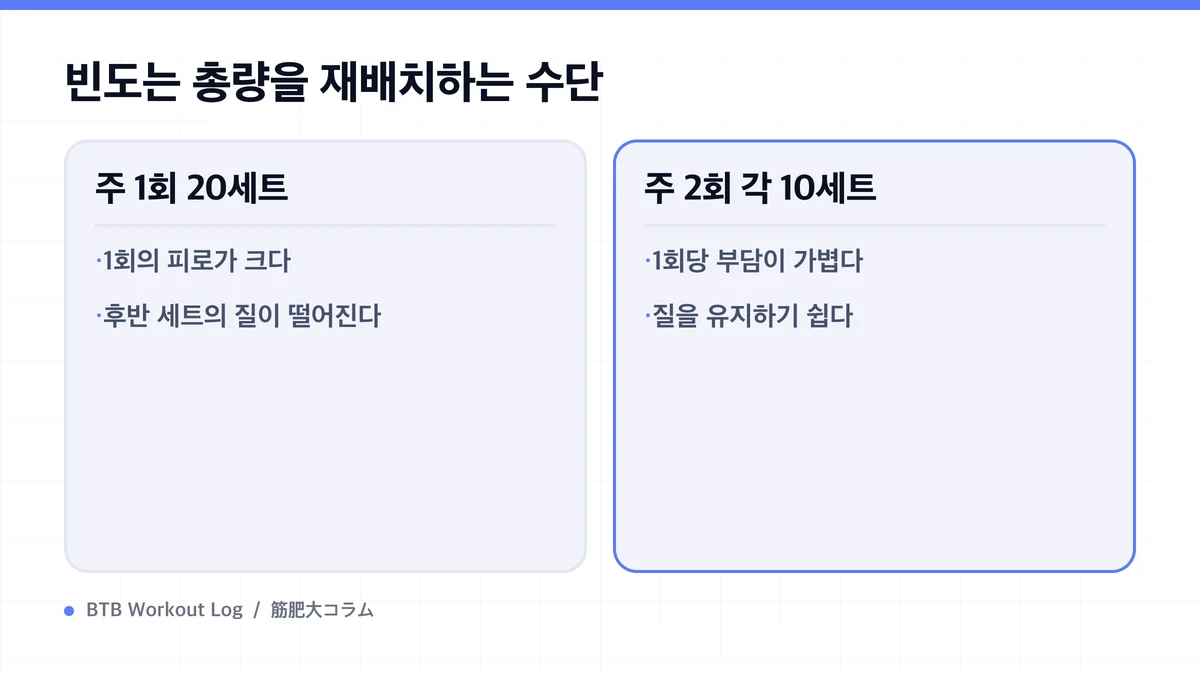
빈도를 늘리면 자극 총량보다 배분과 질이 바뀐다
주12세트를 하루에 하면 같은 근군의 후반 세트에서 국소 피로가 쌓이기 쉬워집니다. 주2회에 6세트씩 나누면 각 날 후반까지 무게·반복 횟수·가동 범위를 유지하기 쉬운 사람이 많을 것입니다. 이 경우 높은 빈도가 유리한 게 아니라 분산으로 기존 주간 세트를 더 높은 품질로 실행할 수 있었던 것이 실질입니다.
다만 분산한다고 항상 질이 올라가는 건 아닙니다. 전날 프레스로 삼두근이나 어깨가 피곤한 상태에서 가슴을 단련하거나, 하체 날을 잘게 나눈 결과 허리 부담이 연일 계속되는 중복도 생깁니다. RIR(아직 몇 회 더 할 수 있는지를 나타내는 여력)이 계획보다 작아져 같은 무게에서 반복 횟수가 떨어지면, 보기에는 짧은 세션이어도 회복이 따라가지 못하고 있다는 뜻입니다.
또한 빈도를 늘릴 때마다 세트 수도 추가하면 주간 하드 세트 수까지 증가합니다. 주간 볼륨과 근비대에는 용량반응 경향이 있지만 추가 세트의 이득은 일정하지 않으며, 개인의 회복력이나 종목 구성에 따라 유효 범위가 달라집니다. 빈도를 평가하려는데 주간 총량까지 바꾸면 개선해도 악화해도 원인을 판정할 수 없게 됩니다.
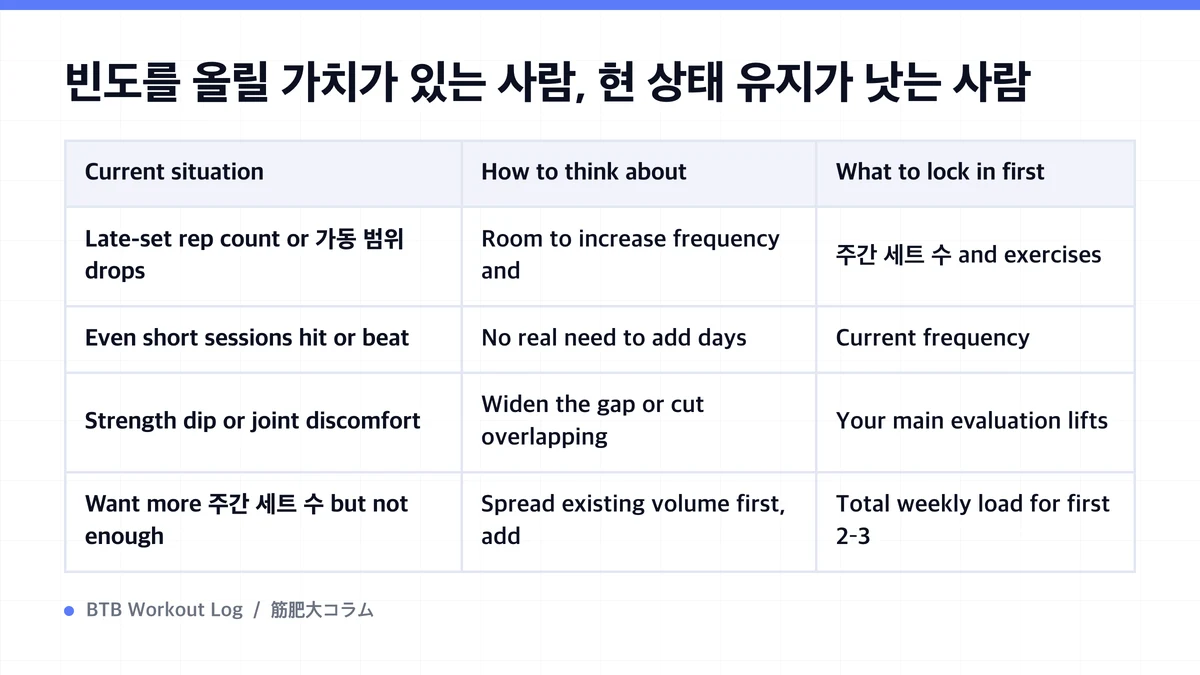
빈도를 올릴 가치가 있는 사람, 현 상태 유지가 낫는 사람
The question isn't "how many times per week is ideal," but whether you're hitting your current 주간 세트 수 with high quality in your current split. Organizing it this way clarifies why you'd actually change frequency.
| Current situation | How to think about frequency change | What to lock in first |
|---|---|---|
| Late-set rep count or 가동 범위 drops significantly | Room to increase frequency and spread sets | 주간 세트 수 and exercises |
| Even short sessions hit or beat previous numbers | No real need to add days | Current frequency |
| Strength dip or joint discomfort lingers until next session | Widen the gap or cut overlapping movements | Your main evaluation lifts |
| Want more 주간 세트 수 but not enough time per session | Spread existing volume first, add a small amount later | Total weekly load for first 2–3 weeks |
The same logic applies when switching your 분할법. Moving from a 3-day 전신 루틴 to a 5-day split doesn't automatically raise frequency for each muscle group. Count gym days, muscle-group frequency, and direct vs. indirect sets separately. Presses, rows, and squat patterns especially load multiple muscles, so don't assume you need more reps just because direct work looks light.
If you're progressing on one session per week, maintaining set quality each time, and it fits your life, no need to change just because frequency sounds low. Conversely, if you're cramming too much into one day and grinding through the tail end, splitting the load without adding total volume often fixes it.
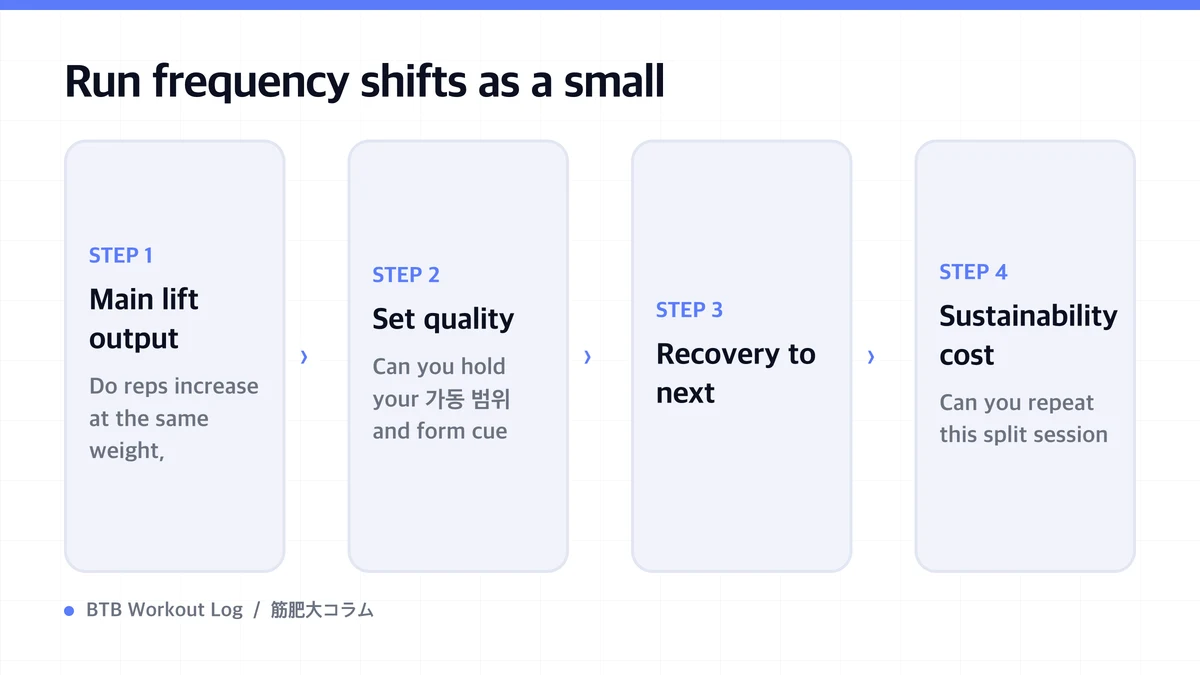
Run frequency shifts as a small experiment—keep 주간 세트 수 constant
If you raise frequency, spend the first 2–4 weeks holding 주간 세트 수, main lifts, 렙 범위, and RIR as steady as possible. Only change the split. If you're doing 12 chest sets in one day, simply divide it into 6 and 6 first. Don't add sets just because you made a new training day—that kills the comparison.
Four metrics to track before and after
- Main lift output: Do reps increase at the same weight, or does weight climb for the same rep count?
- Set quality: Can you hold your 가동 범위 and form cue all the way through, landing the target RIR?
- Recovery to next session: When you hit the same muscle again, do your warm-up numbers look normal or clearly weaker?
- Sustainability cost: Can you repeat this split session after session—considering time, schedule conflicts, and sleep impact?
If the back-half drop shrinks after spreading frequency, and weight or reps climb week-to-week, the new split works. If daily output falls and you're not 회복 by the next stimulus, go back to fewer days, longer rest, or fewer indirect sets. Don't decide based on soreness alone—look for trends across multiple weeks of data.
An app shouldn't decide optimal frequency; use it to gather evidence that your split change actually raised set quality and progress. Confirming your total weekly load stayed the same before and after is crucial. BTB Workout Log tracks 주간 세트 수 by muscle group that way.
빈도를 늘리면 주간 세트 수는 어떻게 달라지는가
'빈도를 늘린다'고 말할 때, 실제로는 성질이 다른 두 가지 변경이 일어날 수 있습니다. 하나는 한 주의 총 세트 수를 고정한 채 분산시키는 변경, 다른 하나는 1회당 분량을 유지한 채 총량도 늘리는 변경입니다. 이 두 가지를 섞으면 빈도의 효과는 영원히 평가할 수 없습니다.
주 12세트를 주 1회로 수행하던 부위를 6세트×주 2회로 나눈 경우, 총량은 달라지지 않습니다. 달라지는 것은 1회 세션 안에서 피로가 쌓이는 방식이며, 후반 세트의 출력을 유지하기 쉬워집니다. 한편, 6세트×주 2회였던 부위에 3일째를 더해 18세트로 만들면, 이것은 빈도의 실험이 아니라 볼륨의 증량입니다.
순서로는 우선 주간 총량을 고정하고 분산시켜, 세션 후반의 중량·횟수가 개선되는지를 봅니다. 개선되고 회복도 제때 이루어지고 있다면, 그때 비로소 총량을 더할 여지가 있는지 검토합니다. 두 가지를 동시에 움직이면, 늘어도 멈춰도 원인을 특정할 수 없습니다.
자주 묻는 질문
- Will I build 근비대 if I only train each body part once per week?
- Yes, if you hit the required 주간 세트 수 at high quality and your weight or reps keep climbing. If late-set work falls apart or you can't finish the volume in time, you can split into two sessions per week without raising total load—that's where a split helps.
- What frequency should I start with for 근비대?
- Most people find that hitting each muscle group roughly twice per week makes it easier to balance weekly sets and 회복. But there's no fixed rule. Some progress on once per week; others prefer small amounts spread across three sessions. Adjust based on set quality.
- Can I raise frequency and set count at the same time?
- You'll blur cause and effect. First, lock 주간 세트 수 and only change the split for 2–4 weeks—check output and 회복. Once spread out, if you still have room and progress keeps going, then try adding a small number of sets as a separate change.
정리
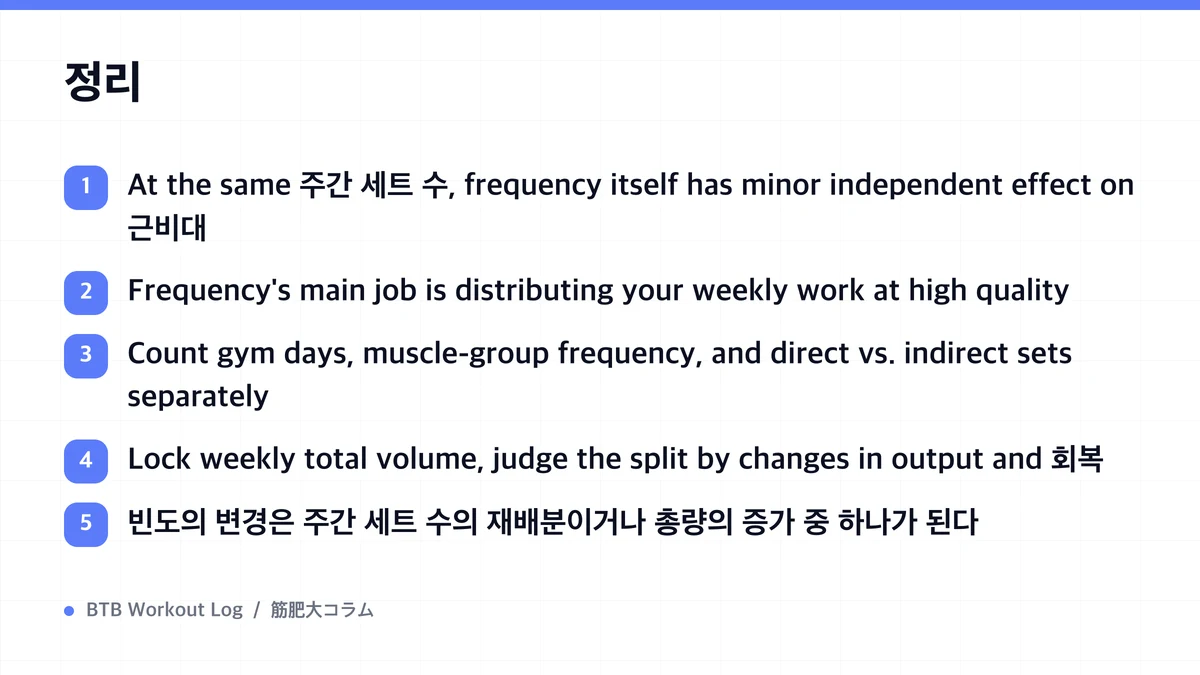
- At the same 주간 세트 수, frequency itself has minor independent effect on 근비대
- Frequency's main job is distributing your weekly work at high quality
- Count gym days, muscle-group frequency, and direct vs. indirect sets separately
- Lock weekly total volume, judge the split by changes in output and 회복
- 빈도의 변경은 주간 세트 수의 재배분이거나 총량의 증가 중 하나가 된다
참고문헌
- Resistance Training Frequency and Muscle Hypertrophy: Systematic Review and Meta-analysis
- The Resistance Training Dose Response: Meta-Regressions Exploring the Effects of Weekly Volume and Frequency on Muscle Hypertrophy and Strength Gains
- Effects of Resistance Training Frequency on Muscle Hypertrophy: Systematic Review and Meta-analysis
- Dose-response Relationship Between Weekly Resistance Training Volume and Muscle Mass