"Doğru Form Tek Bir Şekildir" Diye İnanmak Seni Geri Bırakır | Kas Hipertrofisinde Bilmen Gereken Gerçek Sebep
Tehlike, forma önem vermekten değil, her bireye ve her amaca uyacak tek bir görüntüyü doğru olarak kabul edip, kemik yapısındaki farkları, ağrıyı, hedef kasları ve ekipman farkını görmezden gelerek uygulamaktan gelir.
İyi bir formun uyması gereken koşulları vardır. Ancak bu koşulları karşılayan hareket tek bir tür değildir; tekrarlanabilirlik sağlanarak kişiye özgü ayarlamalar yapma imkanı vardır.
"Ders kitabı şeklinin tek doğru olması" neden tehlikelidir?
Form eğitiminde ayak genişliği, grip genişliği, eklem açıları hatta bar yolu tek bir örnek olarak sunulabilir. Standart bir örnek hareketi öğrenmeyi kolaylaştırır, bozulmaları fark etmeyi sağlar; başlangıç için yararlıdır. Sorun, bu örneği herkesin aynı şekilde yapması gereken nihai form olarak görmeye başladığımızda ortaya çıkar.
Kol bacak uzunluğu, eklemleri hareket ettirme rahatlığı, şimdiki hareket açısı, ekipman yapısı kişiden kişiye değişir. Dahası, aynı bench press'te bile, spor dalı olarak ağır yük kaldırmak ile kas hipertrofisi için göğüs kasına dengeli yük uygulamak arasında, öncelik farklıdır. Tek bir görüntüye uydurmaya çalışırsak, bireyin işine yaramayan pozisyonları zorlamaya, hedefine uygun ayarlamaları "hata" saymaya başlarız.
Öte yandan "bireysel fark olduğu için özgür hareket et" demek de aşırıdır. Kontrolsüz ivme, yükün baskısı altında değişen yörünge, sadece tekrar sayısı için darlaştırılan hareket açısı, bilinçli ayarlamalardan ayrı tutulmalıdır. Tam hareket açısını temel almamızın sebebi de, herkesin eklemini aynı maksimum açıya kadar hareket ettirmek değil, hedef kası geniş açıda çalıştırmak, hareket koşullarını eşitlemektir.
Formu istikrarlı hale getirmek doğru bir düşüncedir
"Formu sabitle" önerisi önemli bir anlama sahiptir. Kilo veya tekrar artışını değerlendirmek için, önceki ve bu sefer koşullar benzer olmalıdır. Grip genişliği, ayak genişliği, koltuk konumu, hareket açısı, ivme kullanımı her seferde değişirse, sayı artsa da kuvvet mi arttı yoksa hareketi daha kolay mı yaptık anlamak güçleşir.
Burada sabitlemek istediğimiz, fotoğraftaki tek bir pozisyon değil, o kişinin seçtiği uygulama koşullarıdır. Hedef kas grupları ve hareketin rolünü belirle, ağrı olmadan kontrol edilebilir menzilde başlangıç ve bitiş noktasını, ana yörüngeyi, tempo hızını eşitle. Bu tekrarlanabilirlik sayesinde, progresif yüklenme'yi kilo veya tekrar artışında görebilirsin.
| Kategori | Kontrol Edilecek | Yaklaşım |
|---|---|---|
| Sabit koşullar | Hareketi kontrol edebilme, keskin ağrı yok, hedef hareket açısı korunuyor | Sette de çok bozulmasın |
| Eşit koşullar | Grip, ayak genişliği, koltuk, hareket açısı, ivme derecesi | Önceki uygulamayla karşılaştırmada kullan |
| Ayarlanabilir koşullar | Eklem açısı, yörünge, duruş, ekipman, hareket çeşitleri | Amaç ve bireysel farka göre ayarla |
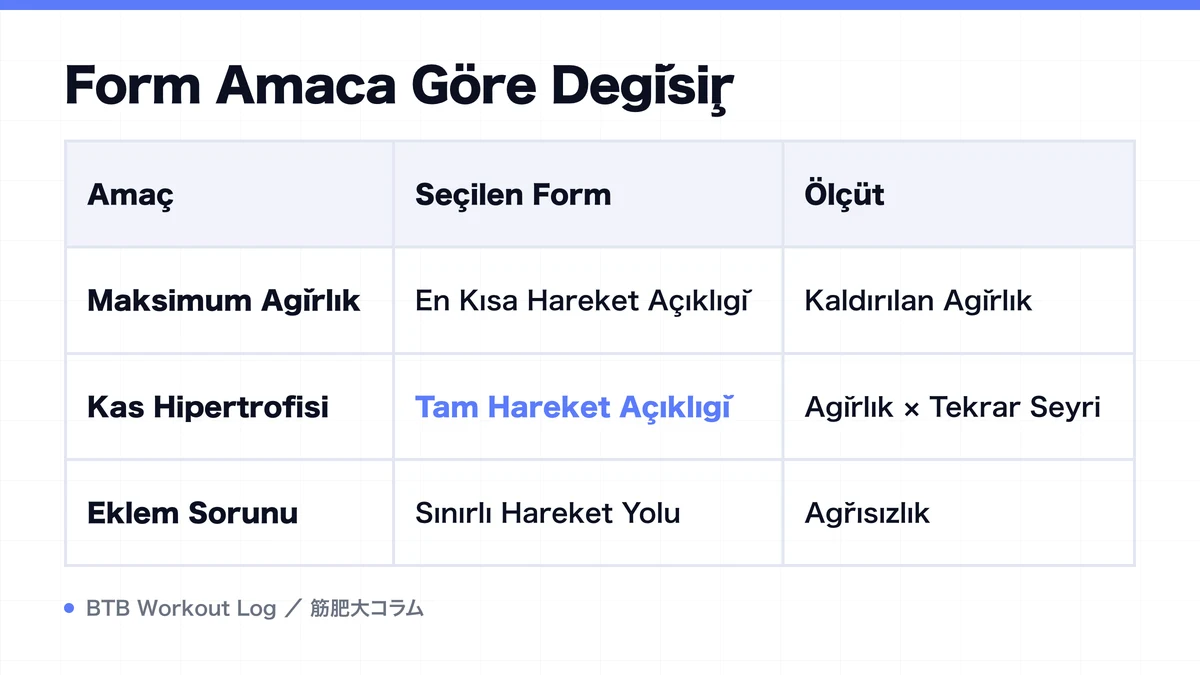
Neresinden itibaren bireysel fark, neresinden itibaren bozulma?
Bireysel fark olarak kabul edilebilecek değişiklik ile yükün etkisiyle ortaya çıkan bozulma, görünüşte ayırt edilemez. Ölçüt, o değişiklik bilinçli, tekrarlanabilir, amaca uygun mu olmasıdır. Örneğin, squat'ta ayak genişliğini artırdığında hedefli derinlikte stabil şekilde inemiyorsan, bu ayarlamadır. Aynı setin ikinci yarısında ayak genişliği veya ağırlık merkezi aniden değişiyorsa, yorgunluktan kaynaklı bozulmadır.
Hareket açısı da aynıdır. Tam açı iyi başlangıç ayarıdır ama "eklemin sonuna gitmek" anlamına gelmez. Hedef kasa yük koruyan, duruşu kontrol edebileceğin açı ölçüt olmalı. Ağrı veya ekipman sınırlaması varsa, açı ayarlanabilir; sadece ağır yük kaldırmak için daraltıldıysa farklı kayıt edilmelidir. Tam açı ve kısmi açı kullanımının ayrımı tam açı ile parsiyel açı karşılaştırmasında da aynı temele dayanır.
Ayrıca formun bir kısmını değiştirirsek, aynı hareket adı olsa da yük dağılımı ve zorluk noktaları değişir. Grip değiştirdiğin seti, önceki rekorla aynı koşul olarak almak doğru değildir. "Önceki hedeften daha ağır kaldırdım" ile "aynı harekette güç kazandım" ayrımını yapman, form ayarlamayı ve ilerlemeyi birlikte takip etmeye olanak verir.
Araştırma gösteriyor: "Değiştirirsek, sonuçlar da değişir"
Bench press research shows that chest muscle activation and performance vary depending on bench angle and execution method. The same applies to back and shoulder exercises—muscle activity distribution shifts based on exercise selection and implementation conditions. This demonstrates why a single aesthetic can't be the universal optimal solution.
However, a form that produces high muscle activity in a short measurement window can't simply be declared the best form for long-term kas hipertrofisi. Muscle activation readings, lifting performance, and hypertrophy weeks later are separate measures. Results change if the research subjects' experience, exercise choice, load, or measurement sites differ.
Resistance training reviews treat hypertrophy stimulus as multiple variables—not just load, but frequency, intensity, volume, and movement pattern. Form relates to movement pattern and load distribution. Rather than extracting a universal trajectory from studies, it's more practical to set your goal, standardize your conditions, and track your own response.
Why one form looks like the right answer
In coaching, simple rules like "don't let your knees go over your toes" or "lock your elbows at this angle" spread easily because they're quick to communicate. These cues help when learning complex movements initially, but they originally address specific problems for specific people. Once the original context disappears, they linger as universal law—turning adjustable elements into absolute rules.
Advanced athletes' videos feed this too. A form optimized for that lifter's skeleton, competition rules, years of training, and specific loads doesn't transplant directly into someone else's hypertrophy training. Videos also capture one rep from one angle, hiding pain, stability, local muscle fatigue, and set-to-set consistency.
Relying only on the "feel" to decide optimal form isn't wise either. Feel guides form adjustments, but a strong pump or burn sensation alone doesn't determine long-term superiority. Separate the sensation from the exercise value, then examine load and reps under identical conditions, RIR, and toparlanma as well.
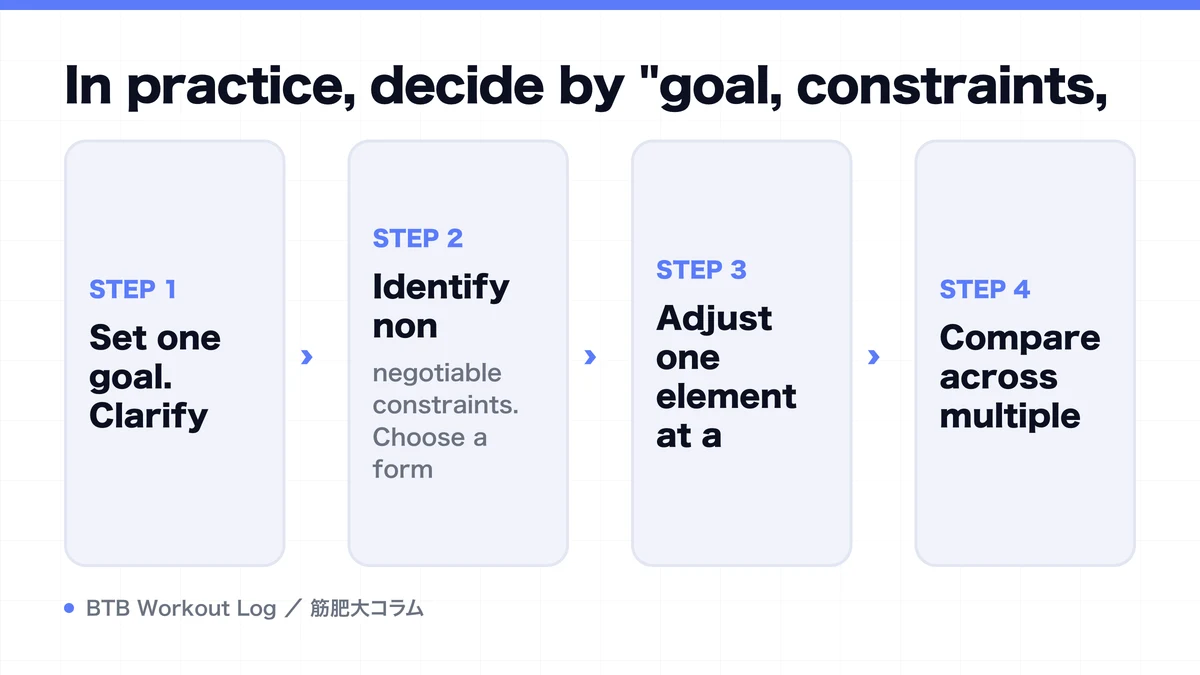
In practice, decide by "goal, constraints, then records"
Instead of hunting for the "correct" video, narrow down your conditions in this order to decide more clearly:
- Set one goal. Clarify the target muscle group, the exercise's role, and your tekrar aralığı.
- Identify non-negotiable constraints. Choose a form with no sharp pain, full load control, and reproducible hareket açısı.
- Adjust one element at a time. Don't change grip, foot stance, seat position, and bar path simultaneously.
- Compare across multiple sessions. At similar RIR, observe reps, stability, fatigue in unintended muscles, and toparlanma until next session.
- Lock in adopted conditions. Once improvement is confirmed, standardize them for a period, then progress weight or reps.
If sharp pain occurs, worsens across reps, or persists even with reduced load, don't micromanage the form—stop the exercise and consult a professional. Conversely, if the movement looks slightly different from textbook but stays stable, targets your intended muscles, and progress aligns with your goals, ask whether a change is necessary first.
Just as chasing load jumps every session doesn't define progress, don't directly compare numbers before and after a form change as if they're the same baseline.
Sık Sorulanlar
- Should I use the same form as others doing the same exercise?
- Same exercise, different bodies. Limb length, comfortable joint angles, equipment, and goals all shift the ideal foot stance and bar path. Use a reference as a starting point, but prioritize pain-free control and reproducibility of your target hareket açısı and movement conditions.
- If I change my form, do my old records become worthless?
- Not worthless, but treat them as personal records under different conditions. Record the date you changed grip or hareket açısı, build a new baseline over several sessions, then compare future weight and rep gains within that new condition.
- Is any form fine as long as it doesn't hurt?
- Pain-free is essential but not enough. Verify you can control the load, maintain the target muscle group and hareket açısı, and avoid major breakdown in the final reps. Stop immediately if sharp pain or worsening discomfort appears, and seek professional help if needed.
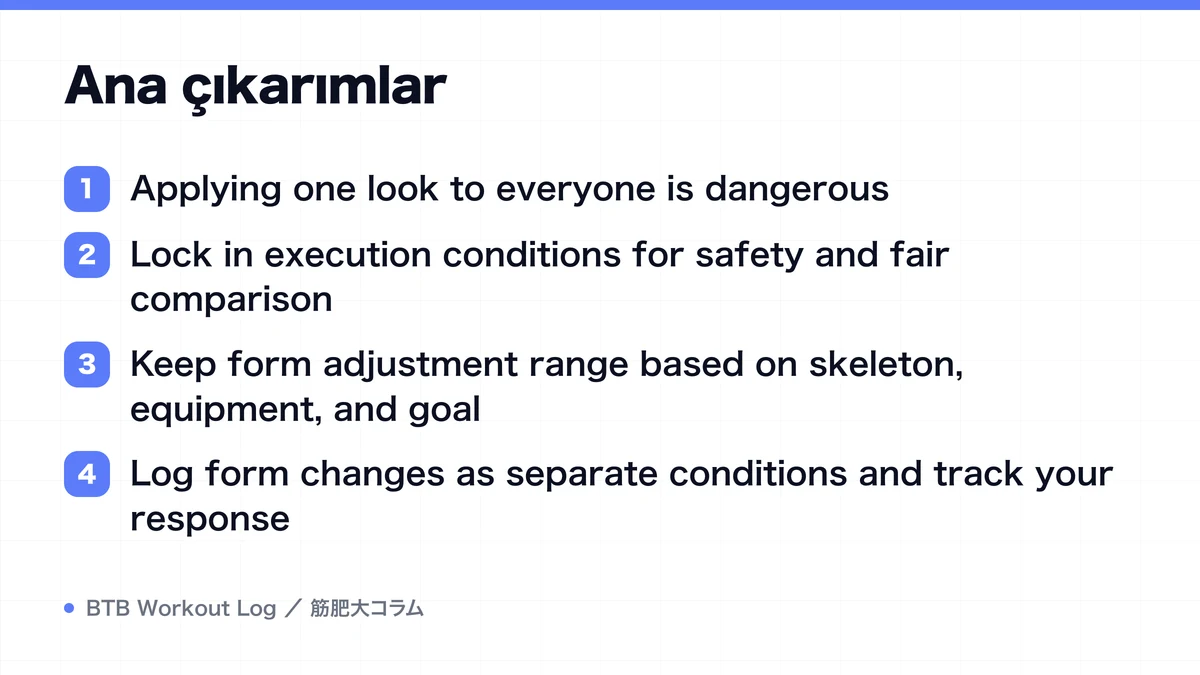
Ana çıkarımlar
- Applying one look to everyone is dangerous
- Lock in execution conditions for safety and fair comparison
- Keep form adjustment range based on skeleton, equipment, and goal
- Log form changes as separate conditions and track your response
Kaynaklar
- Non-uniform Excitation of the Pectoralis Major During Flat and Inclined Bench Press
- The Effects of Bench Press Variations in Competitive Athletes on Muscle Activity and Performance
- Variations in Muscle Activation During Traditional Latissimus Dorsi Exercises
- Different Shoulder Exercises Affect the Activation of Deltoid Portions
- The Influence of Frequency, Intensity, Volume and Mode of Strength Training on Whole Muscle Cross-sectional Area in Humans