운동을 쉬면 근육은 언제부터 줄어들까? 쉬는 게 불안한 사람을 위한 디트레이닝 해설
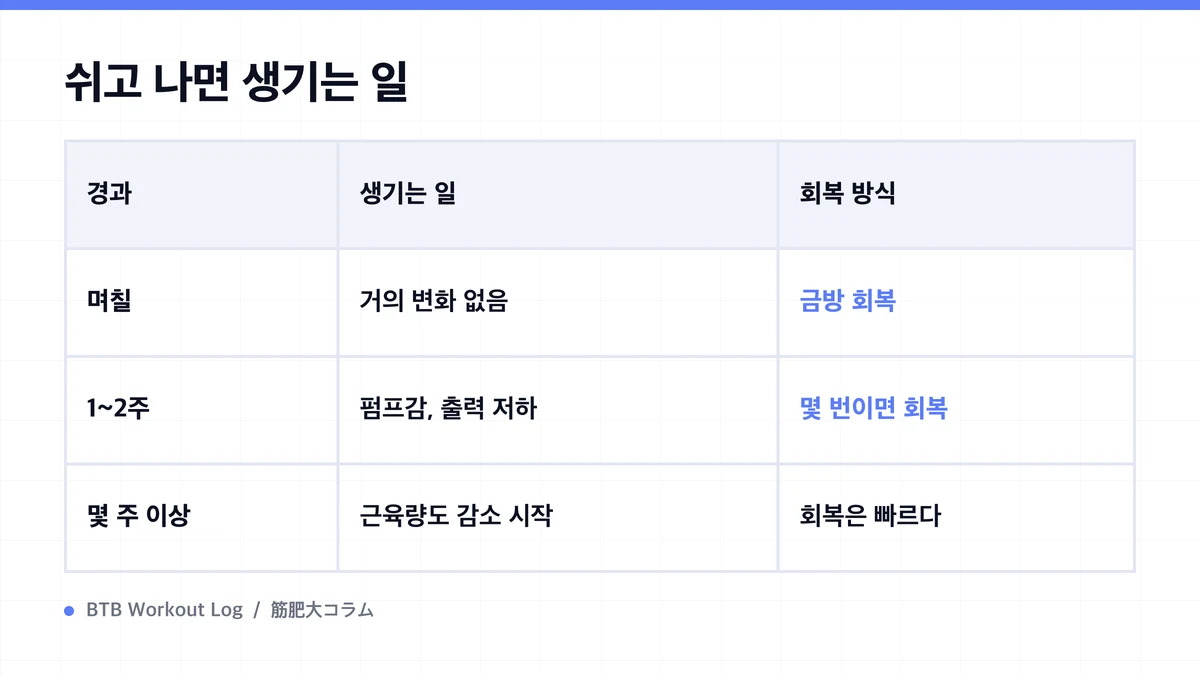
며칠이나 1주일 정도 쉬었다고 해서 단련한 근육이 급격히 소실되지는 않습니다. 먼저 변하기 쉬운 것은 펌프감, 체내 수분, 운동 동작의 감각이며, 실제 근량 감소는 휴지가 길어질수록 일어나기 쉬워집니다.
다만 "몇 일째부터 빠진다"는 공통의 기준선은 없습니다. 평소처럼 움직이며 쉬는 휴가와 병이나 고정으로 거의 움직일 수 없는 기간은 같은 운동 휴지라도 진행 속도가 크게 달라집니다.
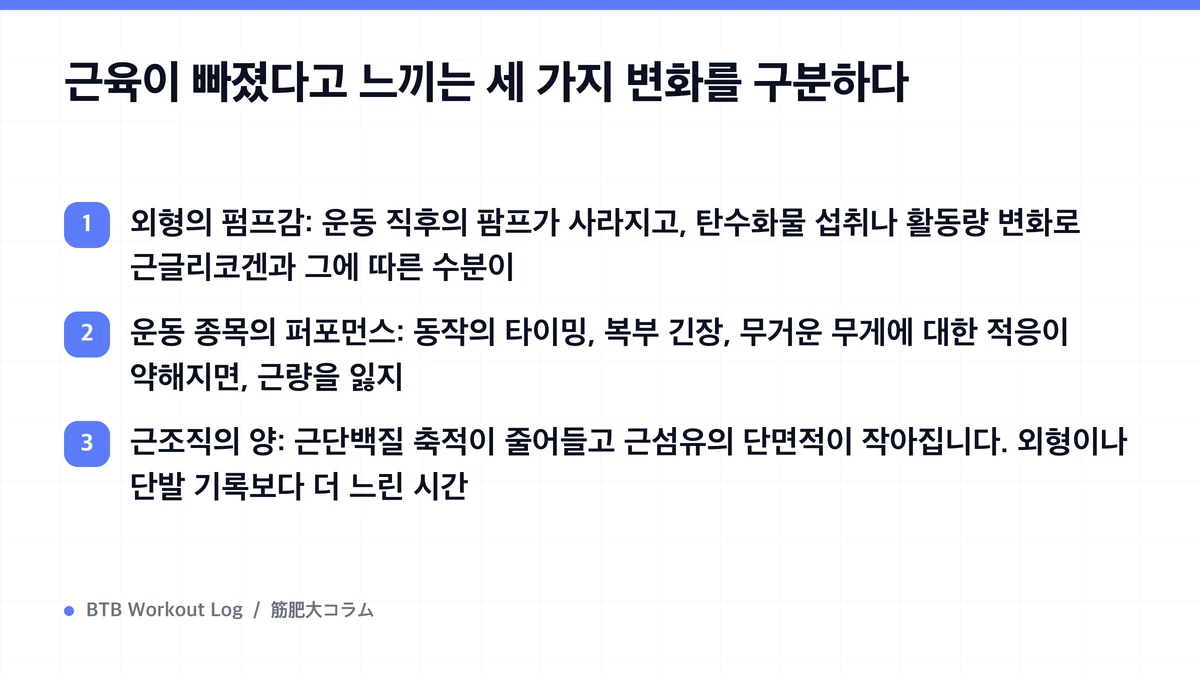
근육이 빠졌다고 느끼는 세 가지 변화를 구분하다
휴지 중 변화를 생각하기 전에, '빠진다'가 무엇을 가리키는지 구분합니다. 거울에 작아 보이는 것, 이전 무게가 무겁게 느껴지는 것, 근섬유 자체가 가늘어지는 것은 별개의 현상입니다.
- 외형의 펌프감: 운동 직후의 팜프가 사라지고, 탄수화물 섭취나 활동량 변화로 근글리코겐과 그에 따른 수분이 감소하면, 초기 단계에도 작아 보일 수 있습니다.
- 운동 종목의 퍼포먼스: 동작의 타이밍, 복부 긴장, 무거운 무게에 대한 적응이 약해지면, 근량을 잃지 않았는데도 무게나 횟수가 떨어질 수 있습니다.
- 근조직의 양: 근단백질 축적이 줄어들고 근섬유의 단면적이 작아집니다. 외형이나 단발 기록보다 더 느린 시간 경과에서 진행됩니다.
이 구분을 하지 않으면, 휴지 후 펌프만 사라져도 "근육이 빠졌다"고 판단하거나, 반대로 체중이 같으니 근량도 유지됐다고 착각하기 쉽습니다. 짧은 휴지를 계획적 회복에 활용하는 디로드와 자극이 오래 끊기는 디트레이닝도 같은 것이 아닙니다.
마지막 세트부터 근량 감소까지 어떤 일이 일어나는가
운동 시 근섬유에 작용하는 기계적 장력이 세포 내 반응을 움직이고, 회복 중인 근단백질 재구성으로 이어집니다. 운동 후 근단백질 합성은 일시적으로 높아지지만, 그 반응은 지속되지 않습니다. 대략적인 인과관계는 운동 중단 → 새로운 장력 자극 입력 없음 → 운동 후 합성 반응 정상화 → 자극 없는 기간 축적 → 유지하던 근조직 점진적 감소 순서입니다. 성장 방향의 흐름은 근비대가 일어나는 메커니즘을 역으로 따라가면 이해하기 쉬워집니다.
여기서 중요한 것은 운동 후 합성 반응이 진정되는 시점과 측정 가능한 근위축 시작을 같은 선에 놓지 않는 것입니다. 근단백질은 항상 합성과 분해를 반복하고 있으며, 식사와 일상 동작에서도 자극을 받습니다. 마지막 운동 효과가 약해진 순간에 근섬유가 눈에 띄게 가늘어지지는 않습니다.
휴지가 계속되면 신체에서 큰 근량을 유지할 필요성이 점차 낮아집니다. 다만 그 속도는 운동 경력, 나이, 휴지 전 획득한 근량, 일상 활동, 에너지와 단백질 섭취, 질병이나 상해 여부에 따라 달라집니다.
며칠~3주: 펌프감과 기술의 변화가 근량 감소보다 먼저 보인다
휴지 직후 며칠간은 오히려 쌓여 있던 피로가 빠져서 퍼포먼스가 올라갈 수도 있습니다. 높은 볼륨을 계속하던 사람일수록 이러한 회복으로 같은 무게가 가볍게 느껴질 수 있습니다. 짧은 휴지 후 좋은 기록은 근육이 늘어난 증거라기보다, 피로에 숨겨져 있던 출력이 돌아온 가능성을 포함합니다. 메커니즘은 디로드 후 출력이 회복되는 흐름과 겹칩니다.
한편 식사량이나 탄수화물이 줄어든 휴가에서는 근육의 펌프감과 체중이 빨리 떨어집니다. 이것은 근조직만의 변화가 아니므로, 거울이나 체중 한 번의 측정값으로 위축량을 추정할 수 없습니다. 무거운 무게 종목에서는 동작의 재현성도 점차 떨어져, 처음 재개 날에 이전의 1RM이 무겁게 느껴질 수 있습니다. 근력은 근량만이 아니라 신경계와 기술에도 좌우되기 때문입니다.
2~3주 전후가 되면 근두께나 단면적 저하를 발견하는 연구도 있고, 명확한 저하를 감지하지 못하는 연구도 있습니다. 대상자, 부위, 휴지 전 운동 기간, 초음파나 MRI 같은 측정법이 통일되지 않아 모두에게 공통되는 "이 날부터"라는 선을 그을 수 없습니다. 휴지 후 한 번 무게가 떨어져도 근량 감소로 단정 짓지 말고, 같은 폼과 RIR로 2~3회 세션을 비교합니다. 근력과 근량이 어긋나는 이유는 근력과 근비대의 관계로도 이어집니다.
수 주일~수 개월: 자극 없는 시간이 길수록 감소 위험이 커진다
When breaks stretch from weeks into months, the lack of mechanical tension repeats, and the adaptations you built through training gradually reverse. Muscle mass, 최대 근력, muscular endurance, and movement skill don't always drop at the same rate. Some lifters lose technical proficiency first while maintaining functional strength for daily tasks, while others gradually lose added muscle even as relative strength holds up.
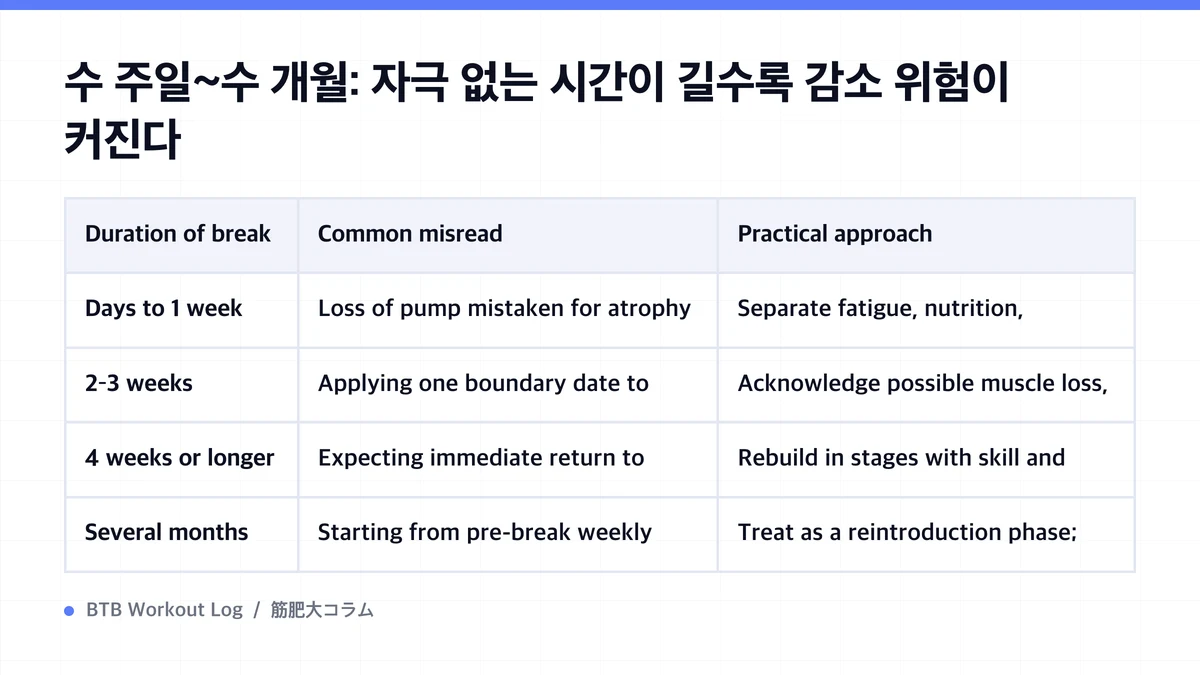
| Duration of break | Common misread | Practical approach |
|---|---|---|
| Days to 1 week | Loss of pump mistaken for atrophy | Separate fatigue, nutrition, hydration, sleep |
| 2–3 weeks | Applying one boundary date to everyone | Acknowledge possible muscle loss, confirm through return-to-training progression |
| 4 weeks or longer | Expecting immediate return to pre-break weights | Rebuild in stages with skill and recovery in mind |
| Several months | Starting from pre-break weekly volume | Treat as a reintroduction phase; rebuild load and sets |
Even over the same span, immobilization or hospitalization—where the target muscle barely works—causes faster loss than maintaining daily activity (walking, carrying objects, stairs). Older lifters, those mid-减量, and anyone recovering from illness with reduced appetite face steeper declines. Conversely, if you keep daily movement and retain some light resistance work instead of complete rest, you can create a maintenance stimulus without matching your growth-phase volume.
When you need to rest, control the factors you can before muscle mass becomes the limiting factor
If travel or work just keeps you from your normal routine, you don't need to replicate the full volume from your muscle-building weeks. Light tension on the target muscles—using 자중, bands, or dumbbells—shifts you toward maintenance instead of complete detraining. For a break period, choosing a few sets you can repeat without strain beats grinding to failure and chasing soreness.
In nutrition, don't slash protein just because you're not training. Avoid extreme calorie deficits either. If activity drops, though, adjust total intake by watching your weight rather than fixing calories to training days. Use your 근비대 protocol for protein guidelines as your baseline.
If injury, fever, or severe fatigue forced the break, don't force load through injured tissue or your whole body to preserve muscle. Prioritize medical restrictions and recovery, then consider light daily movement or unaffected-area work within clearance. Pushing hard now to save short-term muscle only extends the break—you lose more time overall.
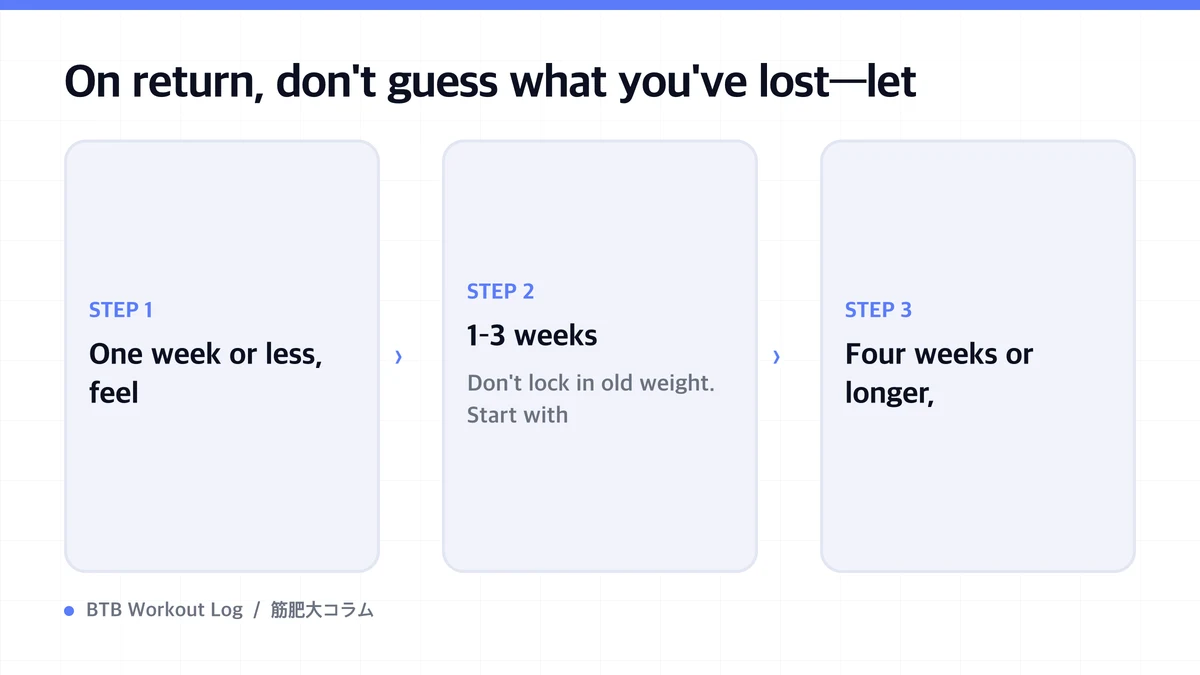
On return, don't guess what you've lost—let your first sessions tell you
Hitting a pre-break PR on day one doesn't reveal what muscle remains. Skill rust and travel or work fatigue obscure the picture. Use your last solid pre-break record as a ceiling, start with extra 여력, then dial in how fast you recover.
- One week or less, feel good: Consider your old routine, but check warmup feel and RIR. If it's heavy, drop load or sets on the spot.
- 1–3 weeks: Don't lock in old weight. Start with RIR 3–4, trim accessory work and later sets.
- Four weeks or longer, or post-illness: Don't jump straight back to pre-break weekly sets. Begin noticeably lighter. Track soreness, joint response, and next session numbers before ramping over several workouts.
Don't try to make up the weeks you skipped. What matters now is current form and recovery capacity. When weight or reps return at similar RIR, you're close to resuming 점진적 과부하.
Don't add sets based on that first dip alone. Watch how fast weight, reps, and RIR bounce back, and you'll separate true muscle loss from skill and fatigue effects. Compare pre-break normal values head-to-head with your first few returns under the same conditions. BTB Workout Log keeps a record across breaks.
자주 묻는 질문
- Do I lose muscle after one week off?
- One week rarely causes meaningful muscle loss if daily activity and eating stay intact. Pump, weight, and how exercises feel will shift, but that's not enough to call it 근섬유 atrophy.
- If my muscles look smaller after a break, did I lose muscle?
- Not necessarily. Loss of pump plus dips in carbs or activity level shrink muscle glycogen and water, flattening appearance in days. Judge after food and training resume and you see how it responds.
- Should I start with the same weight when I come back?
- For short breaks when you feel good, try the old weight—but don't demand success. If warmup feels heavy, lower it, and leave extra RIR. After longer breaks or illness, cut sets too and work back over several sessions.
정리
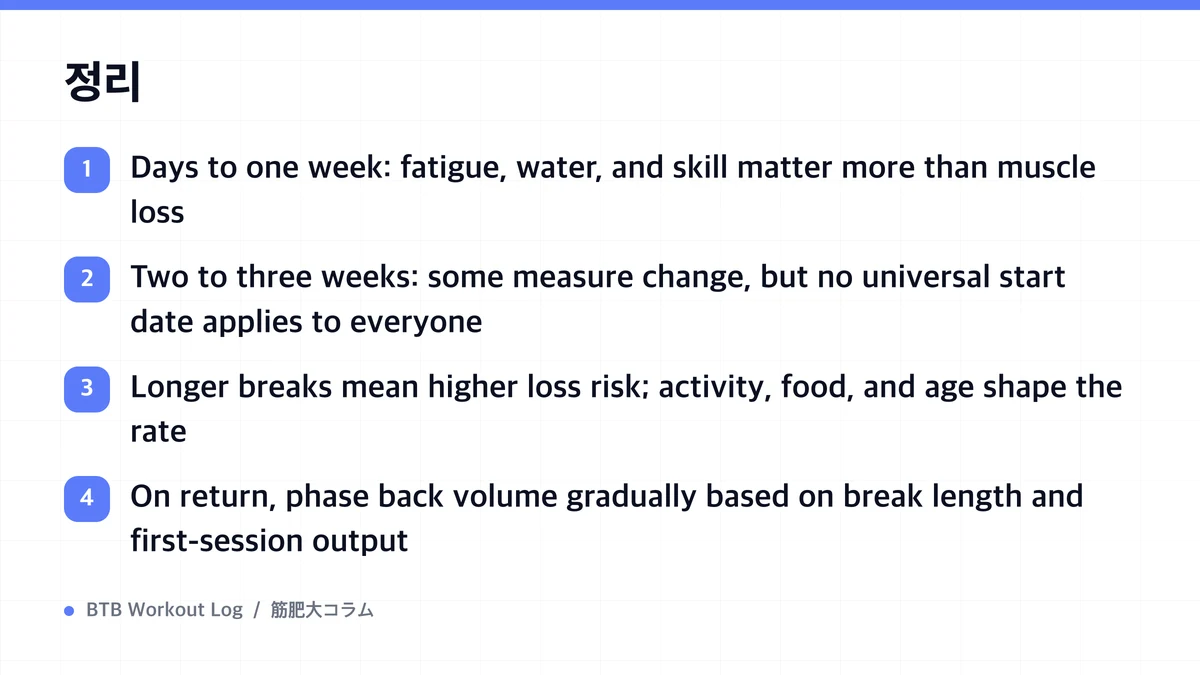
- Days to one week: fatigue, water, and skill matter more than muscle loss
- Two to three weeks: some measure change, but no universal start date applies to everyone
- Longer breaks mean higher loss risk; activity, food, and age shape the rate
- On return, phase back volume gradually based on break length and first-session output
참고문헌
- Mixed Muscle Protein Synthesis and Breakdown After Resistance Exercise in Humans
- Muscle Protein Synthetic Response to Resistance Exercise: Systematic Review and Meta-analysis
- The Mechanisms of Muscle Hypertrophy and Their Application to Resistance Training
- Mechanisms of Muscle Hypertrophy: Current Understanding and Future Directions
- The Influence of Frequency, Intensity, Volume and Mode of Strength Training on Whole Muscle Cross-sectional Area in Humans