'운동은 48시간만 비우면 회복된다'는 사실일까? 그 기준이 맞지 않는 사람도 있다
48시간은 같은 부위를 다시 자극할 간격의 출발점이지만, '쉬면 회복 완료'를 보장하는 시간이 아닙니다.
회복 시간은 이전 세트 수, 몰아붙임 정도, 운동 종목, 훈련 경력, 수면·영양에 따라 달라집니다. 시계만 보지 말고 다음 세션에서 같은 수준의 동작과 출력을 재현할 수 있는지까지 판단해야 합니다.
'48시간 띄우기'가 통하는 범위는 어디까지인가
이 기준이 완전히 근거 없는 것은 아닙니다. 저항성 운동 후 근단백질 합성이 높아지는 경향이 있으며, 건강한 성인이 공복·식후 조건에서 단일 운동을 한 연구에서는 48시간 후까지 휴식 시 수준을 넘는 사례가 보고되었습니다. 최근 체계적 검토에서도 48시간까지 반응이 지속되는 연구가 확인되었습니다. 따라서 같은 근육군을 매일 강하게 자극하지 않고 하루 정도 띄우는 방식은 실용적인 초기 설정이 됩니다.
같은 사람이라도 여력을 남긴 소수 세트인 날과 익숙하지 않은 종목을 한계 근처까지 여러 세트 한 날의 남은 피로도는 다릅니다. 48시간은 개인에게 고정된 능력이 아니라 이전 자극량에 따라 의미가 바뀝니다.
다만 연구가 보인 것은 특정 조건에서 근단백질 합성의 상승이 관찰된 시간입니다. 48시간 후 모든 사람의 근력, 근육통, 관절 부담, 전신 피로가 동시에 원래대로 돌아온다고 증명한 것이 아닙니다. 반대로 합성 반응이 정상에 가까워질 때까지 다음 자극을 전혀 주지 말아야 한다는 뜻도 아닙니다. 일반적인 휴식일 개념은 근비대에 필요한 휴식일에서 다루되, 48시간은 경계선이 아니라 임시 설정 간격으로 봐야 합니다.
'회복했다'를 하나의 시계로 정할 수 없는 이유
회복이라는 단어는 따로 움직이는 상태들을 포함합니다. 하나만 봐서 '회복 완료'라고 판정하면 다음 세션 질을 잘못 읽습니다.
| 확인 대상 | 알고 싶은 것 | 48시간과의 관계 |
|---|---|---|
| 근육 내 반응 | 근단백질 합성·분해 및 조직 재구축 | 상승 지속 시간에 조건차 있음 |
| 국소 출력 | 같은 무게·반복·가동 범위를 재현할 수 있는가 | 이전 부하량에 따라 회복 속도 달라짐 |
| 국소 증상 | 심한 근육통, 뻣뻣함, 관절 위화감이 동작을 방해하지 않는가 | 시간만으로 판정 불가 |
| 전신 준비 상태 | 수면 부족이나 다중 부위 피로로 집중·들어올림이 떨어지지 않았는가 | 같은 부위를 쉬어도 남을 수 있음 |
예컨대 근육통이 약해도 워밍업부터 이전보다 무겁게 느껴지고 같은 무게에서 반복이 줄 수 있습니다. 반대로 가벼운 뻣뻣함이 있어도 가동 범위와 출력을 평소대로 유지할 수 있을 때도 있습니다. 근육통은 참고 정보이며, 강도가 회복도나 근비대 효과를 직접 나타내지는 않습니다. 이러한 구분은 '근육통=좋은 훈련'이라는 오해와도 맞닿아 있습니다.
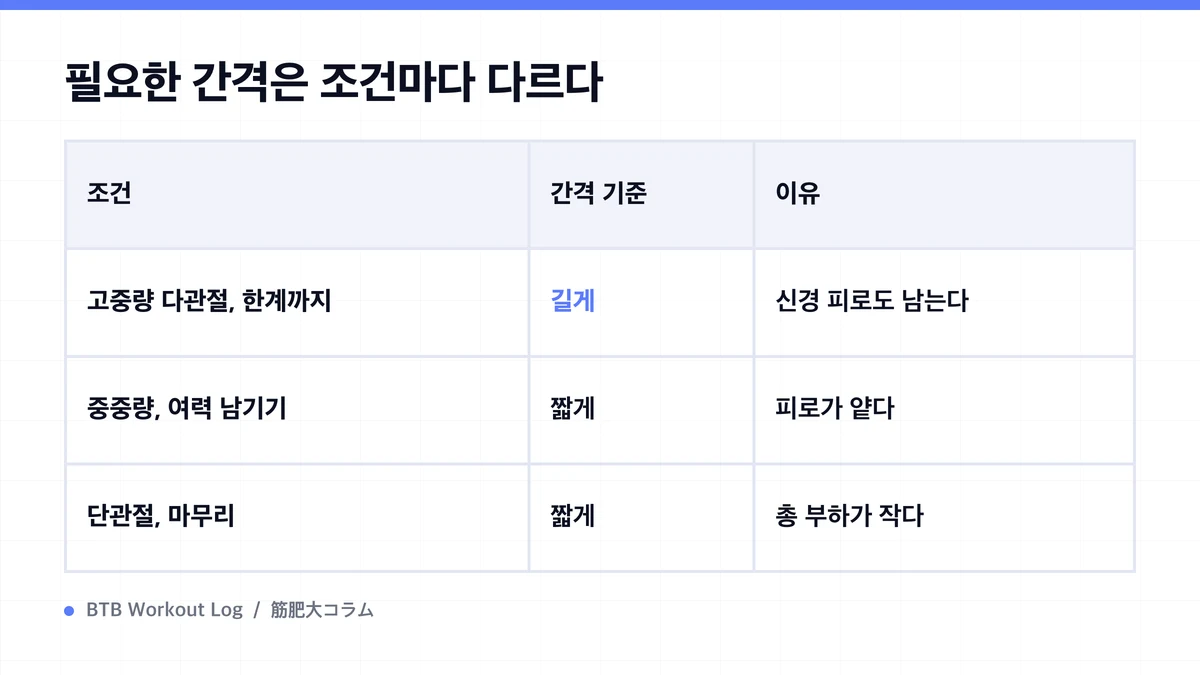
연구는 '48시간이면 모두 같다'고 보이지 않음
2024년 체계적 검토에서는 건강한 성인이 공복·식후 조건에서 단일 저항성 운동을 한 연구를 대상으로, 근단백질 합성의 명확한 상승과 그 크기·지속 시간의 연구 간 큰 편차를 보였습니다. 시간 경과에는 나이, 훈련 경력, 운동 강도·작업량·노력도 등이 영향을 미칠 수 있습니다. 즉 '48'이라는 숫자는 관찰 범위를 설명하기는 편하지만, 개인의 다음 훈련 가능 여부를 자동으로 판정하는 타이머가 아닙니다.
장기 근비대를 본 빈도 연구도 단순한 48시간 규칙을 지지하지 않습니다. 주간 총량을 맞춘 메타분석에서는 저빈도와 고빈도 간 근비대에 의미 있는 차이를 확인하지 못했습니다. 빈도는 회복 가능한 주간 세트 수를 각 날에 어떻게 배분할지 결정하는 설계 변수입니다. 자세한 정리는 훈련 빈도와 총량, 빈도를 높일 때 주의점은 빈도를 높여도 근비대가 가속되지 않는 이유에서 다룹니다.
주의할 점은 '빈도차가 작다'는 것을 '회복을 무시해도 된다'로 읽지 않는 것입니다. 같은 주간 총량이라도 한 번에 몰아붙이면 세션 후반 질이 떨어지고, 너무 고빈도로 나누면 남은 피로가 다음 세션으로 중첩될 수 있습니다. 연구의 평균은 선택지를 줄이는 재료이며, 자신의 적정 간격은 실제 반복 가능성에서 정합니다.
왜 '48시간이면 회복 완료'가 되었나
The misconception spreads because three separate ideas got merged into one. First, the physiology that muscle protein synthesis elevates for a period after training. Second, the supercompensation diagram showing adaptation to a higher baseline after recovering from fatigue. Third, the calendar convenience of "one day between" sessions, which lets you slot the same muscle group 2–3 times per week.
Each offers programming insight. But the peak on that diagram doesn't arrive at the same clock time every session, and muscle protein synthesis measurements don't directly predict when lifting performance bounces back. Treat a high-volume day, a new exercise, and poor sleep all the same with 48 hours and you trade clarity for losing critical context. The interval needs to shift with what you actually did.
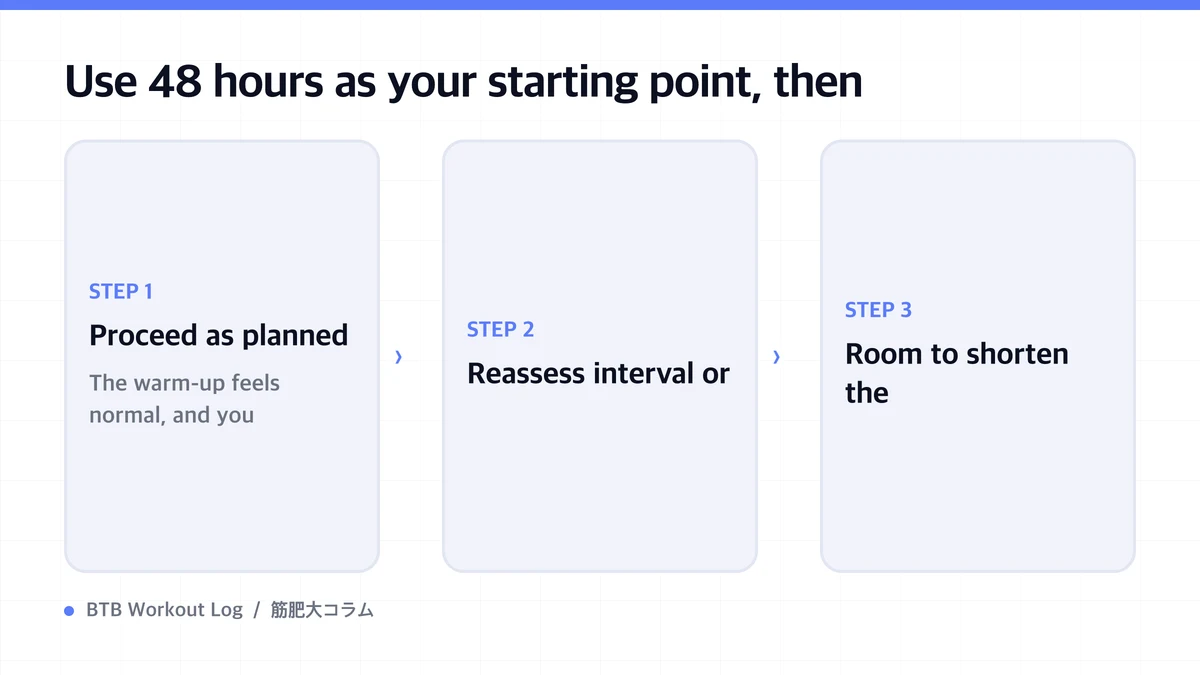
Use 48 hours as your starting point, then adjust based on the next session's quality
Start by spacing main sessions for the same muscle group roughly 48–72 hours apart. Over 2–4 weeks, keep the layout consistent and observe how you respond. Then use your next opening main lift as a "회복 test." Match as many variables as possible: exercise, form, 가동 범위, rest intervals, and target RIR (여력 for one more rep).
- Proceed as planned: The warm-up feels normal, and you reproduce the same weight, reps, and RIR as last time.
- Reassess interval or volume: Reps drop under the same conditions and tightness or restricted movement persists across multiple sessions. Push your next session back 24 hours or trim the previous 하드 세트.
- Room to shorten the interval: Output stays stable session to session, and you maintain quality even in later sets. If you want to spread 주간 세트 수 across more days, try reducing per-session volume and testing higher frequency.
Don't overhaul your program after one weak session—daily output varies with sleep, nutrition, and work fatigue. If the same decline shows up 2–3 times running, first check weekly 하드 세트 count and how you're distributing them. When multiple muscle groups or lifts drop together, a 디로드 to lower total fatigue often clarifies things better than adding interval to each part separately.
Pressing uses shoulders and triceps alongside chest; pulling uses biceps alongside back. Think beyond "chest gets 48 hours"—factor in indirect stimulus too. Sharp pain, swelling, or symptoms that impair daily movement mean stop training and consider medical advice rather than push through routine fatigue management.
Use logged data as your guide. Look not just at one session 48 hours out but at weeks of output under the same interval. Your required spacing becomes clear when you see performance shift in the weeks you changed it. BTB Workout Log pairs dates and results for the same lift, so trends surface.
자주 묻는 질문
- Should I skip training if soreness lingers past 48 hours?
- Soreness alone doesn't determine 회복. But if it cuts into 가동 범위 or form, or if warm-up output plummets, scale back or postpone that muscle group. If you've got mild tightness and motion and output run normal, you can progress gradually.
- Is training the same muscle group after 24 hours wrong?
- Not automatically. It can work if you keep 하드 세트 per session low, manage 주간 세트 수 including indirect work, and the next session's weight, reps, and RIR hold steady. The goal of higher frequency isn't more stimulus—it's spreading a 회복-capable weekly load across more days.
- Is 72+ hours between sessions every time too much rest?
- Not if you hit your weekly target and each lift keeps progressing. Conversely, if you cram too many 하드 세트 into one session and 회복 takes forever, try cutting per-session volume and spreading it thinner before you stretch the interval longer.
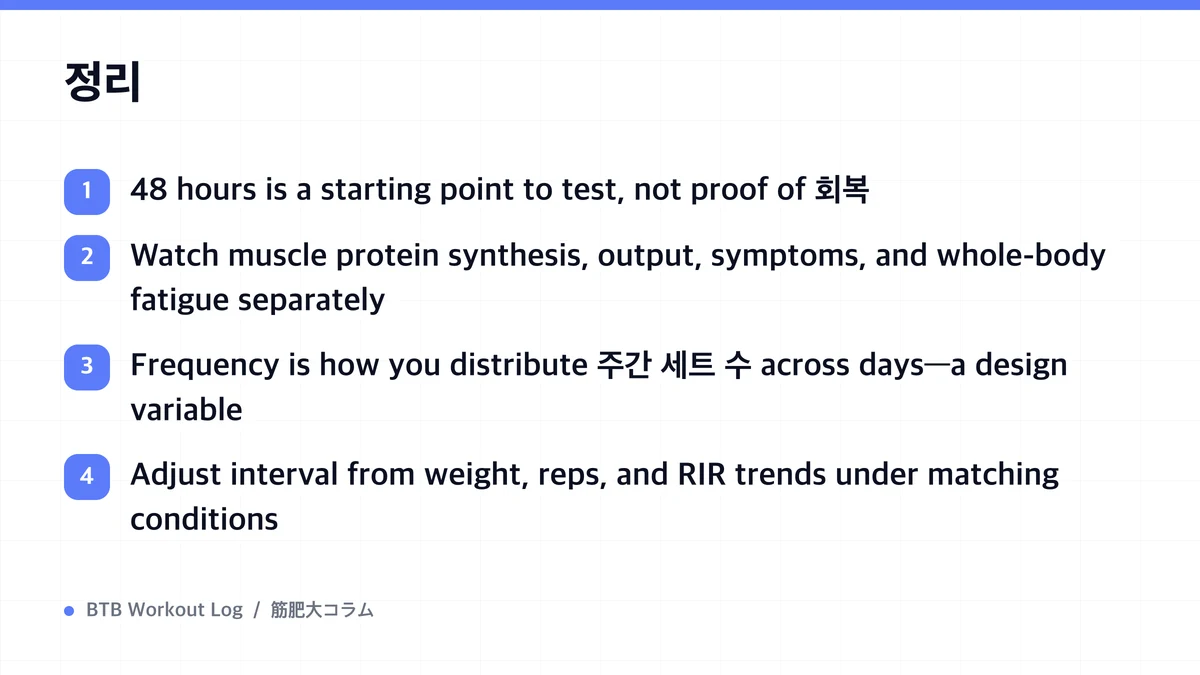
정리
- 48 hours is a starting point to test, not proof of 회복
- Watch muscle protein synthesis, output, symptoms, and whole-body fatigue separately
- Frequency is how you distribute 주간 세트 수 across days—a design variable
- Adjust interval from weight, reps, and RIR trends under matching conditions