어제는 됐던 무게가 오늘은 왜 무겁게 느껴질까? '약해졌나' 하고 불안해하기 전에 알아둘 것
같은 무게가 갑자기 무겁게 느껴지는 주된 이유는 근육이 하루 만에 약해졌기 때문이 아니라, 그날 발휘할 수 있는 성능이 피로와 수면, 준비 조건에 따라 변하기 때문입니다.
한 번의 부진은 정체의 증거가 아닙니다. 먼저 "능력이 떨어졌는가"와 "오늘은 능력을 제대로 발휘하지 못했는가"를 구분해서 생각해야 합니다.
"무겁게 느낀다"와 "근력이 떨어졌다"는 다르다
지난번엔 8회를 할 수 있던 무게가 오늘은 5회차부터 느려진다. 이때 일어나는 것은 장기적인 근력 자체의 저하만은 아닙니다. 근량이나 기술을 포함한 기초 능력은 며칠 만에 크게 변하지 않는 반면, 그 능력을 당일에 얼마나 발휘할 수 있는지는 변동합니다. 전자를 엔진의 크기라 하면 후자는 그날의 도로 상태, 연료, 운전 조건에 가깝습니다.
여기서 "약해졌다"고 단정하고 폼을 무너뜨려 지난번 반복수를 강행하면 비교 조건까지 바뀝니다. 반대로 하루 무거웠다고 해서 세트 수나 운동을 싹 바꾸면 무엇이 원인인지 알 수 없게 됩니다. 어제의 성공은 오늘의 반복수를 보장하는 노름이 아니라, 같은 조건에서 장기 진전을 보기 위한 기준값입니다.
근비대에 필요한 것은 매번의 자기 신기록이 아니라 수주에서 수개월에 걸쳐 무게, 반복수, 동작의 질이 상향되는 것입니다. 하루의 체감은 중요한 정보지만, 그것만으로 성장이나 정체를 판정하기엔 노이즈가 너무 큽니다.
피로·수면·영양이 "쓸 수 있는 출력"을 결정한다
당일 출력을 좌우하는 대표적인 요인은 이전까지 쌓인 피로입니다. 같은 부위의 하드 세트뿐 아니라 전날 하반신 운동, 일에서의 장시간 활동, 여러 날에 걸친 고볼륨도 영향을 미칩니다. 근육통이 없어도 워밍업부터 거상 속도가 느리고, 평소보다 호흡이 가다듬어지지 않으며, 여러 운동에서 반복수가 떨어진다면 회복이 따라가지 못하고 있을 가능성이 있습니다.
피로의 범위도 단서가 됩니다. 벤치프레스만 떨어지고 하반신이나 풀 계열은 평상시 수준이라면, 가슴·삼두근의 국소 피로나 벤치 고유의 기술 조건을 먼저 의심해볼 수 있습니다. 반대로 누르기·당기기·다리 모두 워밍업부터 무겁고, 집중력 저하나 강한 졸음도 있다면 특정 부위의 세트 추가로 해결하려 하지 말고 전체 회복을 재검토해야 할 때입니다. 무거움을 여러 운동에 걸쳐 비교하면 원인 후보를 좁히기 쉬워집니다.
수면도 무시할 수 없습니다. 수면 부족은 특히 큰 근육을 쓰는 다관절 운동의 출력을 떨어뜨릴 수 있습니다. 피곤한 날 스쿼트나 벤치프레스가 무거워도 그것만으로 프로그램이 무너진 것은 아닙니다. 회복 날짜에 대한 생각은 휴식일 정하기, 수면 부족과 출력 저하의 흐름은 수면 부족과 성능도 참고가 됩니다.
식사 간격이 길다, 평소보다 탄수화물이나 수분이 적다, 더운 환경에서 발한이 많다 같은 조건도 체감을 바꿉니다. 다만 원인을 하나로 단정할 필요는 없습니다. "어젯밤 수면", "최근 48~72시간의 해당 근육 세트 수", "운동 전 식사와 수분" 같이 바꾸기 쉽고 재현성이 높은 항목부터 확인하는 것이 훨씬 실질적입니다.
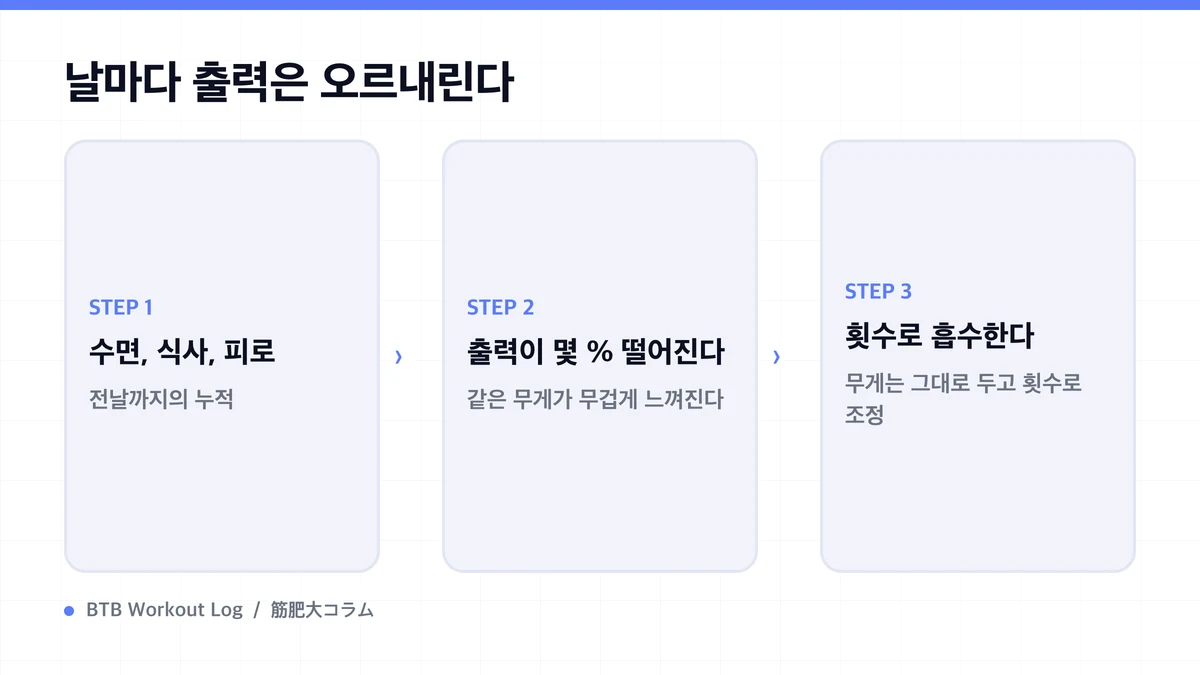
같은 무게라도 사실은 다른 조건에서 드는 것
체력 저하 외에 흔한 원인은 비교 조건의 차이입니다. 지난번엔 첫 번째 운동이었는데 오늘은 세 번째, 지난번엔 세트 간 휴식이 3분이었는데 오늘은 90초, 랙 높이나 벤치 위치가 다르다면—플레이트의 무게가 같아도 난이도는 다릅니다.
| 변경된 조건 | 발생하기 쉬운 현상 | 확인 방법 |
|---|---|---|
| 운동 순서 | 선행 운동의 국소 피로로 반복 횟수 감소 | 지난번과 같은 순서인지 확인 |
| 세트 간 휴식 | 회복 부족으로 후반 세트가 무거워짐 | 휴식 시간 통일 |
| 워밍업 | 준비 부족 또는 준비 과정에서 피로 축적 | 단계와 반복 횟수 고정 |
| 가동 범위·템포 | 엄격한 동작일수록 같은 무게가 어려워짐 | 영상이나 기록으로 비교 |
| 기구·설정 | 궤적이나 력의 방출 용이성 변화 | 플랫폼, 랙, 머신 번호 확인 |
특히 휴식 시간은 총 반복 횟수에 직결되는 변수입니다. 자세한 내용은 세트 간 인터벌을 참고하세요. 그리고 이전보다 가동 범위가 넓거나, 반동이 적거나, 하강 국면을 제어할 수 있다면 반복 횟수가 같아도 실제로는 개선된 것입니다. 무게와 횟수만으로 판단하지 말고 비교 조건을 통일해야 비로소 '오늘 정말 약해졌나'를 정확히 평가할 수 있습니다.
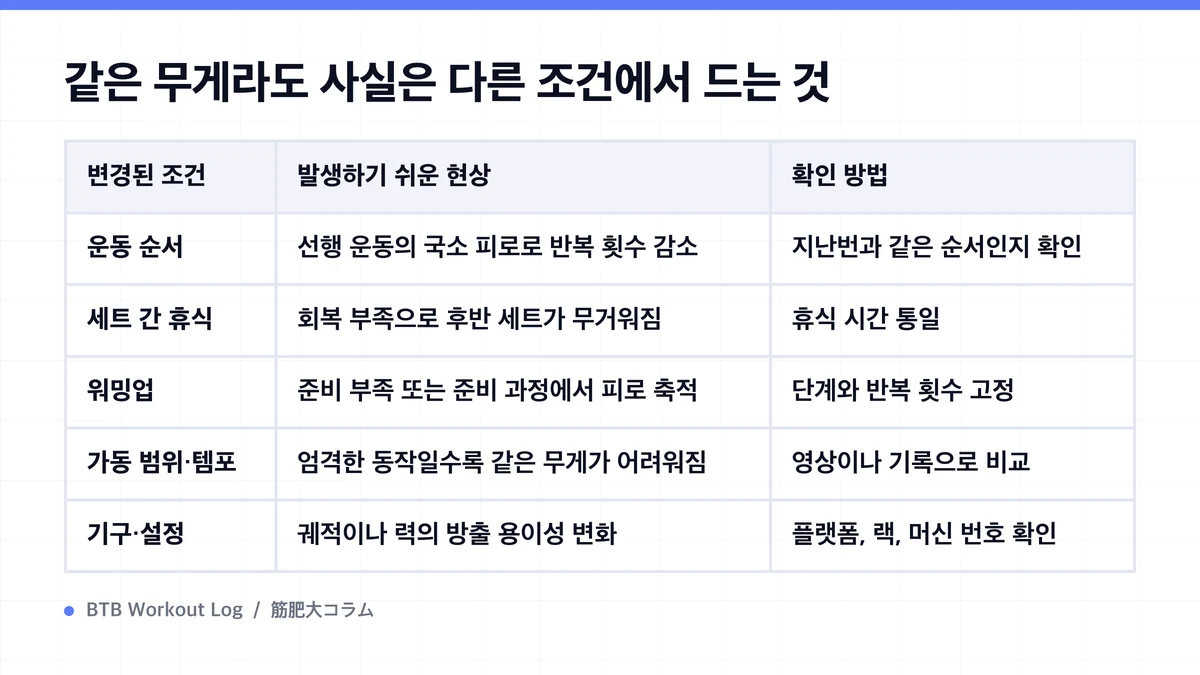
워밍업과 RIR로 그날의 부하를 정한다
You can't pinpoint the exact cause before training starts. That's where standardized warm-up and RIR come in. RIR indicates how many reps you had left in the tank when the set ended—RIR 2 means you could've done 2 more reps. Run nearly the same prep each time, then assess how your body responds during the final warm-up and your first work set.
- Keep prep consistent: Same exercise order, similar warm-up weights, identical rest periods.
- Use the first set as a diagnostic: Record not just reps hit, but movement quality and RIR.
- Adjust if RIR drifts from target: If you planned RIR 2 but hit failure several reps early, drop the weight slightly or stop at your rep floor for the day.
- Treat pain separately: Sharp pain, numbness, or unusual joint discomfort shouldn't be pushed through as just an off day.
Dropping weight isn't abandoning 점진적 과부하. It's an on-the-day tweak to move your target muscle at your target RIR. Conversely, if the warm-up felt light and your form was solid, aim for your previous numbers. Forcing numbers on a bad day hurts more than it helps—keeping stimulus quality high and staying comparable across sessions compounds your long-term progress.
Judge by trend, not one session—keep your conditions locked
One heavy session? Adjust that day's load and move on. Check if it bounces back next time you hit the lift. What matters is a pattern: across multiple sessions run under similar conditions, weight, reps, RIR, and form all decline together. If several lifts across your whole body drop at once, prioritize sleep and total fatigue; if it's one lift, look at exercise order, technique, or volume on that movement.
Persistent decline doesn't automatically call for more sets. If fatigue markers are high, 디로드 or weekly volume cleanup comes first. If you're recovering fine but one lift won't budge for weeks, revisit your 렙 범위 or progression method as a strategy for breaking through. A single bad day and a month-long slump need opposite fixes.
Catching the difference means logging weight, reps, RIR, exercise order, rest, and how you felt—all in order. Look at the line over weeks, not the win-loss of today. Whether that heavy session was an outlier or the start of a downtrend only shows when you line up several weeks. BTB Workout Log keeps the history you need to tell them apart.
자주 묻는 질문
- Should I skip training on a heavy day?
- Heaviness alone doesn't mean you skip. Warm up the standard way, check your movement, RIR, and any pain, then lower the weight or reps if needed—you can still get safe, solid stimulus on your target. Bail if multiple lifts crater or pain is unusual.
- Does dropping weight hurt 근비대?
- One session's load drop won't kill your gains. If your form breaks down at the planned weight or you're racing toward RIR 0, dropping it slightly and hitting your target RIR saves the set's purpose. Evaluate by your weight and rep trend over weeks.
- How many heavy sessions signal 정체?
- No magic number. But if multiple sessions with matched sleep, order, rest, and form all show lower weight, reps, and RIR, you're looking at a recovery or program issue, not just noise. First confirm your conditions actually match.
정리
- One heavy day usually reflects daily output swings, not strength loss
- Separate fatigue, sleep, and food from order, rest, and other setup variables
- Use warm-up and RIR to adjust weight and reps on the spot
- 정체 shows in a trend across matched sessions, not a single bad day