
한계에 가까워질수록 자극이 달라질까? RIR이 줄어들 때 근육에서 일어나는 일
RIR이 줄어들수록 피로해진 상태에서 계속 힘을 발휘해야 하고, 기계적 장력을 담당하는 근섬유 범위가 넓어지기 때문에 일반적으로 근비대로 이어지는 자극이 강해집니다. 다만 RIR0에서 자극이 갑자기 완성되거나, 0에 가까워질수록 효과가 직선적으로 증가하지는 않습니다.
변하는 것은 '힘들음'뿐 아니라 남은 힘, 운동단위의 사용 방식, 반복 속도, 그리고 이후 세트로 이어지는 피로입니다. 이 순서를 파악하면 RIR을 단순한 기분의 점수가 아니라 부하 설정에 활용할 수 있습니다.
RIR은 무게가 아니라 '그 세트의 한계까지의 거리'
RIR(Reps In Reserve)은 정해진 자세와 가동 범위를 유지한 채로 몇 회를 더 반복할 수 있었을지 추정한 값입니다. RIR3이면 남은 반복이 3회, RIR1이면 1회, RIR0이면 다음 반복을 완수할 수 없는 순간적 근실패를 의미합니다. 자세한 사용법은 RIR 기초에서 다루지만, 여기서 중요한 것은 RIR과 사용 중량을 같은 것으로 취급하지 않는 것입니다.
예를 들어 같은 80kg이라도, 최대 10회 할 수 있는 사람이 5회에서 멈추면 RIR5 정도, 9회까지 가면 RIR1 정도입니다. 외부적으로 보이는 무게는 같아도 세트 종료 시 남은 힘은 다릅니다. 반대로 무거운 3회와 가벼운 15회가 모두 RIR1로 끝날 수도 있습니다. 즉, RIR은 '몇 kg을 들었는가'가 아니라 그 무게로 자신의 반복 능력을 얼마나 사용했는가를 나타내는 지표입니다.
여기서 말하는 한계는 반동이나 가동 범위 축소로 반복을 늘린 것 이후가 아닙니다. 목표한 동작 조건이 무너진 지점을 종료 기준으로 해야만, 같은 RIR 기록이라도 대상 근육의 부하가 일관됩니다.
반복을 거듭하면서 남은 힘이 줄어들고 상대적 노력이 올라간다
세트 시작 직후는 근육에 아직 큰 힘의 여유가 있습니다. 반복을 거듭하면 활동 중인 근섬유의 수축 능력이 일시적으로 낮아지고, 같은 무게를 같은 궤도로 움직이기가 점차 어려워집니다. 이것이 세트 내 피로입니다.
외부 무게가 변하지 않아도 발휘할 수 있는 힘의 상한은 반복할 때마다 내려갑니다. 그래서 초반에 여유 있게 움직일 수 있던 무게가 후반으로 갈수록 현재 능력에 대해 높은 비율을 차지합니다. RIR이 5에서 2, 1로 줄어드는 것은 단순히 회수를 소화했다기보다 현재 남은 힘에 대한 일의 무거움이 커졌다는 뜻입니다.
거양 속도가 자연히 떨어지기 시작하는 것은 이 변화를 외부에서 볼 수 있는 단서가 됩니다. 하지만 의도적인 느린 템포, 자세 붕괴, 숨이 참으로도 속도는 떨어지므로 '느린 반복 = 정확히 RIR1'은 아닙니다. RIR은 속도만으로 정하지 말고, 같은 무게·자세로 과거에 몇 회를 했는지와 함께 추정합니다.
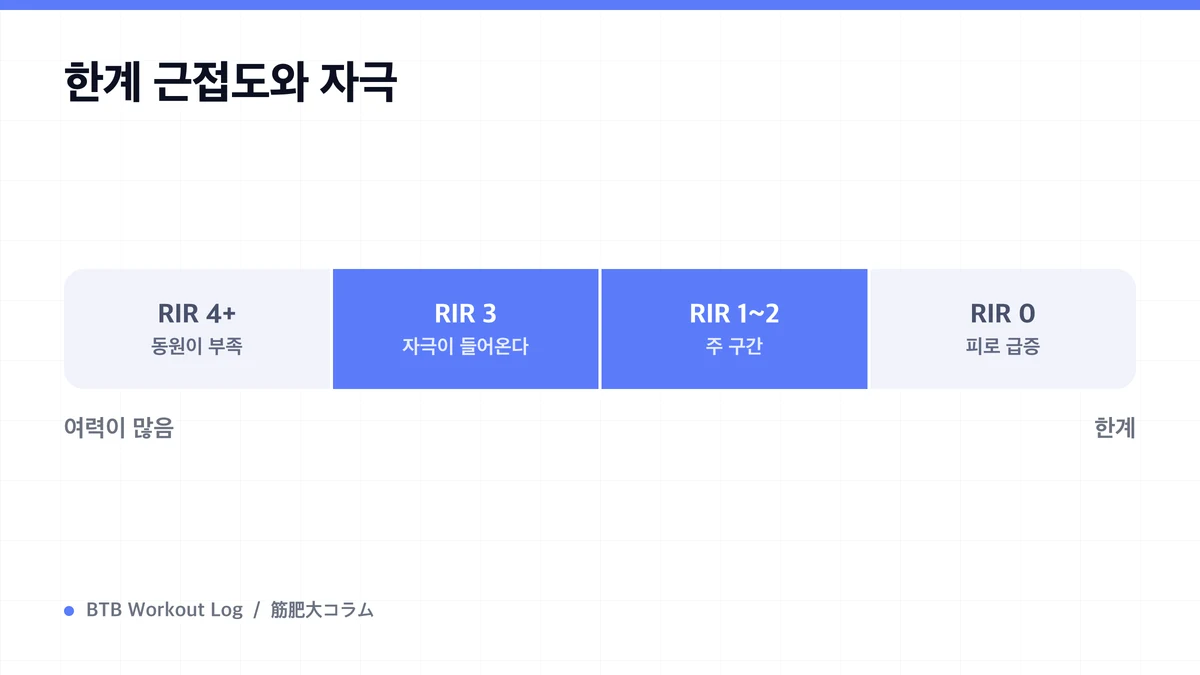
힘을 유지하기 위해 더 많은 운동단위가 일에 참여한다
근육은 수많은 운동단위로 제어됩니다. 여유 있는 반복에서는 필요한 힘을 낼 수 있는 범위의 운동단위로 일을 처리합니다. 하지만 먼저 작동하던 근섬유가 피로해지면서 같은 힘을 유지하기 어려워지면, 신체는 아직 충분히 참여하지 않은 운동단위를 추가하거나, 이미 작동 중인 운동단위의 발화를 조정하여 외부 무게에 저항합니다.
그 결과 RIR이 줄어들수록 높은 노력 아래에서 기계적 장력을 부담하는 근섬유의 범위가 넓어진다고 생각됩니다. 기계적 장력은 근비대를 설명하는 핵심 요인 중 하나이며, 한계까지의 근접성이 주목받는 이유는 고통 자체가 아니라 충분한 기계적 장력을 경험하는 근섬유를 늘리는 방향으로 작동하기 때문입니다.
여기서 '마지막 몇 회만 효과적이고, 그 전까진 무가치'라고 구분하는 것은 부적절합니다. 무거운 부하는 초반부터 많은 운동단위가 필요하고, 가벼운 부하는 피로 축적에 따라 참여가 확대되기 쉬운 등 과정은 부하에 따라 달라집니다. 고중량과 저중량에서 같은 RIR을 써도 반복 횟수, 국소 피로, 숨 참음은 동일하지 않습니다.
RIR0은 특별한 스위치가 아니라 자극과 피로의 끝점
한계에서 너무 먼 세트를 가까이 가져오면 자극에 관여하는 근섬유를 늘릴 가능성이 있습니다. 한편 이미 한계 근처까지 온 세트를 RIR1에서 0으로 진행해도, 추가되는 자극이 같은 폭으로 증가한다고 보장할 수 없습니다. 근접 정도와 근비대의 관계를 정리한 연구는 순간적 근실패가 실패하지 않은 트레이닝보다 우월하다는 근거를 제시하지 못했으며, 관계가 비선형일 가능성을 시사합니다.
이에 반해 피로는 후반으로 갈수록 두드러집니다. RIR0까지 가면 그 세트에서 힘을 모두 썼다는 것은 확인되지만, 다음 세트의 반복 감소와 자세 유지의 어려움도 커집니다. 여기서 중요한 것은 'RIR0은 나쁘다'고 정하는 것이 아니라 마지막 1회에서 얻는 정보와 자극이 그 후에 잃게 될 질과 맞는지 생각하는 것입니다. 실패 반복 연구 전체를 봐도, 근비대에 매세트 실패가 필수라고 보기 어렵습니다.
따라서 RIR을 자극의 온·오프 판정에 쓰기보다 자극과 피로의 배분 다이얼로 쓰는 것이 현실에 맞습니다. 한계까지 밀어붙이는 세트는 하나의 선택지이지만, 주 전체 작업량과 떼어서 평가할 수 없습니다.
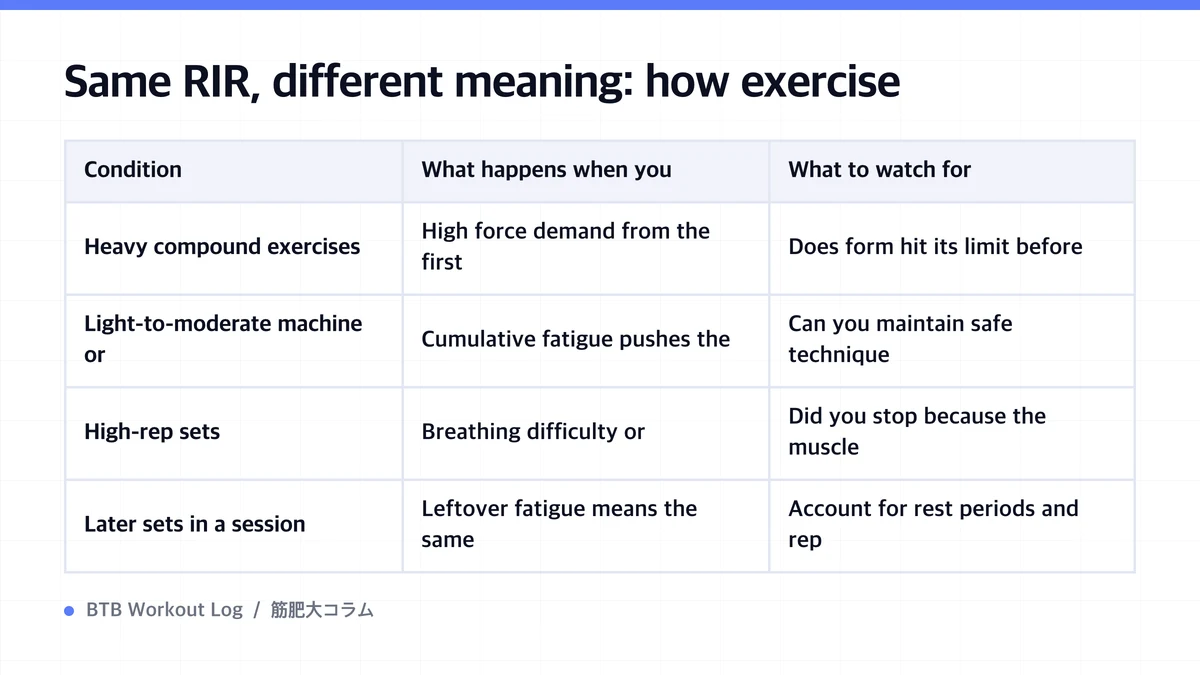
Same RIR, different meaning: how exercise type, load, and stopping reason change the stimulus
| Condition | What happens when you lower RIR | What to watch for |
|---|---|---|
| Heavy compound exercises | High force demand from the first rep; form breakdown and whole-body fatigue increase easily | Does form hit its limit before the target muscle does? |
| Light-to-moderate machine or isolation work | Cumulative fatigue pushes the target muscle closer to failure with each rep | Can you maintain safe technique throughout? |
| High-rep sets | Breathing difficulty or discomfort often forces you to stop before the muscle actually fails | Did you stop because the muscle couldn't produce force, or for other reasons? |
| Later sets in a session | Leftover fatigue means the same weight and rep count gives a lower actual RIR than it did earlier | Account for rest periods and rep loss across all sets |
So standardizing every exercise to RIR 1 doesn't standardize the stimulus. An RIR 1 squat where breathing and posture break down first is neurologically different from an RIR 1 leg extension where your quads simply can't finish another rep. And if a set looks like RIR 1 only because of short rest between sets—not because you're closer to true failure—you may not have added high-quality volume to your week at all.
When comparing RIR, keep the exercise, range of motion, tempo, rest period, and set order as consistent as possible. RIR is not a universal number that translates across different conditions. It only becomes reliable as a metric when conditions stay the same.
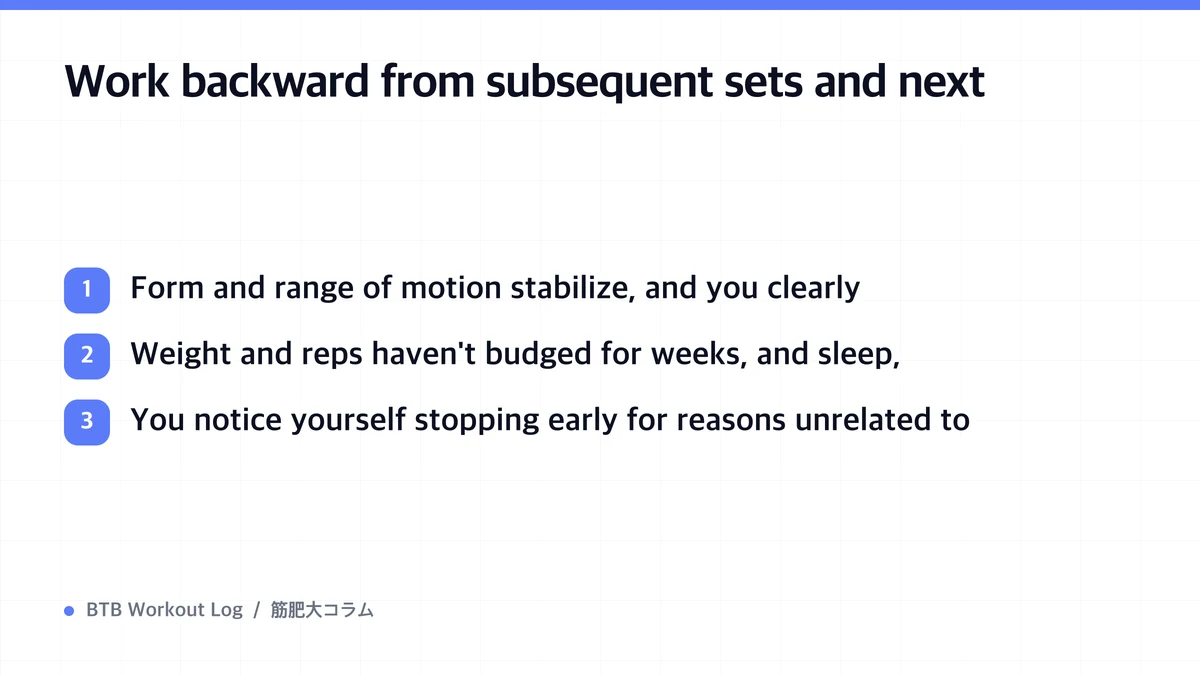
Work backward from subsequent sets and next session progress to pick your target RIR
In practice, starting compound lifts at RIR 2–3 and stable machine or isolation work at RIR 1–2 makes it easier to observe stimulus and fatigue. This is a starting point, not a fixed rule. Running the final set of a safe exercise all the way to RIR 0 occasionally helps you calibrate your RIR estimates, but you don't need to do it every time.
When to lower RIR by one step
- Form and range of motion stabilize, and you clearly complete more reps than you claimed RIR would allow
- Weight and reps haven't budged for weeks, and sleep, nutrition, and weekly set volume aren't the issue
- You notice yourself stopping early for reasons unrelated to muscle fatigue
When to raise RIR by one step
- A failed set in the opening exercise causes reps to drop sharply on later sets
- Performance stays depressed until the same session days later
- Posture, joint discomfort, or accessory muscles give out before your target muscle does
Keep more than just weight and reps. Log the RIR you used, set order, rest taken, and movement quality. Don't adjust based on RIR alone—look at whether you're actually repeating progress under the same conditions.
Choosing between pushing to failure or stopping short isn't about how satisfied one set feels. It's about how many high-quality reps you can repeat across the week while staying in recovery. How close you are to the limit matters, but closer is not always better.
자주 묻는 질문
- Does lower RIR always mean better 근비대 gains?
- Bringing a set closer to failure does increase stimulus, but the jump from RIR 1 to RIR 0 doesn't necessarily give the same gain as jumping from RIR 3 to RIR 2. Think of the relationship as nonlinear, and weigh the stimulus gain against the fatigue cost to later sets and next session.
- Should you set every set to RIR 1–2 for 근비대?
- No. Complex compound lifts tend to work better with more 여력 in reserve; stable machines and isolation exercises tolerate—and often benefit from—getting closer to the limit. Adjust based on exercise type, load, set order, and recovery status.
- How do you verify your RIR estimates are accurate?
- Log weight and reps consistently with the same form and range of motion, then compare your predicted RIR to what actually happens next session. On safe machines, occasionally go all the way to failure and count how many reps you actually had left—that's real calibration data.
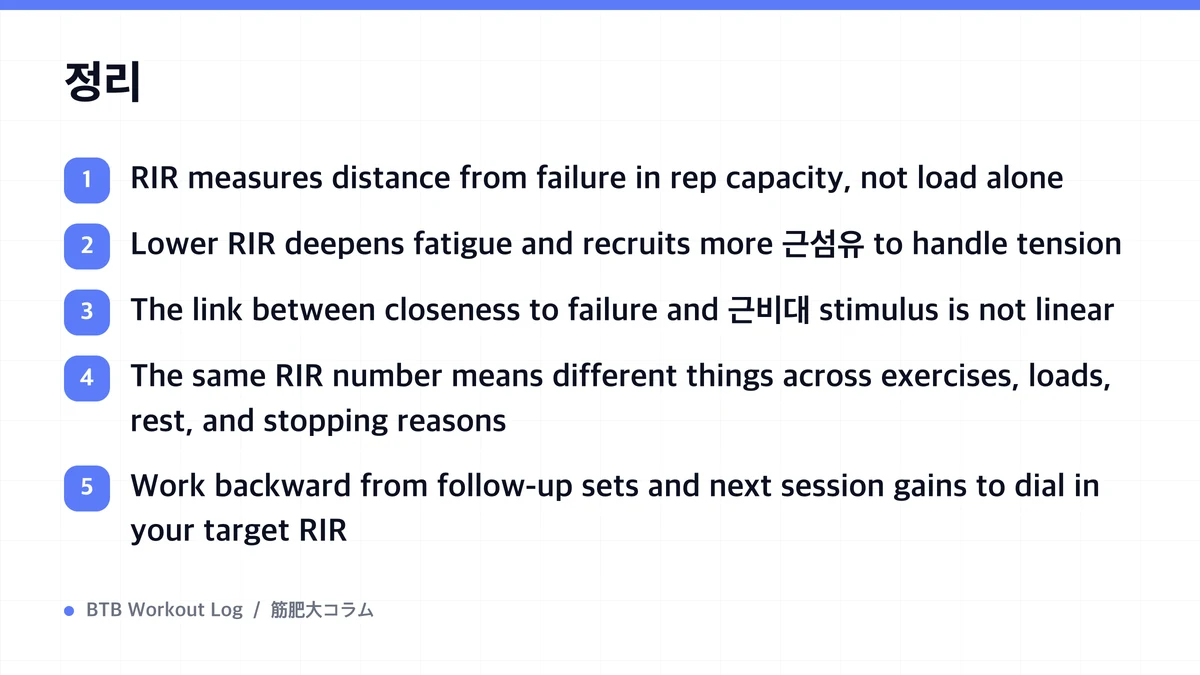
정리
- RIR measures distance from failure in rep capacity, not load alone
- Lower RIR deepens fatigue and recruits more 근섬유 to handle tension
- The link between closeness to failure and 근비대 stimulus is not linear
- The same RIR number means different things across exercises, loads, rest, and stopping reasons
- Work backward from follow-up sets and next session gains to dial in your target RIR
참고문헌
- Proximity-to-Failure and Muscle Hypertrophy: Systematic Review with Meta-analysis
- Training to Repetition Failure or Non-failure: Systematic Review and Meta-analysis
- Repetitions in Reserve Is a Reliable Tool for Prescribing Resistance Training Load
- The Mechanisms of Muscle Hypertrophy and Their Application to Resistance Training