力量變強,肌肉肥大會更容易嗎?重量、次數與肌肉量之間意外的關係
肌力提升後,更容易更新用於肌肉肥大的重量和次數。但變強本身不會直接導致肌肉增長——只有把這種能力轉化為相同動作形式、動作幅度和RIR下的漸進超負荷,才能創造下一階段的增長刺激。
肌肉量增加推動肌力上升,提升的肌力又使更高負荷的訓練成為可能,因此兩者不是單向的,而是循環關係。這個循環還涉及神經適應和技術進步。
肌力不只由肌肉量決定
訓練中的肌力不等同於簡單的「肌肉大小」。相同肌肉量下,動員運動單位的能力、多肌肉協調的技術、動作的熟練度、關節角度和身體條件都會影響能舉起的重量。疲勞、睡眠和測試程序也會導致同一天的數據波動。
最大肌力與反複能力是不同的指標
1RM是只能舉起一次的最大重量,強烈反映對重負荷的技術適應。相比之下,同一重量能做多少次,除了最大肌力外,還取決於局部耐疲勞能力和節奏分配。對比高負荷和低負荷的元分析表明,在做到極限的條件下,肌肉肥大效果相當,但高負荷在1RM進步上更有優勢。換句話說,肌力與肌量有關,但兩者並非同一回事。若變強了卻沒看到外觀改變,原因分析詳見肌力與肌量偏離的原因。
反過來說,肌纖維橫截面積增大確實擴大了發力的基礎。但要把這個基礎體現在特定動作的成績上,需要技術作支撐。「肌肉增加就立即1RM增加」或「1RM增加就按同比例肌肉增加」這種一一對應的看法是不成立的。
肌力進步如何支撐下一階段的肌肉肥大
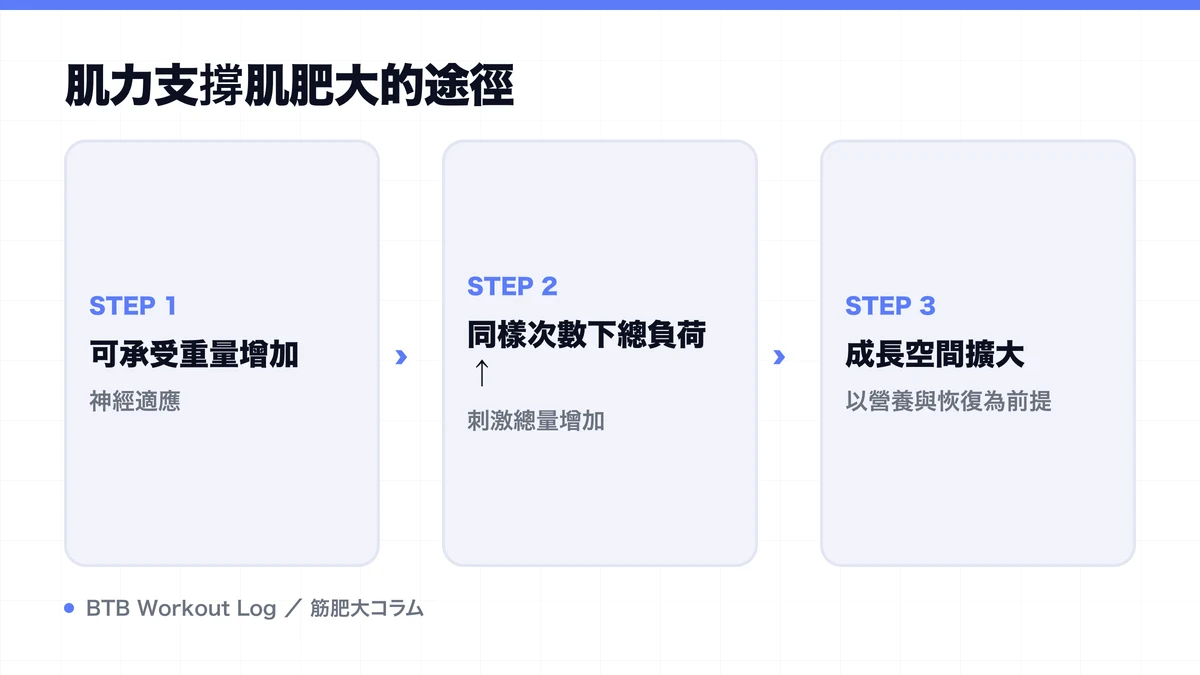
肌力支撐肌肉肥大的路徑不是「變強就自動變大」的直線。中間的負荷設定和努力程度才是關鍵。
- 適應訓練刺激:神經、技術、肌量中的一個或多個得到改善,同樣動作的發力能力增加。
- 之前的負荷產生餘力:舉例來說,用相同重量和次數訓練時,到極限還剩的次數(RIR)從3增加到5。此時能力已提升,但相對來說組的難度下降了。
- 增加重量或次數:在保持動作形式、動作幅度和休息時間不變的前提下,增加重量或在相同重量下增加次數,回到目標RIR。這就是漸進超負荷的執行階段。
- 對活動肌纖維重新施加足夠張力:通過執行更新後的課題,接近極限地完成,為增長後的能力創造相應刺激。在能恢復的範圍內重複這個刺激。
- 肌肉量成為下一階段肌力的基礎:長期適應導致肌肉量增加,就能發揮更大的力量,為下一輪進步創造空間,形成循環。
在這個流程中,肌力進步既是肌肉肥大的「原因」,也是之前適應的「結果」。關鍵在於將進步轉化為重量增加或次數增加的這一步。如果之前的重量變輕了卻不調整訓練處方,變強就不會反映在下一階段的刺激上。
綜合看重量、次數和RIR
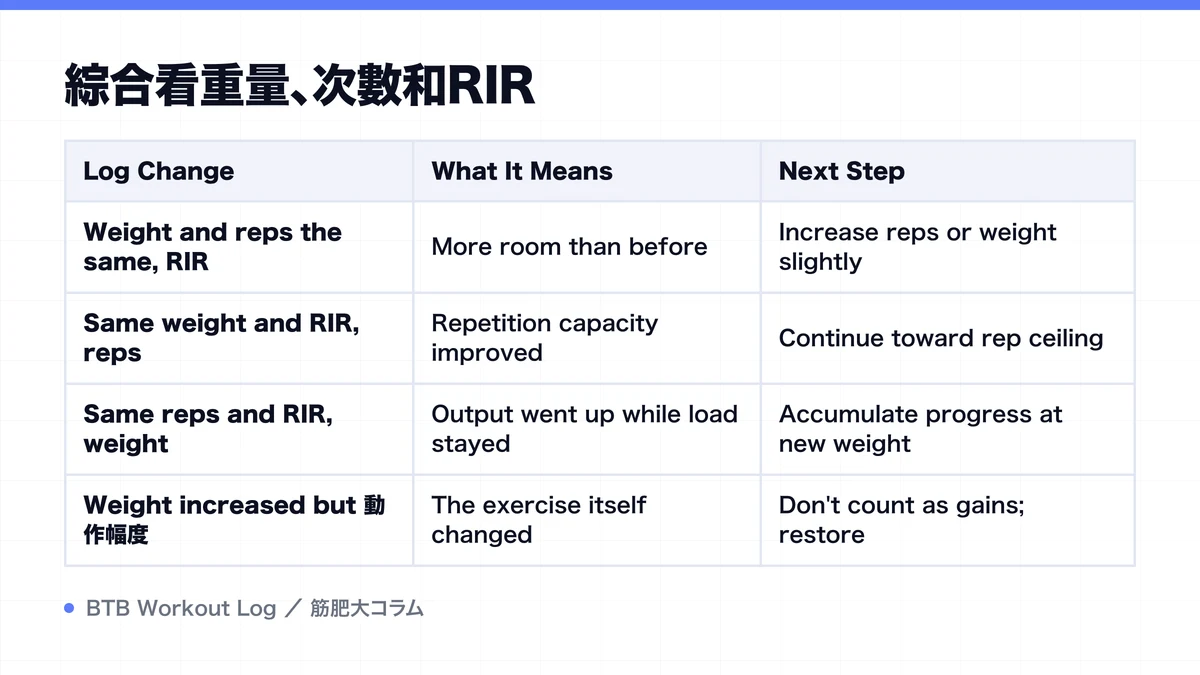
Weight alone won't tell you if you've converted strength gains into growth stimulus. Track at least weight, reps, RIR, form, and 動作幅度 in the same units. RIR includes subjectivity, but keeping the same standard each session improves comparison accuracy.
| Log Change | What It Means | Next Step |
|---|---|---|
| Weight and reps the same, RIR increased | More room than before | Increase reps or weight slightly |
| Same weight and RIR, reps increased | Repetition capacity improved | Continue toward rep ceiling |
| Same reps and RIR, weight increased | Output went up while load stayed constant | Accumulate progress at new weight |
| Weight increased but 動作幅度 shortened | The exercise itself changed | Don't count as gains; restore full range |
| 1RM improved but regular sets stalled | Possible technique gain in max lift | Assess 肌肉肥大 sets separately |
For example, if someone goes from 80 kg for 8 reps at RIR 2 to 80 kg for 10 reps at the same RIR 2, that's progress even though weight stayed the same. Conversely, jumping to 85 kg while shortening 動作幅度, relying more on secondary muscles, and grinding to RIR 0 makes the comparison unclear for 肌肉肥大 purposes. Total load (weight × reps) captures only part of the work equation and doesn't reflect stimulus quality to the target muscle.
For this reason, 漸進超負荷 isn't a race to bigger numbers—it's the work of keeping conditions constant while updating the challenge to match your current capacity.
Do You Need a Heavy Strength Phase for 肌肉肥大?
高重量訓練有利於提升最大肌力,因此可成為長期肌肉肥大的基礎工具。用低回數處理重負荷的經驗能夠磨練複合動作的技術與爆發力,進而提高中回數範圍內可用重量的上限。但是,穿插高重量周期並不會自動加速之後的肌肉肥大。
一般趨勢來看,當所有組數都做到力竭時,寬泛的負荷範圍能產生相近的肌肉肥大效果,而高負荷在提升1RM肌力上更佔優勢。這不代表「肌力越高肌肉肥大越快」,而是說明最大肌力與肌肉肥大對負荷的適應具有特異性。如果想深入了解不同負荷的研究,可參考高重量與高回數的對比。
若以肌肉肥大為主要目標,無須將所有組數都集中在1–5回的高重量區間。主要複合動作可安排部分低至中回數組數,其餘則用中至高回數範圍,確保目標肌群動作穩定。高重量會增加關節壓力和全身疲勞,若週間硬組數或後續動作品質因此下降,即使獲得肌力增長也難以轉化為肌肉肥大。負荷分配應根據訓練目標、動作類型和恢復成本來調整。
Converting Strength Gains into 肌肉肥大
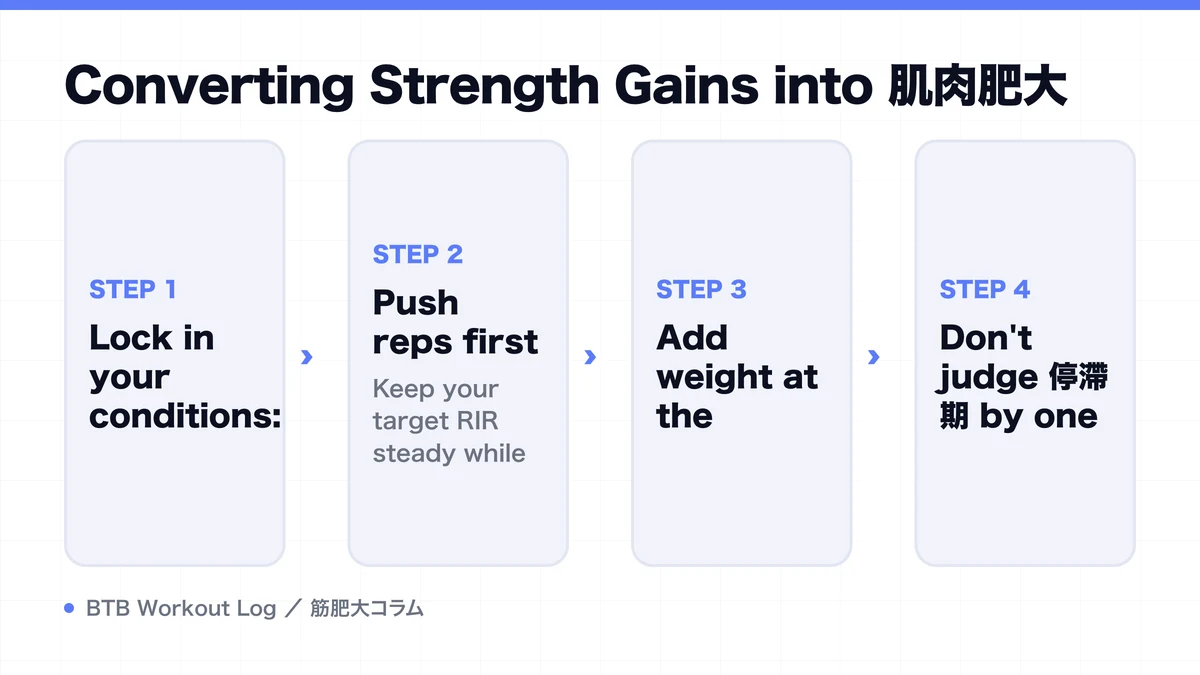
In practice, decide your 次數範圍 and target RIR first for each main lift, then track trends over several weeks under the same conditions. This sequence lets you move strength gains into the next challenge smoothly.
- Lock in your conditions: Standardize the lift, form, 動作幅度, rest, and 次數範圍. Log weight, reps, and RIR.
- Push reps first: Keep your target RIR steady while aiming for the rep ceiling. Look for consistency across multiple sessions, not a one-off PR.
- Add weight at the ceiling by minimum increments: Accept that reps drop back to the range floor after a weight jump, then rebuild reps again.
- Don't judge 停滯期 by one metric: If weight stalls but reps or RIR improve, keep going. Only when everything flat-lines for multiple weeks should you separate fatigue, weekly 硬組 volume, nutrition, and lift suitability.
When evaluating 肌肉肥大, use more than just lift records—track arm/leg circumference under the same conditions, take photos, and watch bodyweight trends over weeks. Conversely, don't judge muscle gain from a 1RM update right after max-lift practice alone. For deeper troubleshooting of stalled weight, see the diagnosis in 重量停滯的原因.
From weight, rep, and set progressions on the same lift, judge whether strength gains are converting into new load targets. Whether strength growth translates to higher 總負荷量 only shows when you watch totals, not weight alone. BTB Workout Log tracks both on one screen.
常見問題
- Do I have to add 1–5 rep heavy work for 肌肉肥大?
- No. Heavy load builds 最大肌力 and compound technique, but 肌肉肥大 can happen across a much wider load range. Watch joint stress and fatigue to later sessions; if needed, place some heavy work on main lifts only—that's usually enough.
- If my lifts are getting stronger, am I definitely building muscle?
- Maybe. Neural adaptation, movement familiarity, and 動作幅度 changes all raise weight without 肌肉 growth. Pair weight gains with steady reps, RIR, and weekly 硬組 volume, plus longer-term trends in limb circumference and bodyweight.
- Can I build muscle while my lifts stay flat?
- Yes, there are cases where strength gains don't immediately translate to heavier loads. High-rep endurance might improve first, or technique, fatigue, or plate increments could be the limiting factor. Check your set count, RIR, and movement consistency—don't attribute a 肌肉肥大 停滯期 solely to stalled weight.
重點整理
- Strength gains expand your room to chase the next weight or rep milestone
- Strength includes neural and technical adaptation, not just muscle mass
- Convert strength into progression: same movement pattern, same RIR, heavier load
- Heavy weight favors 最大肌力 but isn't required for 肌肉肥大
- Judge growth by tracking weight, reps, and RIR together