7 Reasons You're Not Building Muscle | The Checklist for Lifters Who Train Hard and See Nothing
"I'm training hard but my muscles aren't growing" - that's almost never a talent problem. It usually comes down to one of these seven causes. Work through them from most to least common.
The issue isn't how much effort you're putting in - it's whether that effort is aimed at the right things.
Cause 1: You're not beating last session (the most common cause)
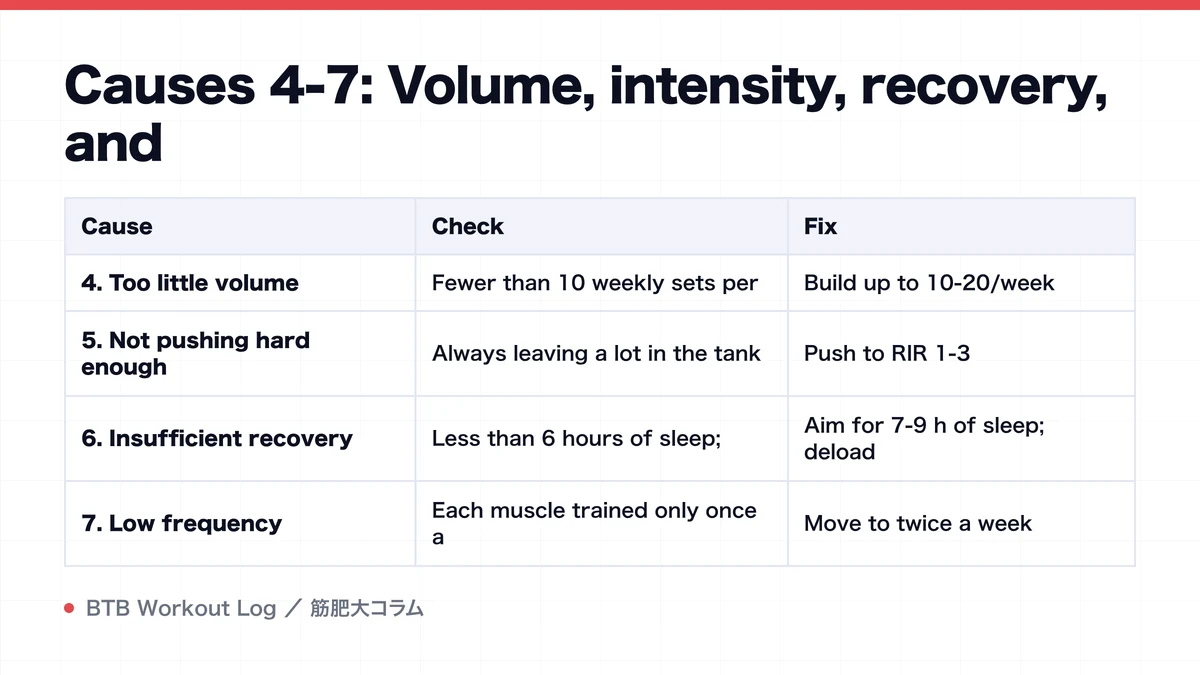
The most frequent reason people don't build muscle: progressive overload isn't actually happening. If you're going through the same weight and the same reps session after session without any intention of topping them, your body has no reason to grow. In most cases this comes down to not having a record of previous numbers - so there's nothing to aim to beat. Start logging, and check whether you're genuinely progressing (progressive overload).
Causes 2 and 3: Not enough calories, not enough protein
The second and third most common causes are nutritional. Muscle can't be built without raw materials - protein - and energy - calories.
- Not enough calories: if your body weight hasn't moved in several weeks, you're not eating enough to support a lean bulk.
- Not enough protein: the target is roughly 1.6-2.2 g per kg of body weight. Most people who think they're eating enough protein are falling short.
Causes 4-7: Volume, intensity, recovery, and frequency
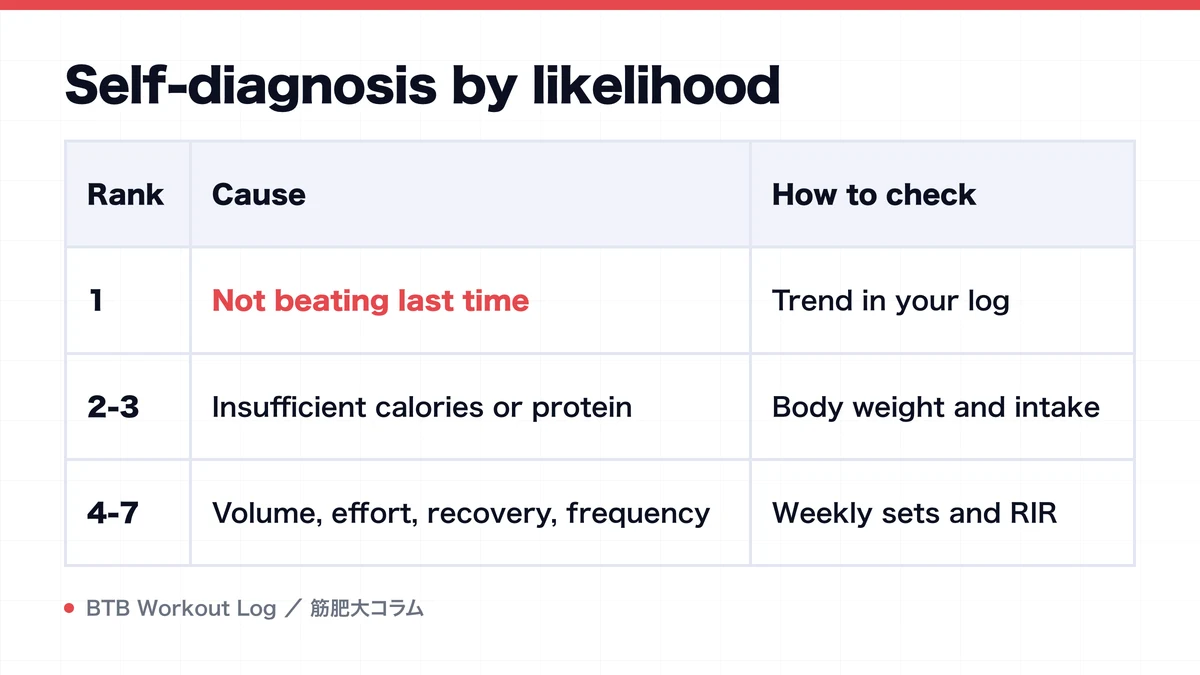
| Cause | Check | Fix |
|---|---|---|
| 4. Too little volume | Fewer than 10 weekly sets per muscle | Build up to 10-20/week |
| 5. Not pushing hard enough | Always leaving a lot in the tank | Push to RIR 1-3 |
| 6. Insufficient recovery | Less than 6 hours of sleep; weights dropping | Aim for 7-9 h of sleep; deload |
| 7. Low frequency | Each muscle trained only once a week | Move to twice a week |
Diagnosis always starts with your training log
Of the seven causes, 1, 4, 5, and 7 are easier to sort out when you have a log. Judging whether the numbers have really stalled is also covered in how to spot a plateau. How many chest sets did you do this week? What weight and how many reps did you bench last session? How much did you leave in the tank on each set? - only when you can answer those do you know where your own gap is. Conversely, with a log most of the causes can be self-diagnosed on the checklist. Start there (workout log app).
FAQ
- I go to the gym every day but I'm not building muscle. Why?
- Frequency matters less than total weekly sets per muscle, progressive overload, and adequate nutrition and recovery. Going daily with the same weights, no records, or insufficient calories won't produce growth. Check your log for progressive overload and your diet for calories and protein.
- Can naturally lean people (hardgainers) build muscle?
- Yes. The number-one reason lean people don't grow is a calorie shortfall. Raise your calorie intake until your body weight goes up and secure your protein, and the conditions for adding muscle tend to fall into place.
- How long until I can actually see the results?
- Beginners often notice changes within a few months, but clear visible changes typically take 6-12 months. Don't expect overnight results - use your log to track progress through rising weights and reps, and trust the process.
Key takeaways
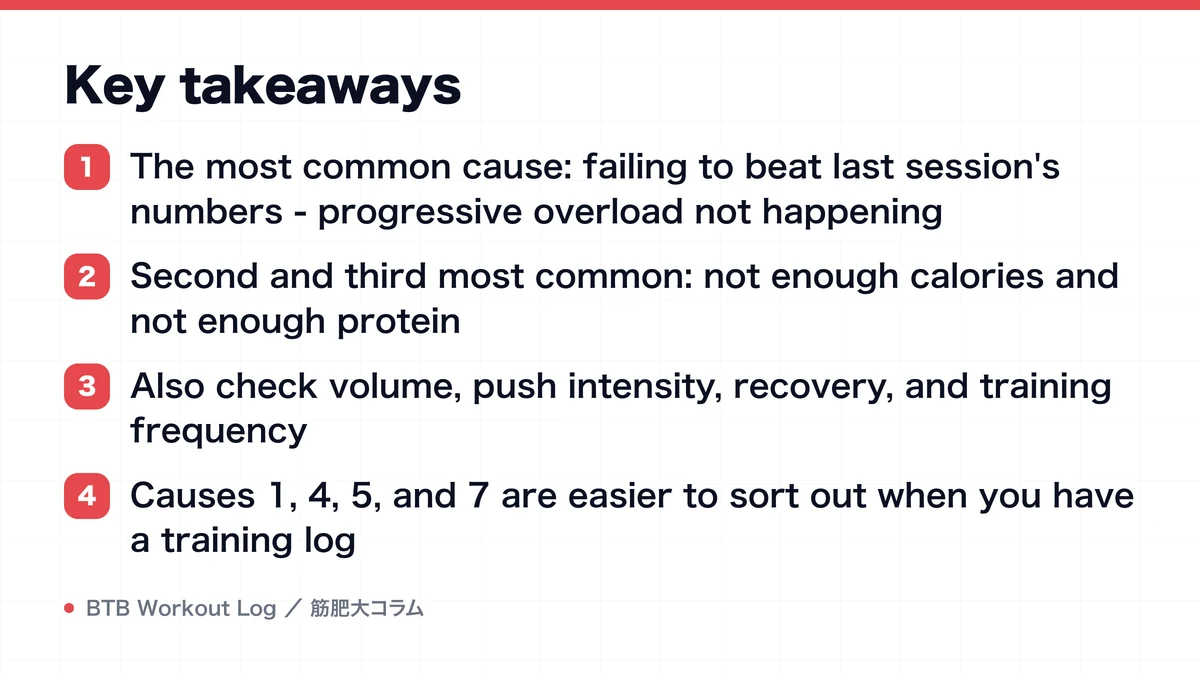
- The most common cause: failing to beat last session's numbers - progressive overload not happening
- Second and third most common: not enough calories and not enough protein
- Also check volume, push intensity, recovery, and training frequency
- Causes 1, 4, 5, and 7 are easier to sort out when you have a training log
References
- ACSM Position Stand: Progression Models in Resistance Training for Healthy Adults
- Dose-response Relationship Between Weekly Resistance Training Volume and Muscle Mass
- Protein Supplementation and Resistance Training-induced Gains: Meta-analysis
- Inadequate Sleep and Muscle Strength: Implications for Resistance Training
- Nutrition Recommendations for Bodybuilders in the Off-Season
- ISSN Position Stand: Protein and Exercise
- Low- vs High-load Resistance Training for Strength and Hypertrophy: Meta-analysis