How Many Calories Do You Need for Hypertrophy? | How to Calculate a Bulking Surplus Without Getting Overly Fat
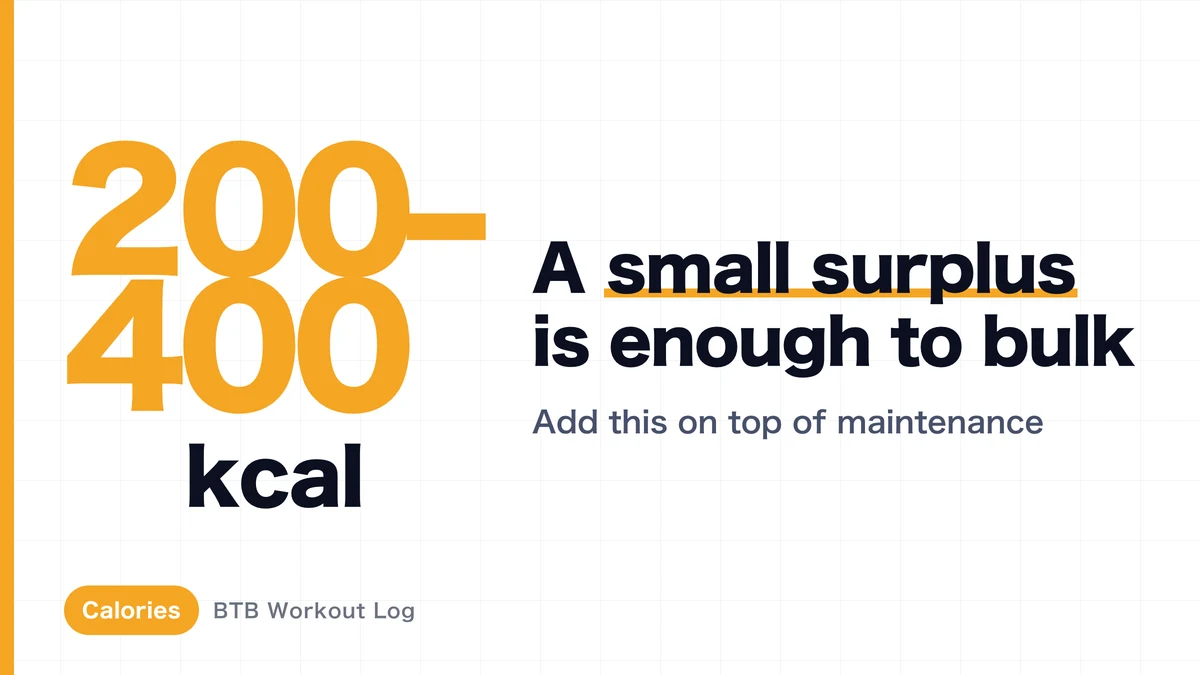
Building muscle requires eating more calories than you burn (a caloric surplus). The target: maintenance calories + 200-400 kcal. Too much surplus means mostly fat gain; too little means you stall.
Calculations are just your starting point. The real feedback is how your bodyweight actually moves.
Why muscle growth requires a caloric surplus
Building new muscle takes both raw materials (protein) and energy. At or below your maintenance calories, your body stays in maintenance or cuts mode, and muscle-building efficiency drops sharply - except for beginners and those returning after a break. That's why for intermediate and advanced lifters, a modest caloric surplus is the most reliable path to meaningful muscle growth.
Step 1: Estimate your maintenance calories (TDEE)
Start by estimating the calories that keep your weight stable, known as your total daily energy expenditure (TDEE). A simple rule of thumb: bodyweight (kg) x 30-35 kcal (use the higher end if you're active). Example: 70 kg x 33 = ~2,300 kcal. This is an estimate, not a precise number - you'll correct it with real data in the next step.
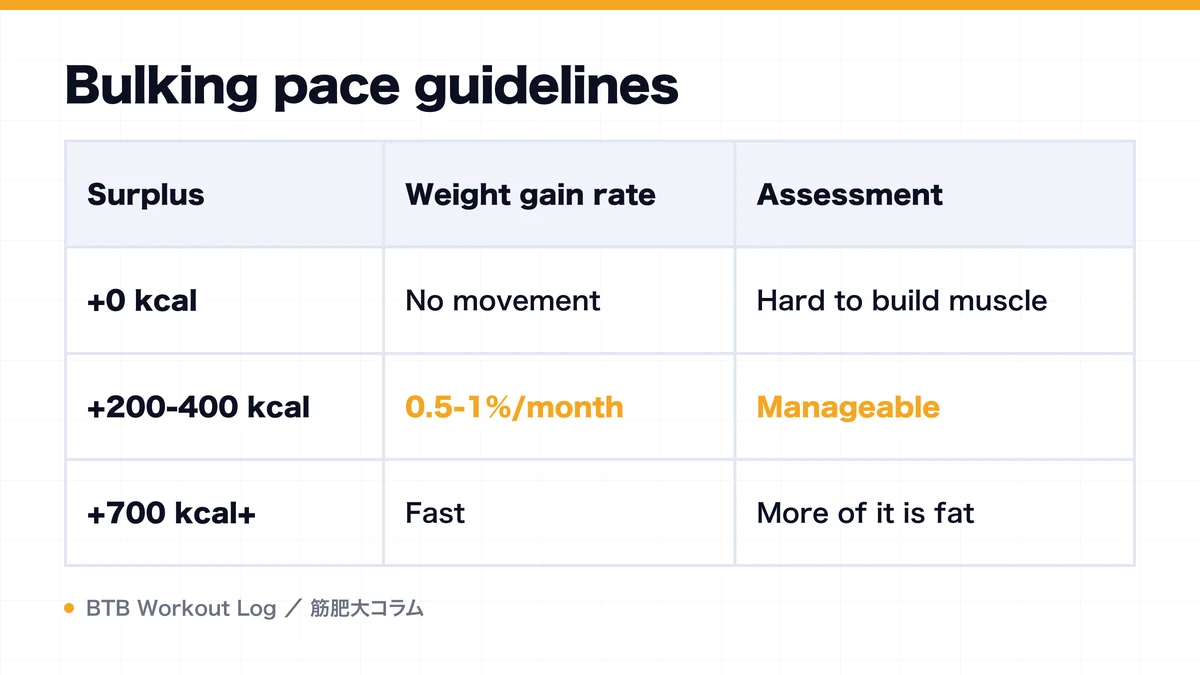
Step 2: Add +200-400 kcal for a lean bulk
| Approach | Surplus | Monthly gain | Notes |
|---|---|---|---|
| Lean bulk | +200-400 kcal | 0.5-1% of bodyweight | Optimal for muscle growth with minimal fat |
| Standard bulk | ~+500 kcal | 1-1.5% | Faster but more fat accumulation |
| Dirty bulk | Large surplus | 2%+ | Excessive fat gain; not recommended |
Muscle can only grow so fast. A bigger surplus doesn't accelerate that process - it just adds more fat. Start with a lean bulk.
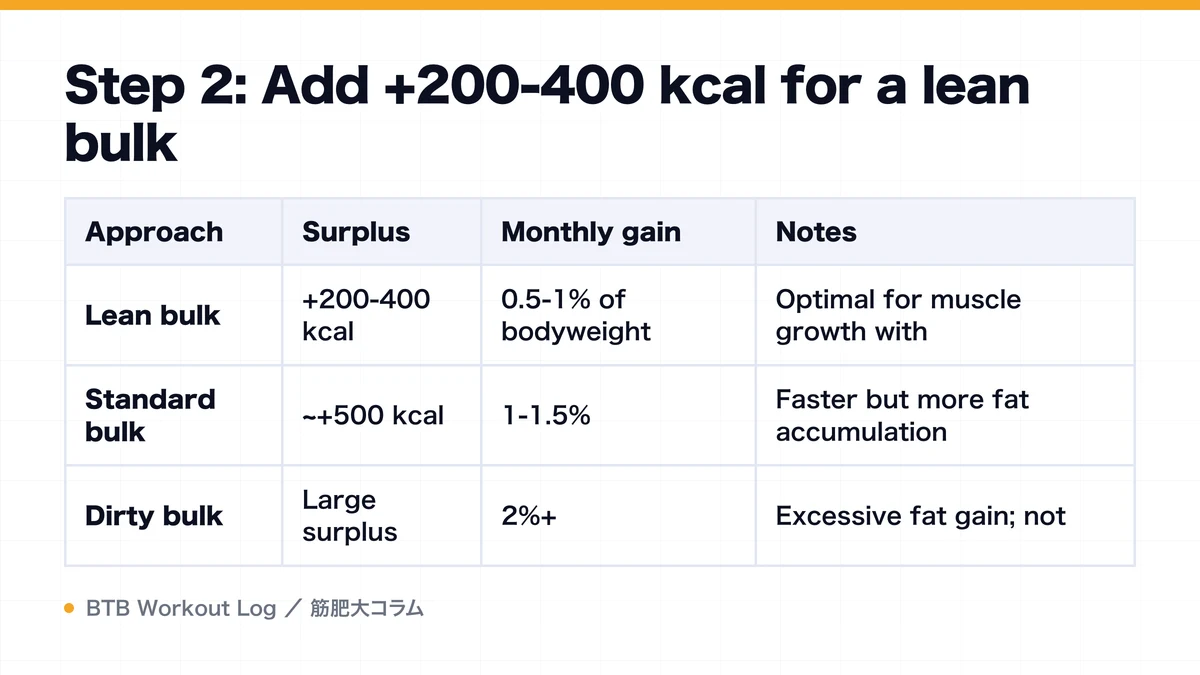
Step 3: Adjust based on your actual weight trend (the most important step)
Your calculated number is just a starting point. The real indicator is whether your weight is increasing at your target rate. Weigh yourself every 1-2 weeks (same time of day, first thing in the morning on an empty stomach works well) and look at the average trend rather than daily swings.
- Two weeks of no movement: add +150-200 kcal.
- Gaining too fast (noticeably adding fat): cut by 150-200 kcal.
Many people think they're eating enough but the scale says otherwise - always let the actual trend have the final word. If calories aren't the issue, check the reasons you're not growing article too.
FAQ
- Do I have to bulk if I don't want to gain fat?
- A caloric surplus gives you the best odds for muscle growth as an intermediate or advanced lifter. But at +200-400 kcal, fat gain is minimal. Beginners and those with higher body fat can often build muscle near maintenance calories.
- Can I eat clean and still gain fat?
- Yes. What determines weight gain is total calories, not the quality of the foods you eat. Healthy foods can still put you in a surplus if you eat enough of them, so total intake always needs to be managed.
- How often should I switch between bulking and cutting?
- There's no fixed rule. A practical approach is to switch to a cut when you feel you've put on too much fat, then bulk again once you've leaned out. Many people cycle through a few months of bulking followed by a shorter cut.
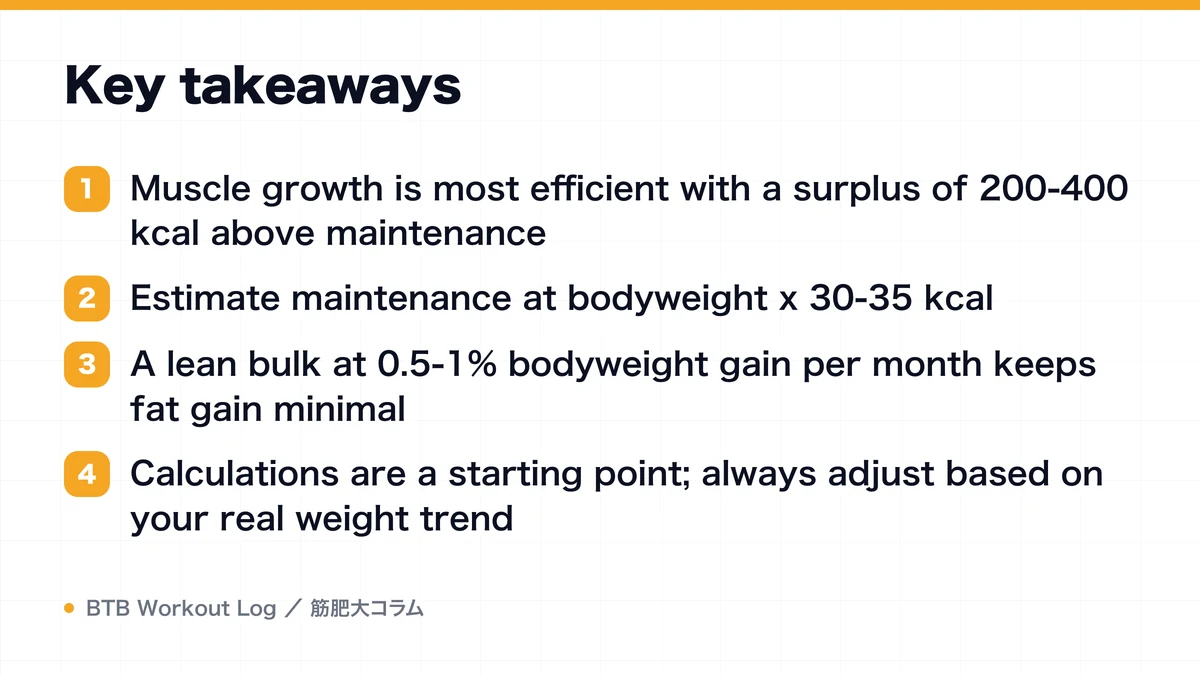
Key takeaways
- Muscle growth is most efficient with a surplus of 200-400 kcal above maintenance
- Estimate maintenance at bodyweight x 30-35 kcal
- A lean bulk at 0.5-1% bodyweight gain per month keeps fat gain minimal
- Calculations are a starting point; always adjust based on your real weight trend