종목을 너무 늘리면 성장이 보이지 않는 이유 | 열심히 하는데 성과가 느껴지지 않는 사람에게
종목을 너무 많이 추가하면 동일한 동작을 동일한 조건에서 반복할 기회가 줄어들어, 중량·회수·RIR의 변화가 근력 향상인지 종목이나 순서 차이인지 구분하기 어려워집니다.
다양한 자극 자체가 나쁜 것은 아닙니다. 문제는 종목의 역할을 정하지 않고 추가하고, 진도를 측정하는 기준까지 바꿔버리는 것입니다.
‘여러 각도에서 자극하면 안심된다’는 직관의 함정
가슴이라면 플랫, 인클라인, 디클라인, 플라이, 머신, 딥스. 후보를 늘릴수록 빠짐없이 단련되는 것처럼 보입니다. 실제로 관절 상태에 맞는 동작을 선택하거나 다른 동작 방향을 조합하는 가치는 있습니다. 그러나 종목을 추가한 사실과 진도를 확인한 사실은 별개입니다.
근비대는 하루하루 눈에 띄게 진행되지 않습니다. 그래서 보통은 동일한 종목에서 동일한 가동 범위와 폼을 유지하고, 비슷한 여력으로 다룰 수 있는 중량이나 회수가 어떻게 변했는지를 대리 지표로 봅니다. 종목이 매번 바뀌면 그 척도도 매번 바뀝니다. ‘오늘은 잘 들었다’ ‘새로웠다’는 느낌은 남아도, 이전보다 능력이 올랐는지는 불명확합니다.
즉, 핵심은 종목이 많으면 즉시 근비대가 안 된다는 것이 아닙니다. 프로그램이 만든 변화를 읽는 해상도가 떨어진다는 것입니다. 자극의 완전성을 늘린 척하면서 판단 자료를 흩어놓고 있지 않은지 구분할 필요가 있습니다.
진도는 ‘동일한 조건에서의 전회 대비’로 읽는다
중량만 올라도 가동 범위가 짧아지고, 반동이 많고, 한계까지 밀어붙인 결과라면, 근비대 목적의 진도라고 단정할 수 없습니다. 반대로 중량이 같아도 동일한 폼과 가동 범위, 비슷한 RIR에서 회수가 늘었다면 확실한 진도입니다. RIR은 ‘추가로 몇 회 더 할 수 있었는가’를 나타내는 지표로, 세트 간 노력도를 맞추는 데 도움이 됩니다 (RIR 사용법).
이 비교가 성립하려면 최소한 종목, 기구, 폼, 가동 범위, 실시 순서, 렙 범위를 크게 바꾸지 않는 기간이 필요합니다. 매주 바벨에서 덤벨로, 다음 주는 머신으로 바꾸면 숫자의 차이에 근력뿐 아니라 동작 숙련도, 안정성, 기구의 저항 특성까지 섞입니다. 신규 종목의 회수가 갑자기 늘어도 근육이 단기간에 커진 것이 아니라 동작 익숙함이 큰 부분일 수 있습니다.
점진적 과부하는 중량을 매번 더하는 것이 아닙니다. 동일한 조건에서 회수, 중량, 세트의 질 등을 단계적으로 높이는 개념입니다. 비교 조건을 고정할 수 있는 종목이 없으면 과부하가 진행되었는지, 측정 조건이 바뀌었는지 판단할 수 없습니다.
종목을 늘릴수록 하나의 데이터 계열이 희박해진다
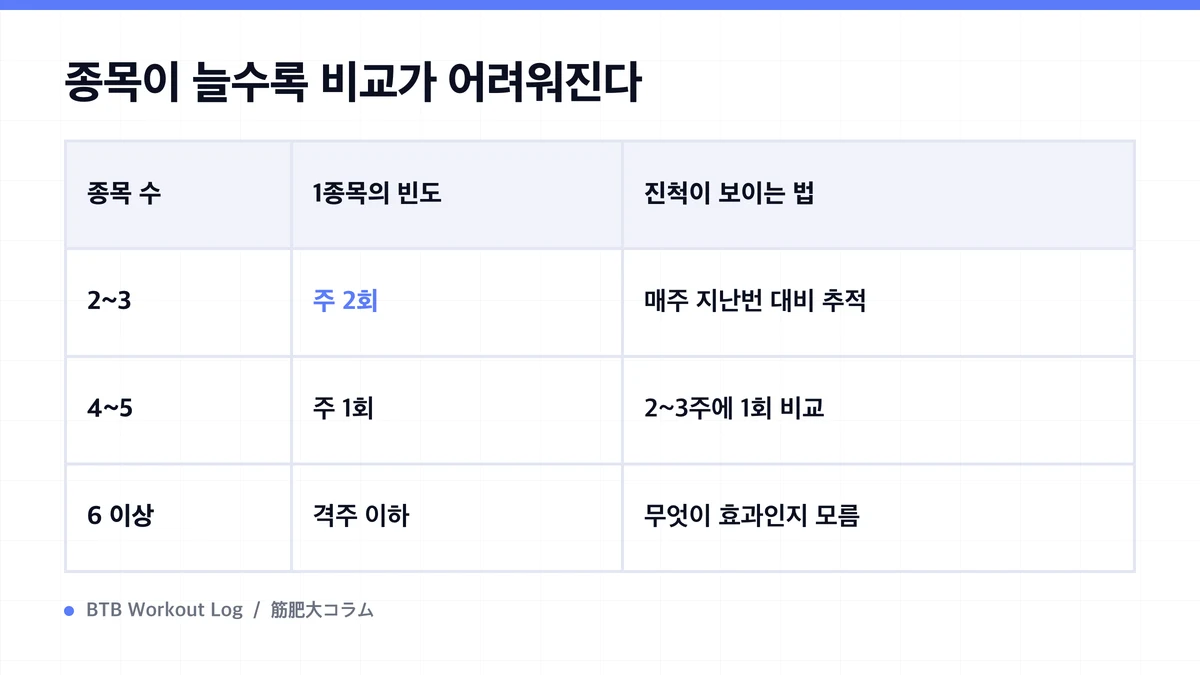
동일한 근군의 주간 볼륨을 많은 종목으로 나누면, 각 종목에서 얻을 수 있는 비교 가능한 세트가 줄어듭니다. 게다가 종목을 주별로 로테이션하면 동일한 동작으로 돌아오는 간격도 길어집니다. 전회값이 수주 전이 될수록 수면, 체중, 기구, 실시 순서 등의 차이가 개입하기 쉽고, 단기 변동을 진도나 정체로 잘못 읽기 쉬워집니다.
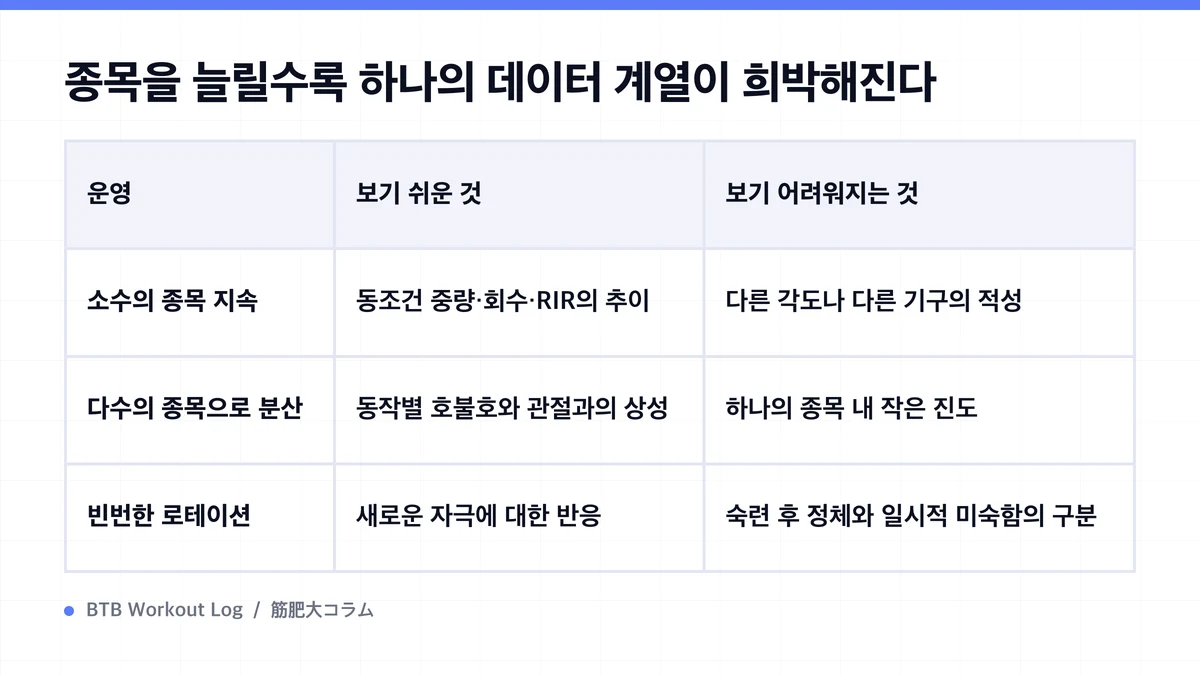
| 운영 | 보기 쉬운 것 | 보기 어려워지는 것 |
|---|---|---|
| 소수의 종목 지속 | 동조건 중량·회수·RIR의 추이 | 다른 각도나 다른 기구의 적성 |
| 다수의 종목으로 분산 | 동작별 호불호와 관절과의 상성 | 하나의 종목 내 작은 진도 |
| 빈번한 로테이션 | 새로운 자극에 대한 반응 | 숙련 후 정체와 일시적 미숙함의 구분 |
또 다른 혼동의 원인은 실시 순서입니다. 종목을 추가하면 이전에는 1번 종목이던 프레스가 3번 종목으로 옮겨질 수 있습니다. 거기서 회수가 떨어져도 그 프레스 능력이 내려간 것은 아닐 수 있습니다. 이전 종목으로 인한 국소 피로를 측정하고 있을 가능성이 있습니다. 종목 수, 순서, 세트 수를 동시에 바꿀수록 어느 변경이 숫자에 영향을 미쳤는지 알기 어려워집니다.
관측할 종목이 많을수록 ‘오른 숫자’만 고르기 쉬운 점에도 주의가 필요합니다. 여섯 개 중 하나에서 개인 기록이 나와도 다른 종목들이 동조건에서 낮아졌다면, 근군 전체가 순조롭다고 아직 판단할 수 없습니다. 미리 평가할 앵커를 정해두면 좋은 기록만으로 진도를 판정하는 편향을 줄일 수 있습니다.
주의 총량 자체는 근비대를 생각할 때 중요한 변수입니다 (트레이닝 볼륨). 다만 근군별 주간 세트 수가 같아도 종목별 진도의 읽기 쉬움까지 같다고 할 수는 없습니다. 총량을 보는 척도와 개별 동작에서 과부하를 추적하는 척도를 나누어 가지는 것이 실무적입니다.
다양성은 버리지 않고, 역할의 중복을 줄인다
Cutting exercises isn't about doing nothing but compound movements for your whole body. If you have clear reasons—hitting different movement patterns, loading a muscle at longer lengths, directly training a weak point, or avoiding a joint-unfriendly variation—multiple exercises earn their place. The problem is layering similar movements just in case.
When you organize, place an anchor exercise for each muscle group to track progress, then build complementary assistance exercises with different roles around it. For chest, make a horizontal press your comparison standard, then add flyes or different angles as needed. What you keep depends on your whole program structure—there's no universal exercise count that works for everyone.
Before adding an exercise, ask "what does this cover that current exercises don't?" If the answer overlaps, lower its priority. Even when you swap assistance work, keeping the anchor fixed means you still have a common measuring stick post-update. Variety and measurability aren't mutually exclusive; split your work into fixed and variable components and you get both.
Decide what stays fixed and what you'll record before expanding
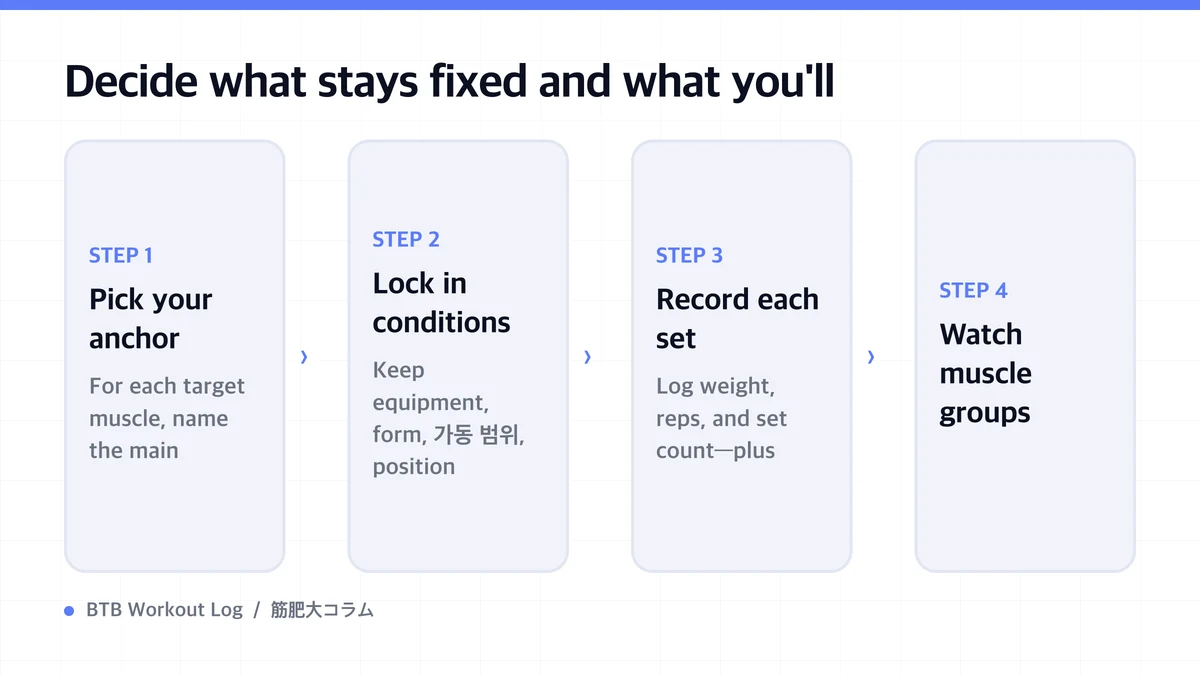
When reviewing your exercise setup, this sequence cuts through confusion:
- Pick your anchor: For each target muscle, name the main exercise you'll track progress on right now.
- Lock in conditions: Keep equipment, form, 가동 범위, position in the workout, and 렙 범위 as consistent as possible.
- Record each set: Log weight, reps, and set count—plus RIR to correct for effort variance.
- Watch muscle groups too: Don't just track per-exercise gains; check weekly 하드 세트 volume and 회복 status by muscle.
- Change one thing at a time: Pick your reason—pain, equipment limits, poor muscle feel, or multiple sessions of 정체—then add or swap one exercise at a time.
One bad session doesn't mean you need more exercises. Daily output swings with sleep and stress, so wait for multiple matching records before spotting a trend. Only when your anchor isn't growing, support work is stuck, volume and 회복 look fine, should you question exercise fit or stimulus imbalance. The more data you have, the sharper your call: do you really need to add, or can the current exercise still improve?
A logging app works best when you use it to connect fixed conditions to the next decision—not to justify adding more. Whether you need another exercise depends on how many you're doing now and what your session-to-session gains look like. BTB Workout Log keeps the spacing between each exercise's appearances intact.
자주 묻는 질문
- How many exercises per muscle group do you need for 근비대?
- There's no fixed ceiling for everyone. Start by keeping an anchor exercise to track, then check whether each assist lift has a unique job. If multiple exercises serve the same purpose and you're doing them so far apart you can't compare past numbers, you've overdone it.
- Won't you adapt to the same exercise and stop growing?
- Even one exercise can provide fresh stimulus if you're steadily adding weight, reps, or set quality. If you feel joint discomfort, bad muscle activation, or 정체 under locked conditions, that's time to switch. But you don't need to swap movements weekly just for novelty.
- When should you swap an exercise?
- Not after one bad day—wait until you've logged the same setup multiple times with no progress, and you've ruled out 회복 or volume issues. Pain or facility changes are exceptions to address sooner; otherwise, swap one exercise at a time and compare before and after.
정리
- More exercises thin out your comparable data points
- Track progress by locking in weight, reps, RIR, 가동 범위, and position
- Fix your anchor exercise, rotate assistance work by role
- Change one thing at a time, then read exercise trends alongside weekly muscle volume