
Training Volume: How to Calculate, Track and Increase It for Muscle Growth
Volume is one of the main variables driving hypertrophy. In practice, count it as weekly hard sets per muscle group, and read progress within an exercise from volume load (weight × reps × sets).
Using the two metrics for different jobs makes your training volume easier to grasp. How much volume you need varies with training history, recovery capacity and set quality, though, so following your own trend is better evidence than the numbers themselves.
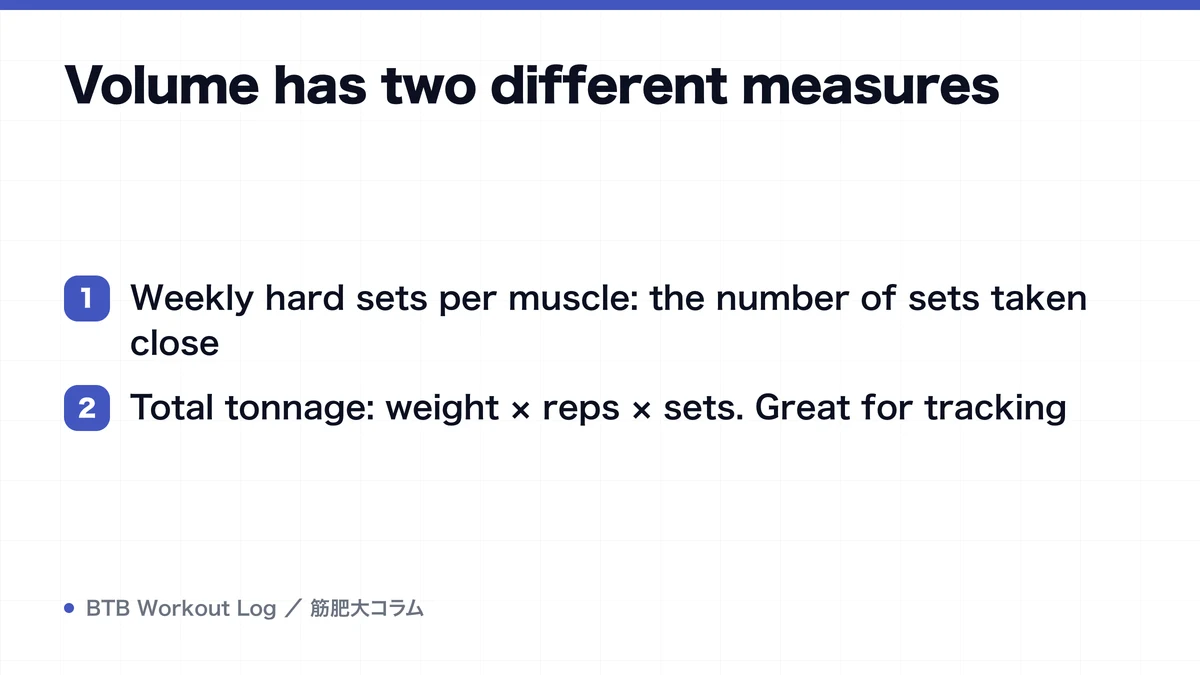
Volume has two different measures
"Volume" in training means two related but distinct things:
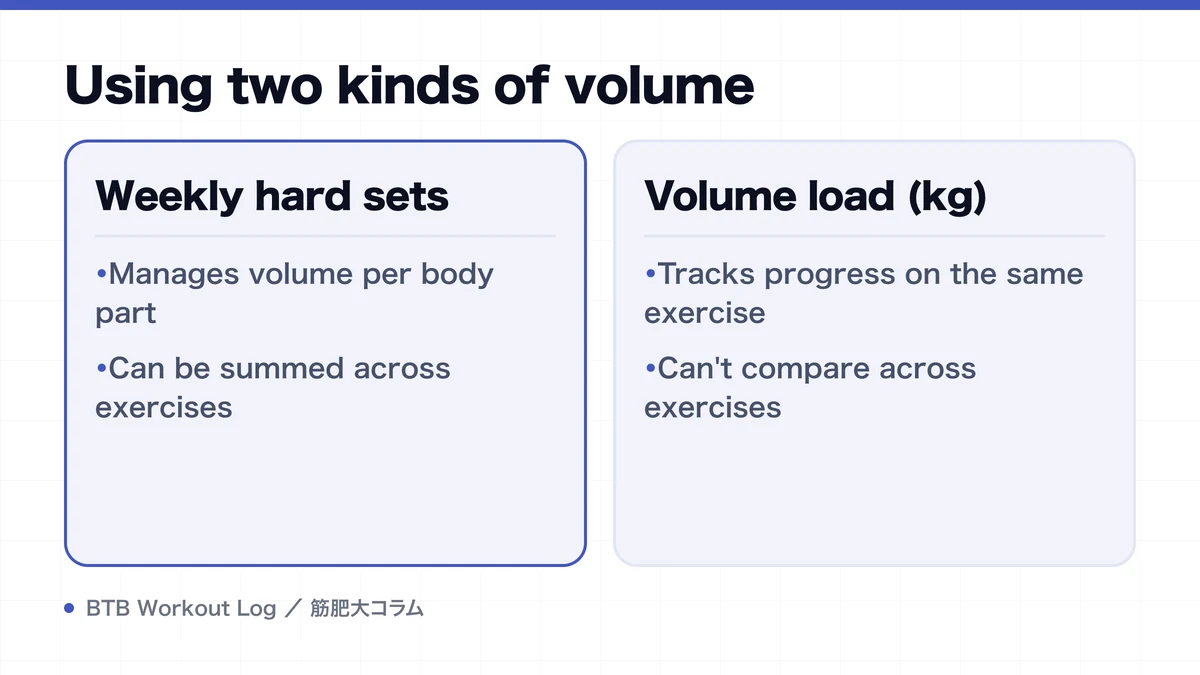
- Weekly hard sets per muscle: the number of sets taken close to failure per muscle group. The best metric for managing stimulus across your whole program (weekly sets guide).
- Total tonnage: weight × reps × sets. Great for tracking progress within a specific exercise and quantifying the work done in a single session.
Weekly sets have become the go-to metric for managing muscle growth, but tonnage is useful for objectively tracking how an individual lift is trending over time.
How to calculate total tonnage
Tonnage = weight × reps × sets.
| Exercise | Details | Total tonnage |
|---|---|---|
| Bench Press | 80 kg × 8 reps × 3 sets | 1,920 kg |
| Next session | 80 kg × 9 reps × 3 sets | 2,160 kg |
Even adding one rep raises your tonnage. When tonnage is trending upward week over week and month over month, that exercise is on a growth trajectory - an objective fact you can read from the numbers.
The right way to add volume
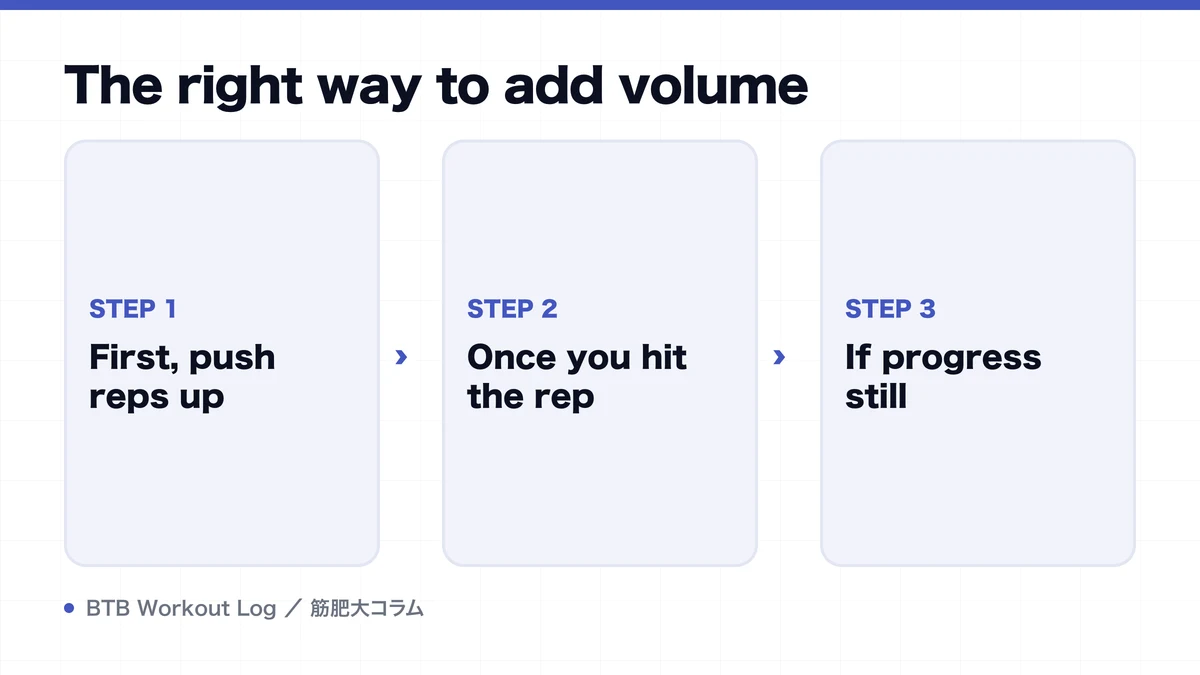
The rule: start at the lower end and build gradually. Jumping to a high volume all at once outpaces recovery. Here's the practical sequence:
- First, push reps up within the same weight (fixed load, more reps).
- Once you hit the rep ceiling, raise the weight (reps and weight).
- If progress still stalls, add 1-2 sets per muscle per week.
Any of the three - more reps, more weight, or more sets - raises total tonnage. Go in that order: weight and reps first, more sets as the last resort. That's the most cost-efficient sequence.
You can't manage volume without records
Neither volume load nor weekly sets is easy to calculate or compare with last time unless you have a log. How many chest sets did you hit this week? Is your bench volume load higher than last month? Being able to answer those on the spot is what managing your training volume actually means. When weekly sets per muscle group and per-exercise trends are totalled automatically, you can make add-or-cut decisions from numbers rather than gut feeling (workout log app).
FAQ
- Should I prioritize weekly sets or total tonnage?
- Use weekly hard sets to manage the stimulus across muscle groups, and use tonnage to track progress within a specific exercise. Weekly sets tell you whether you're getting enough work per muscle; tonnage shows you whether an individual lift is trending upward.
- Does raising tonnage guarantee muscle growth?
- Mostly yes, but tonnage inflated by lots of easy reps with a light weight is not worth much. The tonnage needs to come from sets taken close to failure - then a rising tonnage is a reliable sign of growth.
- How often should I increase my volume?
- Add a little each week - an extra rep or two, or one more set - and reset when you see signs of too much fatigue or progress stalls. For bigger multi-week swings, the periodization article covers how to structure volume over longer cycles.
Key takeaways
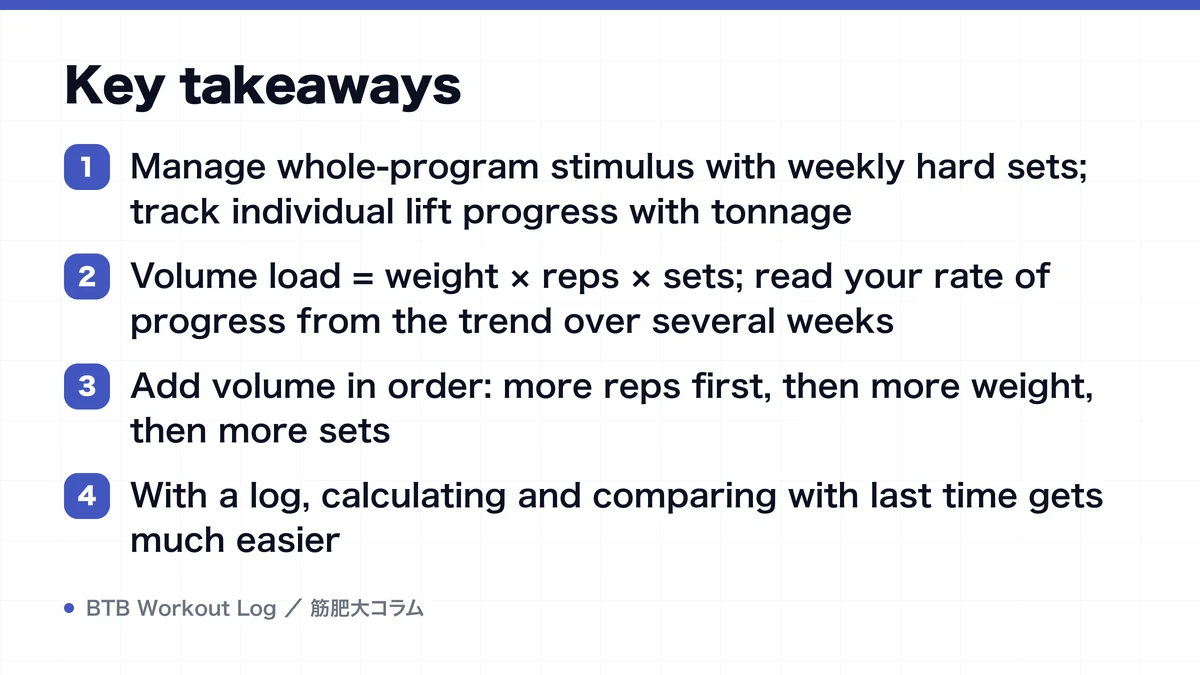
- Manage whole-program stimulus with weekly hard sets; track individual lift progress with tonnage
- Volume load = weight × reps × sets; read your rate of progress from the trend over several weeks
- Add volume in order: more reps first, then more weight, then more sets
- With a log, calculating and comparing with last time gets much easier
References
- Dose-response Relationship Between Weekly Resistance Training Volume and Muscle Mass
- Resistance Training Volume Enhances Muscle Hypertrophy in Trained Men
- Low- vs High-load Resistance Training for Strength and Hypertrophy: Meta-analysis
- Proximity-to-Failure and Muscle Hypertrophy: Systematic Review with Meta-analysis
- A Systematic Review of the Effects of Different Resistance Training Volumes on Muscle Hypertrophy