Hypertrophy: Rest 2–3 Minutes Between Sets | Shorter Rest Could Cost You Gains
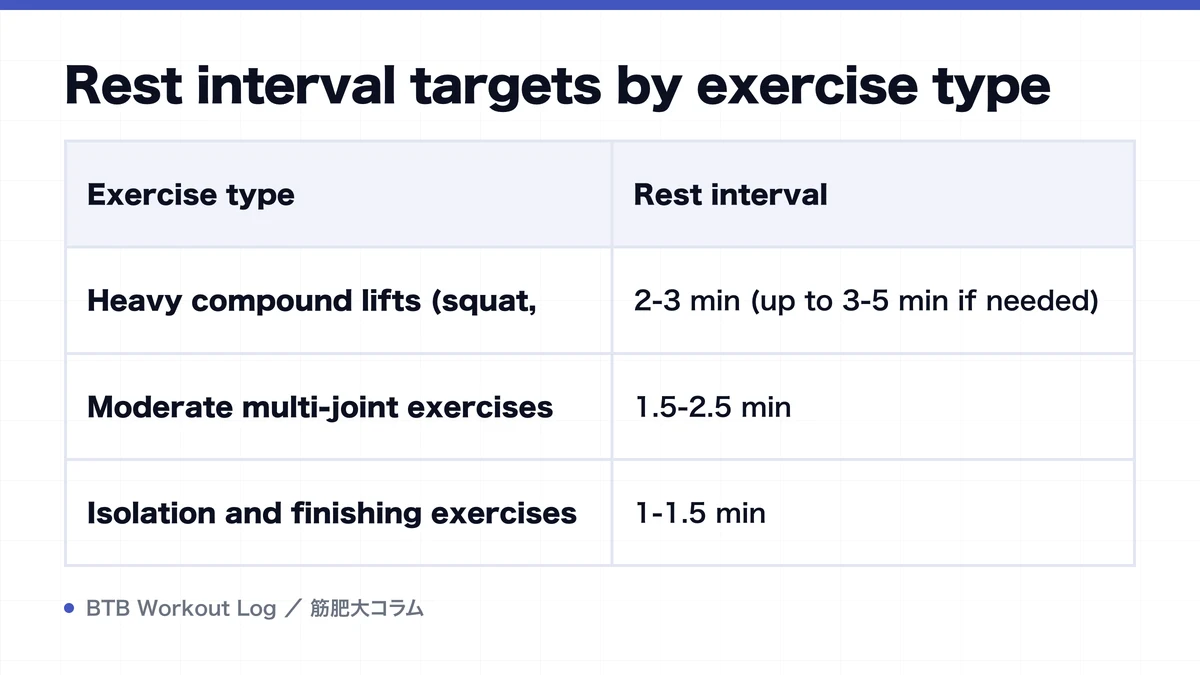
Bottom line: for hypertrophy, 2-3 minutes on main lifts and 1-2 minutes on isolation exercises is a rough guide that is manageable in most cases. The claim that shorter rests work better has become hard to support in current research.
The explanation that cutting rest spikes hormones and makes training work is considered weak as evidence for long-term hypertrophy. In most cases, resting fully makes it easier to secure total volume.
"Short rest spikes hormones" - the myth that got debunked
For years the advice was to keep rest intervals to 30-60 seconds so the spike in growth hormone would boost muscle growth. But research has since shown that transient hormonal spikes after sets don't meaningfully correlate with long-term hypertrophy, and the argument has collapsed. The current body of evidence actually points the other way: longer rest intervals of 2-3 minutes tend to produce more muscle growth.
Why 2-3 minutes is better for muscle growth
The reason is straightforward: the more you recover between sets, the more volume (weight × reps) you can maintain across the session. Short rests leave you under-recovered, so the next set's reps drop significantly. That reduces total tonnage and lowers the quality of your stimulus. Because hypertrophy is strongly driven by volume, cutting rest to cut rest time is self-defeating.
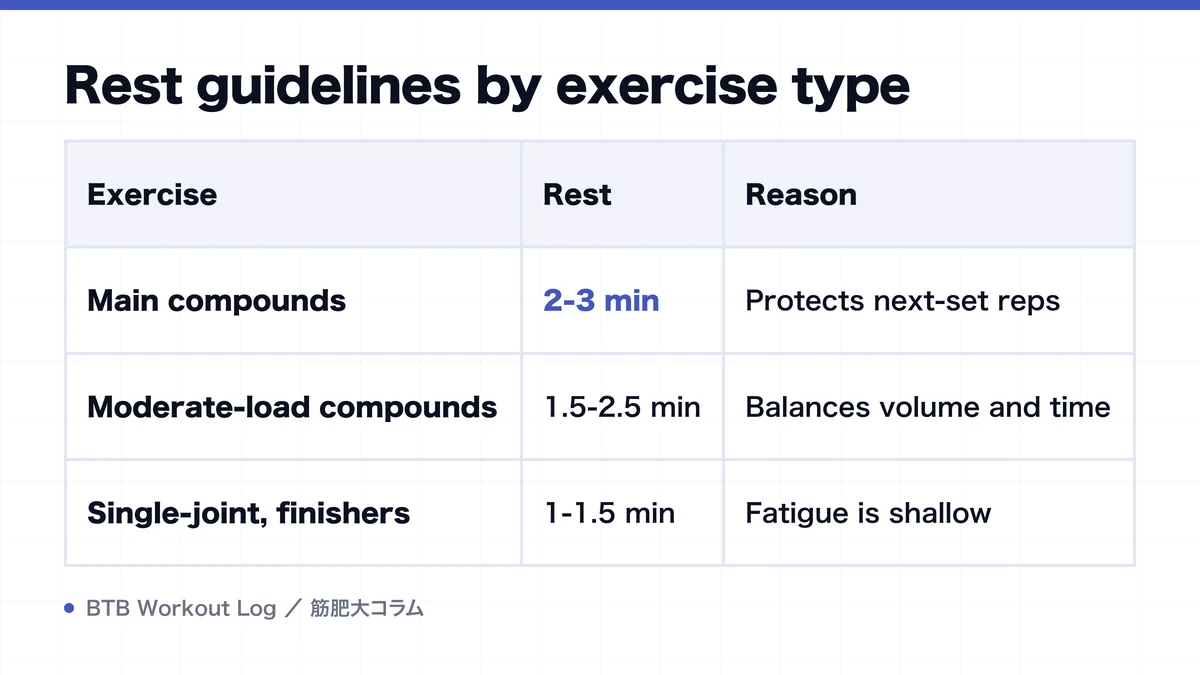
Rest interval targets by exercise type
| Exercise type | Rest interval |
|---|---|
| Heavy compound lifts (squat, deadlift, bench) | 2-3 min (up to 3-5 min if needed) |
| Moderate multi-joint exercises | 1.5-2.5 min |
| Isolation and finishing exercises | 1-1.5 min |
Large muscles and heavy loads take longer to recover - rest accordingly. Smaller muscles and lighter finishing work can handle shorter rests without a meaningful drop in set quality.
How to save time without shortening rest
If 2-3 minute rests feel like they blow out your workout time, the answer isn't to cut rest - it's to use antagonist supersets. Pairing opposing muscle groups (chest and back, biceps and triceps) lets you train one while the other rests, giving you effective recovery time while cutting the clock. That's a better trade than sacrificing volume to save time. Tracking your rest intervals in your log can also reveal when inconsistent rest is hurting your set-to-set quality.
FAQ
- Doesn't a short rest interval push me harder and make the workout more effective?
- Short rests feel harder, but reps on the next set fall and total volume tends to drop. How hard it feels and how effective it is are different things. In most cases, resting 2 minutes or more and stacking up quality sets secures more volume.
- Is resting as long as possible always better?
- From a recovery standpoint, yes - longer rest means better next-set quality. But beyond 5 minutes, time efficiency suffers and your body cools down. Use 2-3 minutes on the main lifts and cap rest at around 5 minutes.
- What should I do during the rest interval?
- Rest fully. Control your breathing, check your log for what you need to beat this set, and go into the next set with a clear target. Using your rest time to review your previous numbers means you're never wasting those minutes.
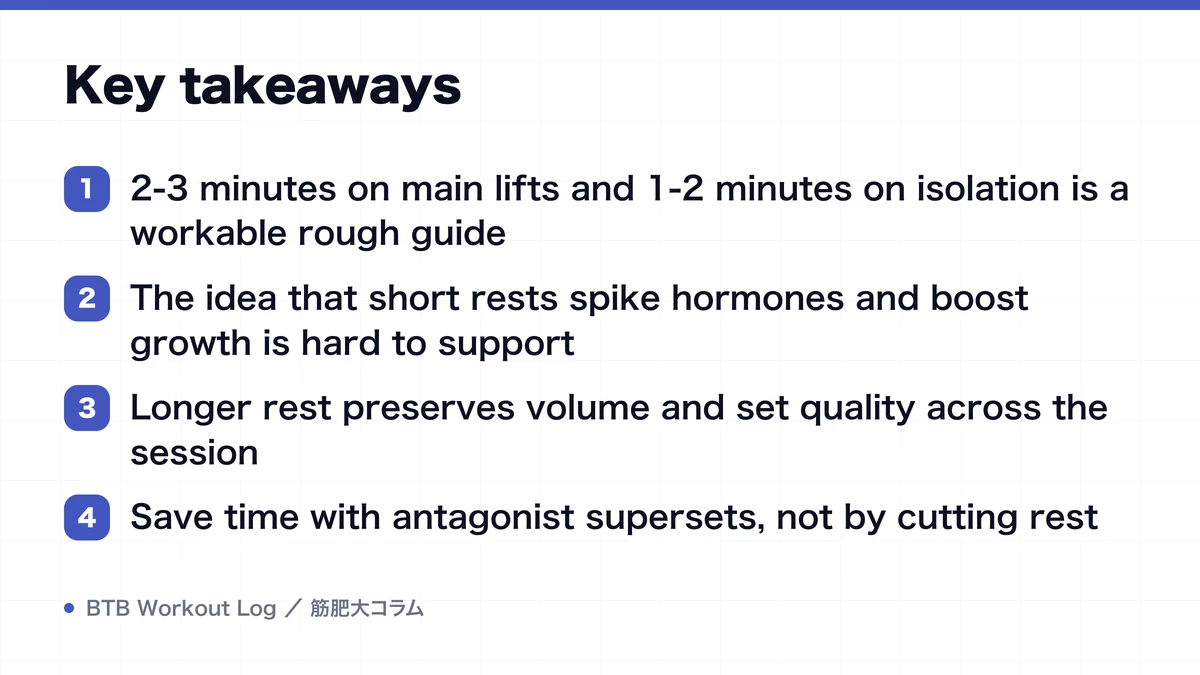
Key takeaways
- 2-3 minutes on main lifts and 1-2 minutes on isolation is a workable rough guide
- The idea that short rests spike hormones and boost growth is hard to support
- Longer rest preserves volume and set quality across the session
- Save time with antagonist supersets, not by cutting rest